
thai red curry recipe chicken

The Best thai red curry recipe chicken
Thinking back to the first time I made Thai red curry with chicken, I remember it was a lazy Sunday afternoon when my kids were still too young to understand the fuss over dinner. I’d been craving something bold and flavorful that could warm the kitchen and the soul, and this recipe hit the spot. The deep, spicy aroma of the coconut milk and the first bite of tender chicken in a rich, aromatic sauce was pure comfort. My family—especially my kids, who’ve grown up eating it now—still ask for it at least once a week, whether it’s for a casual family dinner or a special occasion. It’s that kind of dish that feels like a hug in a bowl, and it’s not just about the taste; it’s about the way it brings people together.
I love this recipe because it’s so adaptable. You can serve it with jasmine rice for a simple meal or pair it with steamed veggies or noodles if you’re feeling more adventurous. It’s perfect for busy weeknights when you want something hearty but not too heavy, or for a weekend gathering where everyone can enjoy the bold flavors without feeling overwhelmed. My kids especially love it because it’s not too spicy for them, but the adults can crank up the heat if they want. Plus, the coconut milk gives it a creamy richness that’s satisfying, and the herbs and spices add layers of depth that keep you coming back for more. And let’s be honest, there’s something comforting about a meal that’s both healthy and delicious—this curry checks both boxes. The chicken is leaner than you might expect, and the veggies in the sauce add fiber and nutrients without sacrificing flavor. It’s a recipe that’s as good for you as it is for your taste buds, and that’s something I appreciate.
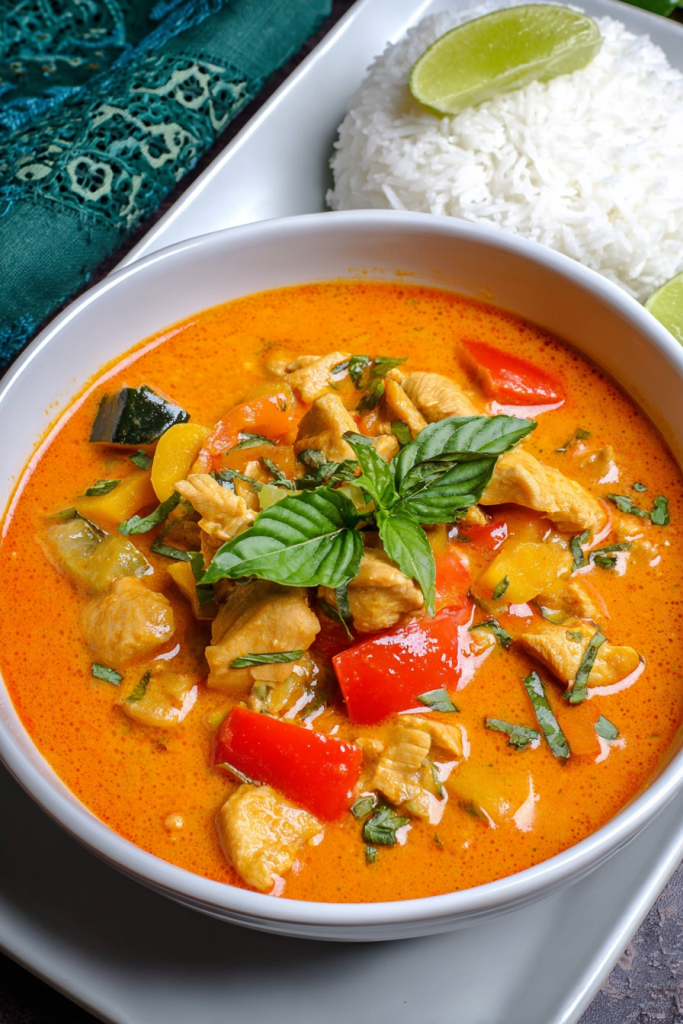
Thai Red Curry with Chicken
A rich and aromatic Thai red curry featuring tender chicken in a spicy, coconut milk-based sauce with tomatoes, lemongrass, and chili. Perfect for a flavorful and comforting meal.
🥘Ingredients
- 1.5 lbs boneless chicken thighs
- 2 tbsp fish sauce
- 2 tbsp palm sugar (or brown sugar)
- 1 tbsp lime juice
- 1 stalk lemongrass, bruised and cut into 2-inch pieces
- 4 cloves garlic, minced
- 1-inch ginger, sliced
- 1 red chili, finely chopped (adjust to taste)
- 1 can (14 oz) coconut milk
- 2 tbsp Thai red curry paste
- 1 tbsp vegetable oil
- 1 cup Thai basil leaves
- 1 cup jasmine rice
- 1 cup sliced bell peppers (optional)
- 1 cup cherry tomatoes (optional)
👨🍳Directions
-
1 In a bowl, combine chicken thighs with fish sauce, palm sugar, and lime juice. Marinate for at least 15 minutes, or up to 2 hours in the fridge.
-
2 In a pot, heat vegetable oil over medium heat. Add lemongrass, garlic, ginger, and chili. Sauté for 1-2 minutes until fragrant.
-
3 Add the Thai red curry paste to the pot and stir for 1-2 minutes until it releases its aroma.
-
4 Pour in the coconut milk and bring the mixture to a simmer. Add the marinated chicken and cook for 15-20 minutes, or until the chicken is fully cooked and tender.
-
5 If using, add sliced bell peppers and cherry tomatoes to the pot and cook for another 5 minutes. Stir in Thai basil leaves just before serving.
-
6 Serve hot over steamed jasmine rice.
🔧Equipment
- Large pot or deep skillet
- Wooden spoon
- Mixing bowl
- Knife and cutting board
- Measuring cups and spoons
📊Nutrition Facts (per serving)
📝Notes
Watch Video Of How Thai Red Curry with Chicken Works
This Thai red curry chicken recipe is always a solid choice for any family gathering because it’s hearty enough to feed a crowd without being too heavy, and the bold flavors keep everyone coming back for seconds. It’s the kind of dish that feels special but doesn’t require last-minute stress—just a few key ingredients and a little prep—and it pairs perfectly with steamed jasmine rice or fresh spring rolls. Plus, it’s a great way to bring a little bit of exotic warmth to your table, whether it’s a casual weeknight meal or a festive holiday spread.
❓ Frequently Asked Questions About Thai Red Curry with Chicken
What is the key difference between Thai red curry and Thai green curry?
The key difference lies in the primary ingredient used to make the curry paste. Thai red curry uses a paste made with dried red chilies, giving it a spicier, redder hue and a more intense heat level. Thai green curry, on the other hand, uses fresh green chilies, which results in a milder, brighter green color and less heat.
Why does my Thai red curry chicken taste bland or lack flavor?
Several factors can make your Thai red curry chicken taste bland. First, ensure you’re using the right amount of curry paste—typically 2-3 tablespoons for a medium-sized pot. If you’re not, the curry might not have enough depth of flavor. Additionally, use high-quality ingredients like fresh herbs (such as Thai basil or cilantro), aromatic vegetables (like garlic and ginger), and a good amount of coconut milk. Lastly, don’t forget to toast the curry paste in a dry pan before adding liquid to release its full aromatic potential.
How do I adjust the spice level in Thai red curry chicken?
Adjusting the spice level is simple. If your curry is too mild, add more dried red chilies (like bird’s eye chilies) or a pinch of cayenne pepper. If it’s too spicy, reduce the amount of curry paste or add a splash of coconut milk to balance the heat. You can also thin the curry slightly with extra water or broth to dilute the spiciness. For extra heat, consider adding a dash of sriracha or a finely chopped fresh chili.
What’s the best way to cook the chicken in Thai red curry?
For the best results, start by searing the chicken pieces in a hot pan to lock in juices, then set them aside. In the same pan, toast the red curry paste for 1-2 minutes to release its aromatics, then add coconut milk, chicken broth, and the chicken back in. Simmer until the chicken is fully cooked and tender. For extra flavor, add lemongrass, kaffir lime leaves, and Thai basil at the end. Avoid overcooking to keep the chicken moist and tender.
Can I substitute any ingredients in Thai red curry chicken, and if so, what’s the best replacement?
Yes, you can make substitutions, but some work better than others. For curry paste, if you can’t find Thai red curry paste, use a mix of dried red chilies, garlic, shallots, ginger, lemongrass, and a touch of palm sugar. For chicken, you can use tofu, shrimp, or even pork for a variation. If using coconut milk, ensure it’s full-fat for richer flavor. For herbs, Thai basil is ideal, but regular basil or cilantro can work in a pinch. Avoid overcomplicating—stick to one or two substitutions at most to maintain authenticity.
