pork and chicken adobo recipe

The Best pork and chicken adobo recipe
Pork and chicken adobo is one of those dishes that just feels like home—simple, flavorful, and something my whole family always leans toward. I love how it’s got that tangy, slightly sweet sauce that makes every bite taste like something special, even if it’s just a quick weeknight meal. My kids have been eating it since they were little, and they’ll always ask for it first when dinner’s ready. It’s that kind of comfort food that doesn’t take forever to make, yet it still feels like a celebration. Plus, it’s versatile enough to serve as a main dish or a side—whether you’re feeding a big family or just a few people, it never fails to be a hit.
The best part is how easy it is to adjust the ingredients. If we want more protein, we add extra chicken or pork belly. If we’re watching our portions, we can serve it with rice and veggies instead of a big pile. And honestly? It’s pretty healthy for you too. The adobo sauce is packed with garlic, vinegar, and spices that help with digestion, and the leaner cuts of chicken or pork keep the calories in check without sacrificing flavor. It’s that kind of dish that makes you feel good about eating, and my family does too. Whether it’s for a casual family dinner or a special occasion like a birthday or holiday, this recipe is always a crowd-pleaser. It’s the kind of meal that makes you feel like you’ve done something right, even if it’s just cooking something simple with love.
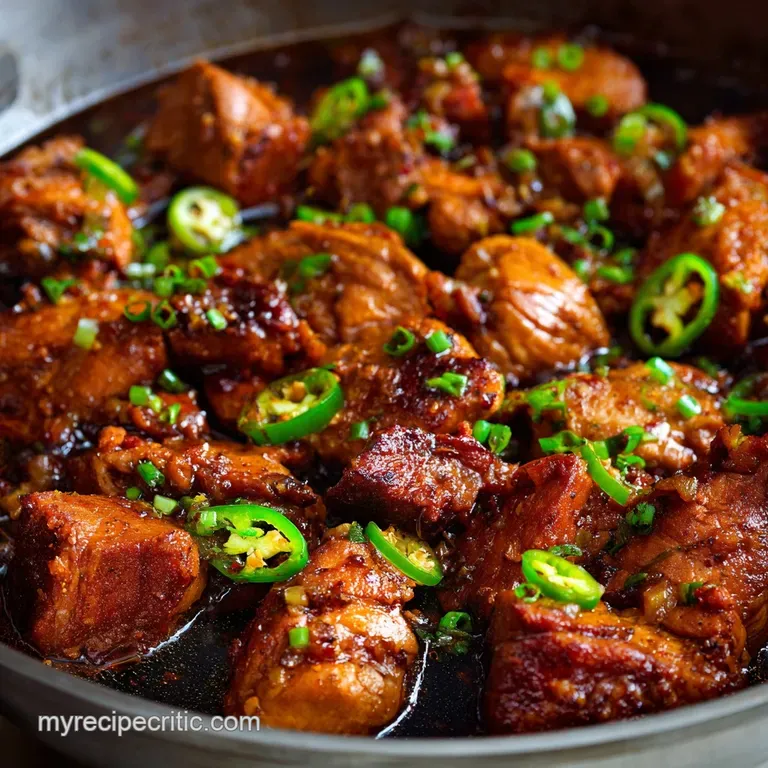
Pork and Chicken Adobo
A classic Filipino dish featuring tender pork and chicken marinated and cooked in a savory vinegar-based sauce with garlic, soy sauce, and black pepper. This recipe is a must-try for any occasion.
🥘Ingredients
- 1.5 lbs pork shoulder, cut into chunks
- 1.5 lbs chicken thighs, cut into pieces
- 3 cups vinegar (white or rice vinegar)
- 1 cup soy sauce
- 1 cup water
- 10 cloves garlic, minced
- 1 tbsp black peppercorns, crushed
- 1 tsp whole black peppercorns
- 1 bay leaf
- 1 tsp salt (adjust to taste)
- 2 tbsp oil
- 1 bell pepper, sliced
- 1 onion, sliced
- 1 cup corn kernels (fresh or frozen)
- 1 cup diced tomatoes
👨🍳Directions
-
1 In a large pot, combine vinegar, soy sauce, water, minced garlic, crushed black peppercorns, whole black peppercorns, bay leaf, and salt. Bring to a boil, then reduce heat and simmer for 10 minutes.
-
2 Add pork and chicken to the sauce. Simmer uncovered for 20 minutes, ensuring the meat is fully coated.
-
3 Remove meat from the pot, reserving the sauce. Set meat aside to cool slightly.
-
4 In the same pot, heat oil over medium-high heat. Add optional vegetables like bell pepper, onion, corn, and tomatoes if using. Cook for 5 minutes until softened.
-
5 Return the meat to the pot, pour the reserved sauce over it, and simmer for another 10-15 minutes until meat is tender and sauce thickens.
🔧Equipment
- Large pot or deep skillet
- Mixing bowls
- Knife and cutting board
- Measuring cups and spoons
- Wooden spoon
- Cooking utensils for simmering
📊Nutrition Facts (per serving)
📝Notes
Watch Video Of How Pork and Chicken Adobo Works
This Adobo recipe is always a go-to for any family gathering because it’s simple enough to make ahead and still tastes fresh when served, making it perfect for busy weeknights or last-minute get-togethers. The bold, tangy flavors of vinegar and soy blend so well with the meat that it feels like a comforting classic—something everyone will enjoy without needing extra explanation. Plus, it’s versatile enough to pair with rice or even serve as a hearty side, so you can always find a way to make it work for whatever’s on the menu.
❓ Frequently Asked Questions About Pork and Chicken Adobo
What is the traditional ratio of pork and chicken used in Adobo? In classic Filipino Adobo, pork (usually pork belly, ribs, or shoulder) is typically the star ingredient, often used in a 2:1 or 3:1 ratio with chicken (like chicken thighs or drumsticks). However, some variations include a mix of both, with pork providing richness and chicken adding tenderness. The exact ratio can vary based on personal preference, but the key is balancing the flavors with vinegar, garlic, and soy sauce.
How do I ensure the Adobo sauce stays tangy and flavorful without burning? To keep the Adobo sauce tangy and prevent burning, maintain a low and steady heat while simmering. Stir occasionally to distribute the vinegar and prevent it from concentrating too much. Adding a splash of water or broth if the sauce thickens too quickly helps control the heat. Additionally, using a heavy-bottomed pot ensures even cooking, and reducing the sauce by simmering for 10–15 minutes after adding the meat also enhances the flavors without burning.
Can I substitute vinegar for another acid in Adobo, and if so, what’s the best alternative? While traditional Adobo uses white vinegar, you can substitute it with apple cider vinegar (for a slightly sweeter taste) or rice vinegar (for a milder, more refined flavor). Lemon juice or lime juice can also work in small amounts, but they may not provide the same depth of tang. If using a different acid, adjust the quantity slightly—too much can make the dish overly sour. The goal is to maintain the balance of acidity while keeping the dish rich and savory.
Why does my Adobo sauce taste bland or lack depth, even after cooking it long enough? A bland Adobo sauce often results from insufficient seasoning or improper cooking techniques. Key fixes include: – Adding more soy sauce (or fish sauce for a deeper umami flavor) to boost saltiness and depth. – Incorporating more aromatics like garlic, onions, ginger, or bay leaves during cooking. – Using brown sugar or brown rice vinegar to caramelize slightly for a richer, sweeter base. – Simmering longer (at least 30–45 minutes) to let the flavors meld fully. – Ensuring proper acidity balance—if vinegar is missing, adding a pinch of salt or a splash of citrus can help cut through blandness.
How can I make Adobo with less oil or a healthier version? To reduce oil in Adobo while keeping it moist and flavorful: – Use water or broth instead of oil for sautéing onions and garlic. – Cook meat in a steamer or pressure cooker (like an Instant Pot) with a little water to infuse flavor without excess fat. – For a lighter version, bake the meat in a slow oven (300°F/150°C) with Adobo sauce drizzled over it, then finish by simmering. – Add fresh herbs like cilantro or scallions for brightness without needing extra oil. – Opt for skinless chicken thighs or pork cuts that are naturally leaner.