
healthy chicken pesto pasta recipe

The Best healthy chicken pesto pasta recipe
I’ve been making this healthy chicken pesto pasta ever since my kids were little, and I’ll admit, it’s one of those recipes that feels like a no-brainer in more ways than one. There’s something so satisfying about a meal that’s quick to put together but still feels special, like you’ve put in effort without overcomplicating things. My family—especially my kids—love it because it’s flavorful without being heavy, and it’s always a hit whether we’re serving it for a weeknight dinner or a casual family get-together. It’s that kind of recipe that makes you feel like you’re doing something good for them without sacrificing taste, and honestly? That’s a win.
What really sets this recipe apart is how balanced it is. The protein from the chicken keeps things filling, the greens in the pesto add a nutritional boost, and the whole wheat pasta gives it that extra fiber without making it feel like a chore to eat. I’ve been cooking like this for years, and I’ve never had a kid turn their nose up at it—no matter how picky they can be. It’s also something I can prep ahead if I’m short on time, or even double the batch for leftovers, which is always a plus. Plus, the health benefits are pretty solid: lean protein, healthy fats from the olive oil, and a good dose of vitamins from the spinach and herbs. It’s not just a meal; it’s a way to make sure everyone’s eating right without feeling like they’re missing out on anything. And honestly? That’s what matters most.
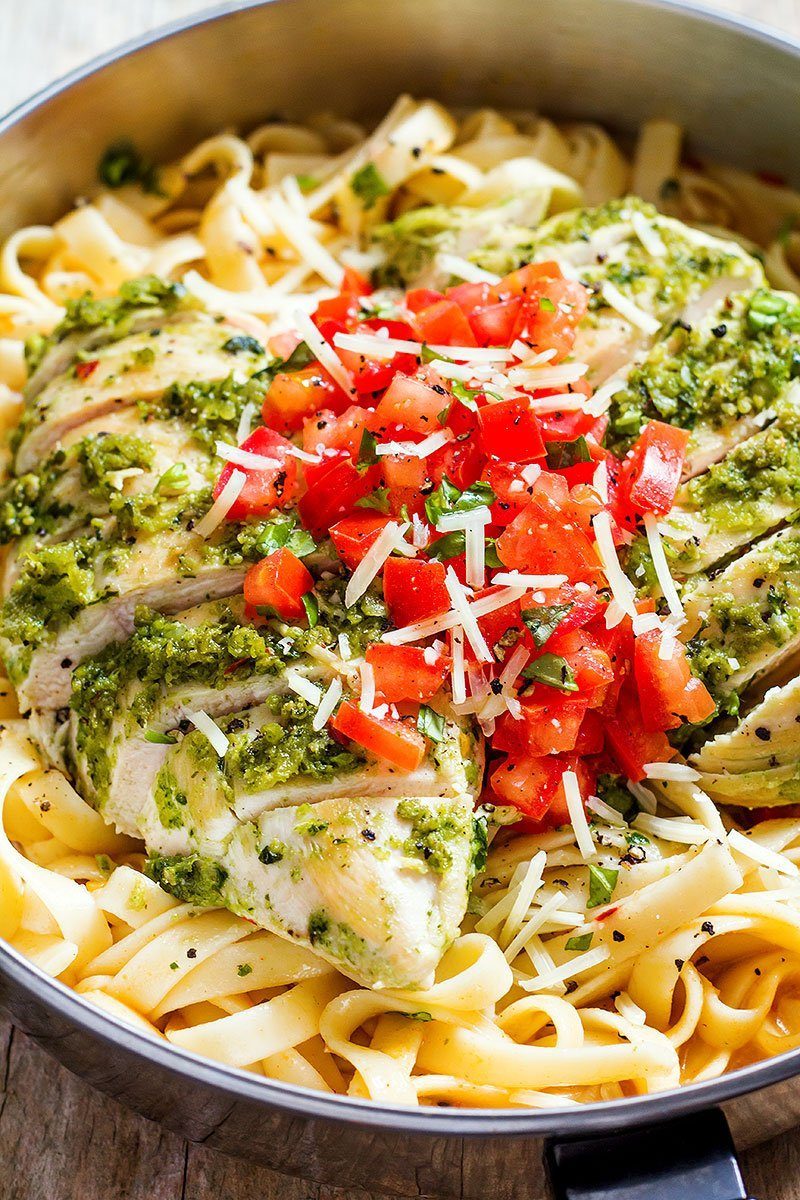
Healthy Chicken Pesto Pasta
A flavorful and nutritious dish featuring lean chicken, fresh basil pesto, and whole-grain pasta for a balanced meal. This recipe is a must-try for any occasion.
🥘Ingredients
- 1.5 lbs boneless, skinless chicken breasts
- 1 tbsp olive oil
- 1 tsp garlic powder
- 1 tsp dried oregano
- ½ tsp salt
- ½ tsp black pepper
- 1 cup fresh basil
- ½ cup grated Parmesan cheese
- ¼ cup pine nuts (or walnuts)
- 3 tbsp olive oil
- 2 cloves garlic
- 1 tbsp lemon juice
- Salt and pepper to taste
- 12 oz whole wheat or chickpea pasta
- 2 cups chicken broth
- 1 cup cherry tomatoes, halved
- ¼ cup red onion, finely chopped
- 1 cup cherry tomatoes, halved
- Handful of spinach
👨🍳Directions
-
1 Preheat oven to 375°F (190°C). Season chicken breasts with garlic powder, oregano, salt, and pepper. Heat olive oil in a skillet over medium heat. Cook chicken for 5-6 minutes per side until fully cooked (165°F internal temp). Remove from skillet, cover, and set aside.
-
2 While chicken cooks, prepare the pesto: Pulse basil, Parmesan, pine nuts, garlic, lemon juice, olive oil, salt, and pepper in a food processor until finely chopped.
-
3 Cook pasta according to package instructions in salted boiling water. Drain and set aside.
-
4 In the same skillet, sauté red onion for 2 minutes. Add halved cherry tomatoes and cook for 3-4 minutes until softened. Stir in cooked pasta, chicken, and pesto. Mix well and cook for another 2 minutes. Add spinach and cook until wilted.
-
5 Pour chicken broth into a pot, bring to a simmer, and heat until slightly bubbling. Pour broth over the pasta mixture, let it warm through, and serve hot.
🔧Equipment
- Large skillet
- Food processor or blender
- Kitchen shears
- Cooking pot
- Mixing bowls
- Whisk
- Serving bowls
📊Nutrition Facts (per serving)
📝Notes
Watch Video Of How Healthy Chicken Pesto Pasta Works
This healthy chicken pesto pasta is always a crowd-pleaser because it’s packed with flavor without being heavy, making it perfect for quick meals or when you need something satisfying for family gatherings. It’s light yet hearty enough to hold up well, whether you’re serving it at a casual dinner or a bigger event where you want to keep things fresh and delicious without the extra fuss. Plus, the fresh ingredients and simple prep make it a no-stress option that everyone seems to love.
❓ Frequently Asked Questions About Healthy Chicken Pesto Pasta
What is the best way to prepare fresh basil for pesto?
For the best pesto, use fresh, high-quality basil—wash it gently in cold water, pat it dry with a clean towel, and remove any wilted or damaged leaves. Chop the basil into small pieces (about 1-inch chunks) and pulse briefly in a food processor with the garlic, pine nuts (or walnuts), Parmesan, and olive oil before adding salt. This helps release the oils and ensures a smooth texture without over-processing.
—
Can I substitute any of the ingredients in this recipe, and if so, what are the best alternatives?
Yes! Here are some flexible swaps: – Pine nuts → Walnuts, almonds, or sunflower seeds (add a pinch of salt to balance). – Garlic → Green onions or shallots (reduce to ½ clove for milder flavor). – Parmesan cheese → Pecorino Romano or freshly grated aged cheddar. – Olive oil → Avocado oil or extra-virgin coconut oil (for a slightly different taste). – Basil → Spinach or arugula (use 1.5x the amount for greens). For pesto, freshness matters—avoid frozen basil, as it loses flavor and texture.
—
Why does my pesto turn out grainy or thick, and how can I fix it?
Grainy or thick pesto usually happens due to over-processing, dry ingredients, or uneven blending. To fix it: 1. Blend longer but in short bursts—start with 10 seconds, then check the texture. Over-blending breaks down the nuts and cheese into a paste, which can thicken. 2. Add a splash of water or pasta cooking water (1–2 tbsp) to loosen it if needed. 3. Use room-temperature ingredients—chilled nuts or cheese can make the pesto stiff. Let everything sit for 10 minutes before blending. 4. Adjust ratios—if using walnuts, they’re naturally denser; reduce by 10% or add a little more olive oil. For extra smoothness, strain the pesto through a fine-mesh sieve after blending.
—
How do I prevent the pesto from separating when mixing it with pasta?
Pesto separates when the oil and water balance shifts, often due to overmixing, high heat, or improper timing. To keep it emulsified: – Mix pesto with cold or room-temperature pasta—hot pasta can cause oil to rise to the top. – Add pesto gradually—stir 1–2 tbsp into the pasta water first, then add the rest in batches while tossing. This helps the emulsion form naturally. – Use a little pasta water—drizzle 1–2 tbsp of cooked pasta water into the pesto before tossing to help bind it. – Avoid boiling the pasta too long—slightly undercook it (al dente) to retain moisture, which helps the sauce cling. – Stir gently—overmixing can break the emulsion. Use a fork or spoon to fold lightly.
—
How can I store leftover pesto and keep it fresh for longer?
Store leftover pesto in airtight containers for up to 4–5 days in the fridge. For longer storage: – Freeze in portions: Transfer pesto to an ice cube tray or small containers, cover with olive oil (to prevent drying), and freeze. Thaw in the fridge overnight or use directly from frozen (add a splash of pasta water to loosen). – Store in olive oil: Combine pesto with enough olive oil to coat the surface (about 1:1 ratio), then refrigerate for up to 2 weeks. This also prevents oxidation. – Label and date—pesto can spoil faster than you think due to its high fat content. Avoid using if it smells sour or has mold. For best results, use within 3 days if not freezing.
