massaman chicken curry recipe

The Best massaman chicken curry recipe
Oh, there’s nothing quite like a good Massaman chicken curry to bring the whole family together around the table. I’ve been making this dish since my own kids were little, and it’s always been a favorite—simple enough to whip up on a busy weeknight but fancy enough to impress when we’re hosting guests. The rich, aromatic spices and tender chicken make it feel special, whether it’s a cozy dinner after a long day or a meal to share with friends. My kids used to beg for it every time I made it, and now they still ask for it on weekends. It’s that kind of comfort food that feels nourishing and satisfying, without being heavy or complicated.
What I love most about this recipe is how balanced it is—spicy enough to wake up the senses but not so intense that it overpowers the meal. The coconut milk adds a creamy depth that’s comforting, and the mix of spices—like the cinnamon, cardamom, and cloves—gives it a warm, cozy flavor that reminds me of home. Plus, it’s a great way to use up chicken and veggies that might otherwise go to waste. I’ve made it for family gatherings, potlucks, and even just as a regular meal when we’re all tired from work or school. It’s that kind of dish that feels like a treat but still feels like home. And the health benefits? Well, the lean chicken keeps it light, the veggies add fiber, and the spices like turmeric and ginger have been shown to support digestion and immunity. It’s a meal that’s as good for you as it is for your taste buds.
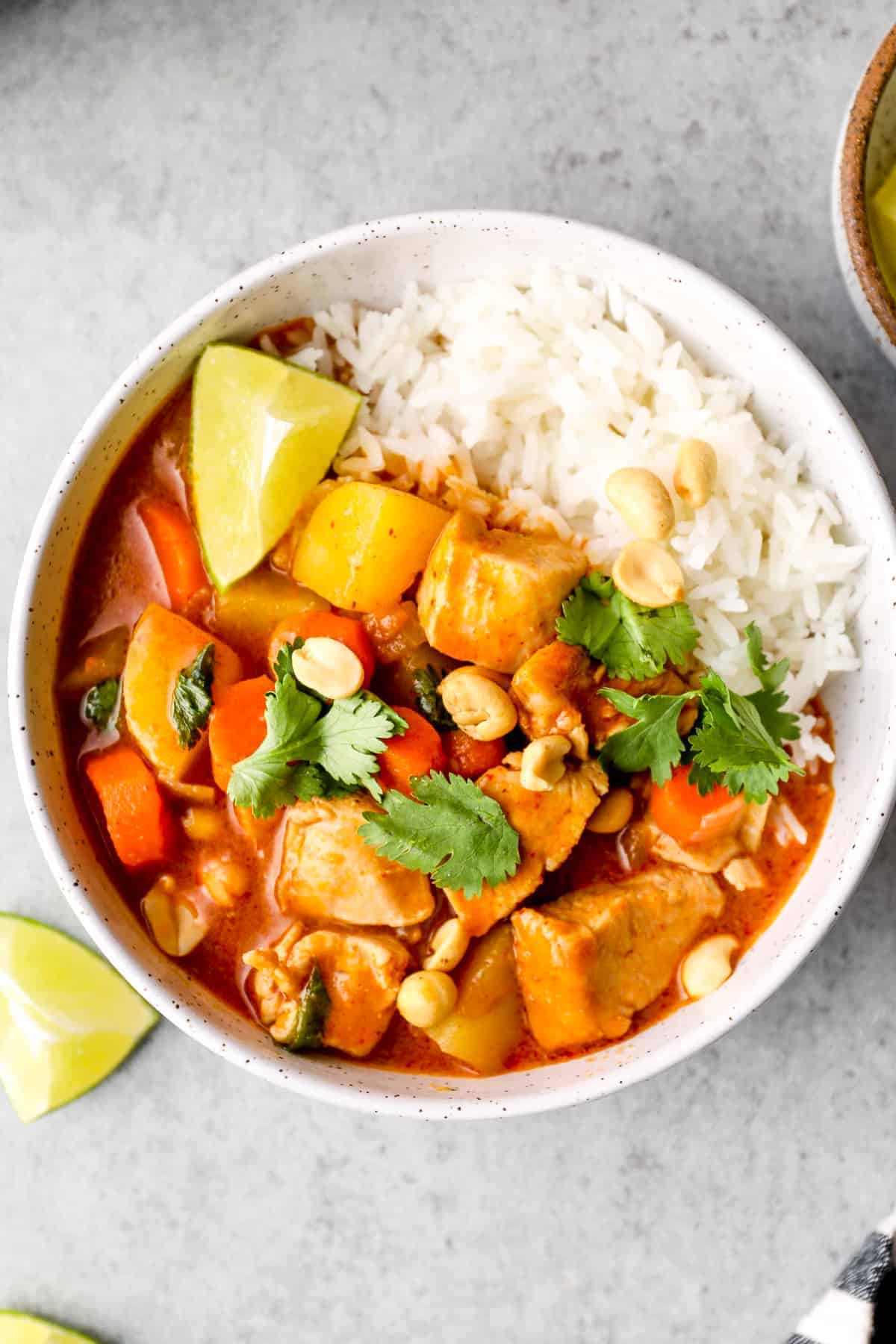
Massaman Chicken Curry
A rich and aromatic Thai curry featuring tender chicken in a creamy, spiced sauce with potatoes, peanuts, and coconut milk. Perfect for a comforting meal!
🥘Ingredients
- 1.5 lbs boneless chicken thighs (cut into bite-sized pieces)
- 2 tbsp fish sauce
- 1 tbsp soy sauce
- 1 tbsp lime juice
- 1 tbsp oil
- 1 large onion (diced)
- 3 cloves garlic (minced)
- 1-inch ginger (grated)
- 1 red bell pepper (diced)
- 1 can (14 oz) diced tomatoes
- 1 can (14 oz) coconut milk (full-fat)
- 1 tbsp Massaman curry paste
- 1 tsp ground cinnamon
- 1 tsp ground coriander
- 1 tsp ground cardamom
- 1 tsp turmeric
- 1 tsp salt (adjust to taste)
- ½ tsp black pepper
- 1 cup potatoes (diced)
- ½ cup peanuts (toasted, chopped)
- Fresh cilantro (chopped)
- Lime wedges
- Extra peanuts (for garnish)
👨🍳Directions
-
1 In a bowl, combine chicken, fish sauce, soy sauce, and lime juice. Marinate for at least 15 minutes.
-
2 Heat oil in a large skillet over medium-high heat. Sauté onion until golden (about 5 mins). Add garlic, ginger, and bell pepper; cook for 2 more minutes.
-
3 Stir in diced tomatoes, coconut milk, curry paste, cinnamon, coriander, cardamom, turmeric, salt, and black pepper. Simmer for 10 minutes.
-
4 Add marinated chicken and potatoes. Cook for 15 minutes, stirring occasionally, until chicken is cooked through and potatoes are tender.
-
5 Remove from heat, stir in chopped peanuts. Garnish with cilantro and lime wedges before serving.
🔧Equipment
- Large skillet or pot
- Wooden spoon
- Mixing bowls
- Knife and cutting board
- Measuring cups and spoons
📊Nutrition Facts (per serving)
📝Notes
Watch Video Of How Massaman Chicken Curry Works
This Massaman Chicken Curry recipe is always a crowd-pleaser because it’s rich, aromatic, and full of flavor that feels comforting no matter the occasion. Whether you’re hosting a family dinner or just need a hearty meal after a long day, this dish balances tender chicken with a perfect blend of spices and coconut milk for a creamy, satisfying taste. It’s versatile enough to serve as a main or side, making it easy to adjust for different appetites, and the spices keep it interesting without being overwhelming—just the right amount of warmth and depth. Plus, it’s always a hit because it feels special, even if it’s just a simple weeknight meal.
❓ Frequently Asked Questions About Massaman Chicken Curry
What is the key difference between massaman chicken curry and other Thai curries?
Massaman chicken curry stands out because it incorporates a blend of sweet, spicy, and aromatic flavors with a distinct touch of coconut milk, cinnamon, and cardamom, unlike other Thai curries that often rely more on chili peppers and lemongrass. The use of less heat and a richer, creamier texture makes it unique compared to fiery dishes like tom yum or tom kha.
—
Why does the recipe call for coconut milk instead of water or broth?
Coconut milk is essential in Massaman curry for its creamy texture and balanced sweetness, which complement the spices and meat beautifully. It also adds a subtle tropical flavor that enhances the dish’s depth. Using water or broth would dilute the rich, aromatic profile of the curry, making it less cohesive and less flavorful.
—
Can I substitute chicken with another protein like tofu or shrimp?
While traditional Massaman curry uses chicken, you can adapt it with tofu (press and cube firm tofu for a similar texture) or shrimp (sautéed first to avoid overcooking). Tofu works well but may absorb flavors differently, while shrimp adds a delicate, slightly sweet profile. Just ensure the protein is cooked thoroughly to avoid raw taste.
—
How do I avoid the curry from becoming too watery or too thick?
To control consistency, simmer the curry gently and adjust thickness with coconut milk or a cornstarch slurry (mix 1 tbsp cornstarch with 2 tbsp cold water, stir into the curry). If it’s too thick, add a splash of water or broth. Avoid boiling vigorously, as it can break down the spices and make the curry grainy. Straining the curry through a fine sieve can also help remove excess liquid if needed.
—
What are the best spices and aromatics to use for authentic Massaman flavor?
For the best Massaman flavor, use a mix of whole spices: 2 cinnamon sticks, 4-5 whole cardamom pods, 2-3 star anise pods, and 1-2 cloves. Toast these spices lightly in a dry pan before grinding, then simmer them in the curry to release their oils. Additionally, include 1-2 tbsp of palm sugar (or brown sugar) and 1 tbsp of shrimp paste (optional but traditional) for depth. Fresh ginger and garlic also enhance the dish’s aromatic complexity.