
chicken cacciatore original recipe

The Best chicken cacciatore original recipe
Chicken cacciatore has always been a dish that feels like a warm hug for my family—simple enough to make weeknights go by without stress, yet rich enough to feel special when serving it at dinner. I first fell in love with it years ago when I tried a version from my grandmother’s old cookbook, and it stayed with me because it’s the kind of meal that doesn’t demand perfection. The tomatoes burst with acidity, the garlic and herbs add depth without overpowering, and the chicken stays tender even after simmering for hours. It’s not a fancy dish, but it’s full of flavor, and that’s what matters most to me. My kids—especially my teenage son who’s always picky—will eat it straight from the pot, and my husband loves how it balances hearty and healthy. It’s the kind of recipe that feels like a comfort, but it’s also light enough that it doesn’t weigh you down.
What I love most about this recipe is how adaptable it is. It’s perfect for a casual family dinner on a lazy Sunday or a meal that feels festive enough for a weekend gathering. The tomatoes and vegetables add vitamins and fiber, while the chicken provides lean protein. I’ve made it with fresh herbs from our garden or even canned tomatoes if we’re in a hurry, and it still turns out delicious. My kids don’t realize how nutritious it is—it’s just chicken, tomatoes, and spices—but I know it keeps them full and energized. Plus, it’s easy to double the recipe and freeze leftovers, so I always have a go-to for busy weeks. It’s a dish that’s as much about the love of cooking as it is about the taste—something my family and I appreciate deeply.
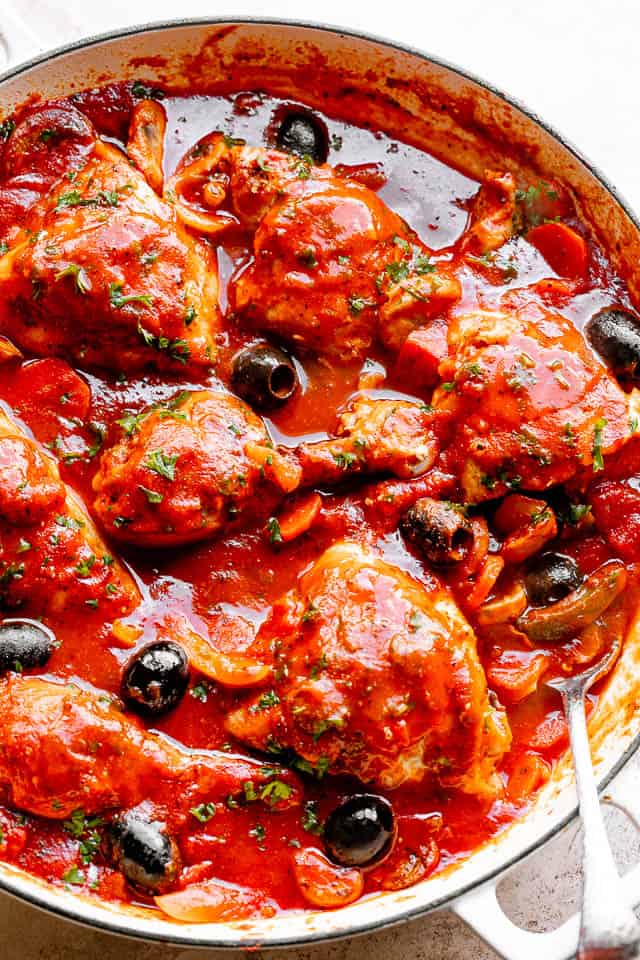
Classic Chicken Cacciatore
A rich, tomato-based Italian stew featuring tender chicken braised in a savory sauce with bell peppers, onions, and herbs. Perfect for a comforting weeknight meal.
🥘Ingredients
- 1.5 lbs boneless chicken thighs (skin-on)
- 2 tbsp olive oil
- 1 tsp dried oregano
- 1 tsp dried basil
- 1 tsp salt
- ½ tsp black pepper
- 2 cups crushed tomatoes (or canned tomato sauce)
- 1 large onion, diced
- 3 cloves garlic, minced
- 1 red bell pepper, diced
- 1 cup dry white wine (optional)
- 2 tbsp tomato paste
- 1 cup chicken broth
- 1 cup fresh basil, chopped
- 1 tsp red pepper flakes (optional)
- 1 tbsp balsamic vinegar
- Fresh parsley, chopped
- Crumbled feta cheese (optional)
- Toasted bread slices
👨🍳Directions
-
1 Preheat oven to 375°F (190°C). In a large pot or Dutch oven, heat olive oil over medium heat. Season chicken thighs with oregano, basil, salt, and pepper. Brown chicken on all sides (about 5 mins per side), then remove and set aside.
-
2 In the same pot, sauté onions until translucent (~5 mins). Add garlic and bell pepper, cooking for another 3 minutes until softened.
-
3 Deglaze the pot with white wine (if using), scraping up browned bits. Stir in tomato paste and cook for 1 minute. Add crushed tomatoes, broth, and red pepper flakes. Bring to a simmer.
-
4 Return chicken to the pot, cover, and transfer to the preheated oven. Bake for 30–35 minutes, or until chicken reaches 165°F (74°C).
-
5 Remove chicken, shred if desired, and stir in fresh basil and balsamic vinegar. Adjust seasoning with salt and pepper if needed.
-
6 Serve hot with garnish of parsley, feta, and toasted bread.
🔧Equipment
- Large Dutch oven or heavy pot
- Knife and cutting board
- Mixing bowls
- Wooden spoon
- Oven-safe baking dish (optional, for serving)
📊Nutrition Facts (per serving)
📝Notes
Watch Video Of How Classic Chicken Cacciatore Works
This classic chicken cacciatore is always a reliable choice for any family gathering because it’s hearty, flavorful, and feels special without being overly complicated. Whether it’s a casual weeknight meal or a dinner party, the rich tomato sauce and tender chicken make it satisfying enough to serve a crowd, and the simple ingredients let everyone customize it to their taste. Plus, it’s so easy to prep ahead—just simmer the sauce and reheat the chicken, so you’re always ready when guests arrive.
❓ Frequently Asked Questions About Chicken Cacciatore
1. What is the traditional ratio of chicken to sauce in the classic Chicken Cacciatore recipe? In the original Italian recipe, the chicken is typically cut into bite-sized pieces and cooked in a rich, tomato-based sauce. A common ratio is about 1.5–2 lbs (700–900g) of chicken per 4 servings, with enough sauce to coat the meat generously. The sauce usually includes tomatoes, garlic, onions, herbs (like rosemary, thyme, and sage), and sometimes wine or broth to balance the flavors.
2. Can I substitute dried tomatoes for fresh in the recipe? Absolutely! Dried tomatoes are a great substitute for fresh ones in Chicken Cacciatore. Use ½ cup (60g) of chopped dried tomatoes in oil (or simmered in water) per 2 cups of fresh tomatoes. If using canned tomatoes, drain and discard the liquid to avoid a watery sauce. Some recipes even call for adding a splash of balsamic vinegar or red wine for depth.
3. Why does the recipe often include white wine in the sauce? White wine adds a bright, slightly acidic contrast that cuts through the richness of the tomatoes and meat. In the original recipe, ½ cup (120ml) of dry white wine is typically added while simmering the sauce. It also helps tenderize the chicken and enhances the umami flavors. If you don’t have wine, substitute with ½ cup (120ml) of chicken broth or a splash of balsamic vinegar for a similar effect.
4. How should I prepare the chicken for Chicken Cacciatore to ensure it stays juicy? The key to juicy chicken is not overcooking it before adding the sauce. Start with a medium-heat pan or oven (around 350°F/175°C) and cook the chicken until just 75–80% done (internal temp of 160°F/71°C). Remove it from the pan, then finish cooking it in the sauce for the last 10–15 minutes. Alternatively, you can parboil the chicken briefly (5–7 minutes) before adding it to the sauce to prevent drying out.
5. What herbs and spices are essential in the original recipe, and can I skip any? The classic Chicken Cacciatore relies on a fresh herb blend—rosemary, thyme, sage, and bay leaves—plus black pepper and red pepper flakes for heat. While you can adjust the herbs, these are non-negotiable for authenticity. If you’re short on fresh herbs, dried versions (1:3 ratio) can work, but fresh is preferred. Some recipes also include garlic and parsley for extra flavor, so feel free to add those if you like!
