
thai curry chicken recipe

The Best thai curry chicken recipe
I’ve made Thai curry chicken more times than I can count, and it’s still one of my go-to meals when I need something fast, flavorful, and filling. The first time I tried making it, I was nervous—curry pastes and coconut milk felt intimidating, like ingredients that belonged in a restaurant kitchen, not my own. But once I realized how simple it is to throw together, it became a weekly staple. My kids request it constantly, especially on busy school nights when I don’t have the energy for anything complicated. All it takes is a few pantry staples, some chicken, and about 20 minutes of hands-on time, and you’ve got a dish that tastes like it simmered for hours.
What I love most about this recipe is how adaptable it is. Some nights, I make it creamy and rich with full-fat coconut milk, and other times, I lighten it up with a little broth and extra veggies. It’s packed with protein from the chicken and nutrients from whatever vegetables I toss in—usually bell peppers, carrots, and snap peas, but sometimes I’ll throw in zucchini or spinach if that’s what’s on hand. The curry paste itself is loaded with aromatics like lemongrass, galangal, and garlic, which not only taste amazing but also have anti-inflammatory benefits. Plus, coconut milk adds healthy fats that keep my family full and satisfied long after dinner’s over.
This dish works for just about any occasion, too. It’s cozy enough for a chilly weekend dinner but easy enough for a weeknight when I’m running between soccer practice and homework. I’ve even served it at potlucks, and it’s always the first thing to disappear. The best part? Leftovers reheat beautifully, so I usually make extra on purpose. If you’re looking for a meal that’s quick, nutritious, and guaranteed to please even the pickiest eaters, this Thai curry chicken is the one to try.
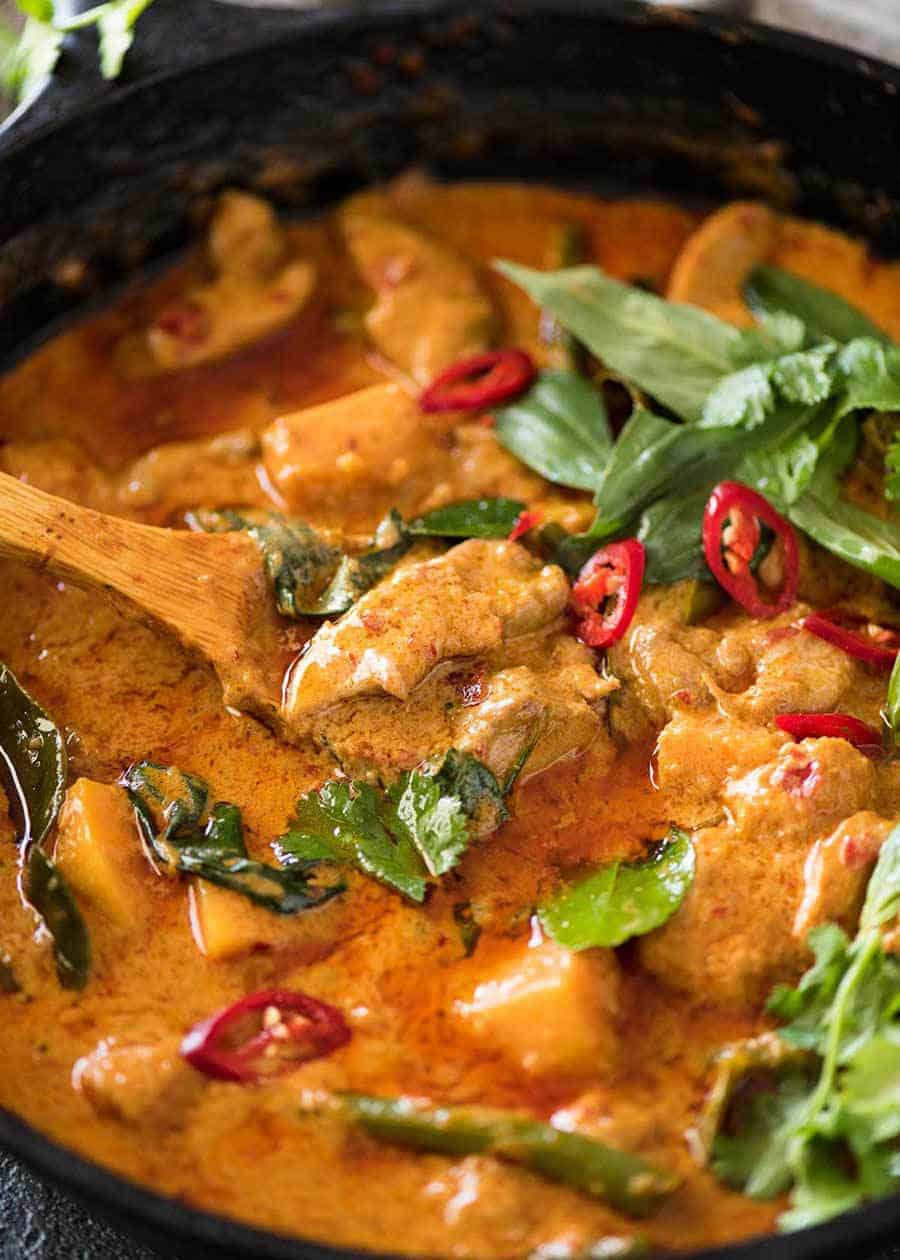
Thai Red Curry Chicken
A rich and aromatic Thai red curry with tender chicken, coconut milk, and vibrant vegetables. This dish is creamy, slightly spicy, and packed with authentic Thai flavors, perfect for a comforting weeknight dinner.
🥘Ingredients
- 1 lb (450g) boneless, skinless chicken thighs or breasts, cut into bite-sized pieces
- 2 tbsp red curry paste (adjust to taste for spice level)
- 1 can (14 oz) coconut milk, divided
- 1 cup chicken broth
- 1 tbsp fish sauce
- 1 tbsp brown sugar or palm sugar
- 1 red bell pepper, thinly sliced
- 1 small zucchini, sliced
- 1 cup bamboo shoots, drained
- 1 cup Thai basil leaves (or regular basil)
- 1 tbsp vegetable oil
- Steamed jasmine rice or rice noodles
- Lime wedges
- Fresh cilantro, chopped
- Thinly sliced red chili (optional)
👨🍳Directions
-
1 Heat vegetable oil in a large skillet or wok over medium-high heat. Add the chicken pieces and cook for 3-4 minutes until lightly browned but not fully cooked. Remove the chicken from the skillet and set aside.
-
2 In the same skillet, reduce heat to medium and add 2-3 tablespoons of coconut milk (the thick part from the top of the can). Stir in the red curry paste and cook for 1-2 minutes until fragrant.
-
3 Pour in the remaining coconut milk and chicken broth. Stir well to combine, then add the fish sauce and brown sugar. Bring the mixture to a gentle simmer.
-
4 Return the chicken to the skillet along with the bell pepper, zucchini, and bamboo shoots. Simmer for 10-12 minutes, stirring occasionally, until the chicken is cooked through and the vegetables are tender.
-
5 Stir in the Thai basil leaves and cook for an additional 1-2 minutes until wilted. Taste and adjust seasoning with more fish sauce or sugar if needed.
-
6 Serve the curry hot over steamed jasmine rice or rice noodles. Garnish with lime wedges, fresh cilantro, and sliced red chili if desired.
🔧Equipment
- Large skillet or wok
- Cutting board
- Chef’s knife
- Wooden spoon
- Measuring spoons
- Rice cooker or pot (for rice)
📊Nutrition Facts (per serving)
📝Notes
Watch Video Of How Thai Red Curry Chicken Works
This Thai curry chicken recipe is one of those foolproof dishes that always delivers, no matter the occasion. It’s rich, flavorful, and easy to scale up for a crowd, making it perfect for family dinners or gatherings where you want something impressive without the fuss. Plus, the balance of creamy coconut milk, aromatic spices, and tender chicken makes it a crowd-pleaser every single time.
❓ Frequently Asked Questions About Thai Red Curry Chicken
1. What type of curry paste should I use for Thai curry chicken?
You can use red, green, or yellow curry paste depending on your preference. Red curry paste is slightly spicier and has a rich, deep flavor, green curry paste is fresh and aromatic with a bright heat, while yellow curry paste is milder and slightly sweet. Each type will give your dish a distinct taste, so choose based on the flavor profile you enjoy.
2. Can I make Thai curry chicken without coconut milk?
While coconut milk is a key ingredient in traditional Thai curry, you can substitute it with alternatives like coconut cream (for a richer texture), almond milk (for a lighter option), or even a mix of chicken broth and a little yogurt for creaminess. However, the flavor and texture will differ from the classic version.
3. How do I adjust the spiciness level of the curry?
To reduce the heat, use less curry paste or add a touch of sugar, honey, or coconut milk to balance the spice. For extra heat, increase the amount of curry paste, add fresh chili peppers, or include a dash of chili flakes. Taste as you go to achieve your desired spice level.
4. What vegetables work best in Thai curry chicken?
Common vegetables include bell peppers, bamboo shoots, Thai eggplant, zucchini, carrots, and green beans. You can also add leafy greens like spinach or bok choy toward the end of cooking. Choose vegetables that hold their texture well when simmered, and cut them into even pieces for consistent cooking.
5. Can I prepare Thai curry chicken in advance?
Yes! Thai curry chicken tastes even better the next day as the flavors meld together. Store it in an airtight container in the refrigerator for up to 3 days or freeze it for up to 3 months. Reheat gently on the stove or in the microwave, adding a splash of water or coconut milk if it thickens too much.
