chicken ramen recipe

The Best chicken ramen recipe
Chicken ramen is one of those dishes that feels like a warm hug for your soul, especially on a cooler day or when you’re craving something hearty but still comforting. I’ve been making it for years—sometimes for my kids who love their noodles soft and saucy, sometimes for a weeknight dinner when I need something quick but satisfying, and always for when we’re hosting guests and want something that feels special but isn’t overly fancy. It’s the kind of meal that lets you slow down just a little, enjoy the flavors, and still feel like you’re doing something good for your family. My kids swear by it—they’ll eat it every time, no matter what else is on the menu. It’s that kind of dish that doesn’t just fill your plate, it fills your heart.
What I love most about this recipe is how adaptable it is. You can make it a simple, everyday meal or turn it into something extra special with a few extra touches—like adding fresh herbs or a sprinkle of sesame seeds. It’s also surprisingly healthy for what it is. The broth isn’t heavy with salt or sugar, and the chicken is lean, packed with protein. The veggies add fiber and nutrients, and the whole thing is balanced with a mix of textures—soft noodles, tender chicken, and crisp bits of veggie. It’s not just a comfort food; it’s a meal that actually does good things for you without feeling like a sacrifice. And the best part? It’s easy to customize. If you have a favorite veggie or a different protein, you can swap it in and still keep all the cozy, satisfying elements. My family loves it because it’s always there—ready to be made with whatever we have on hand, but always delicious no matter how it’s prepared.
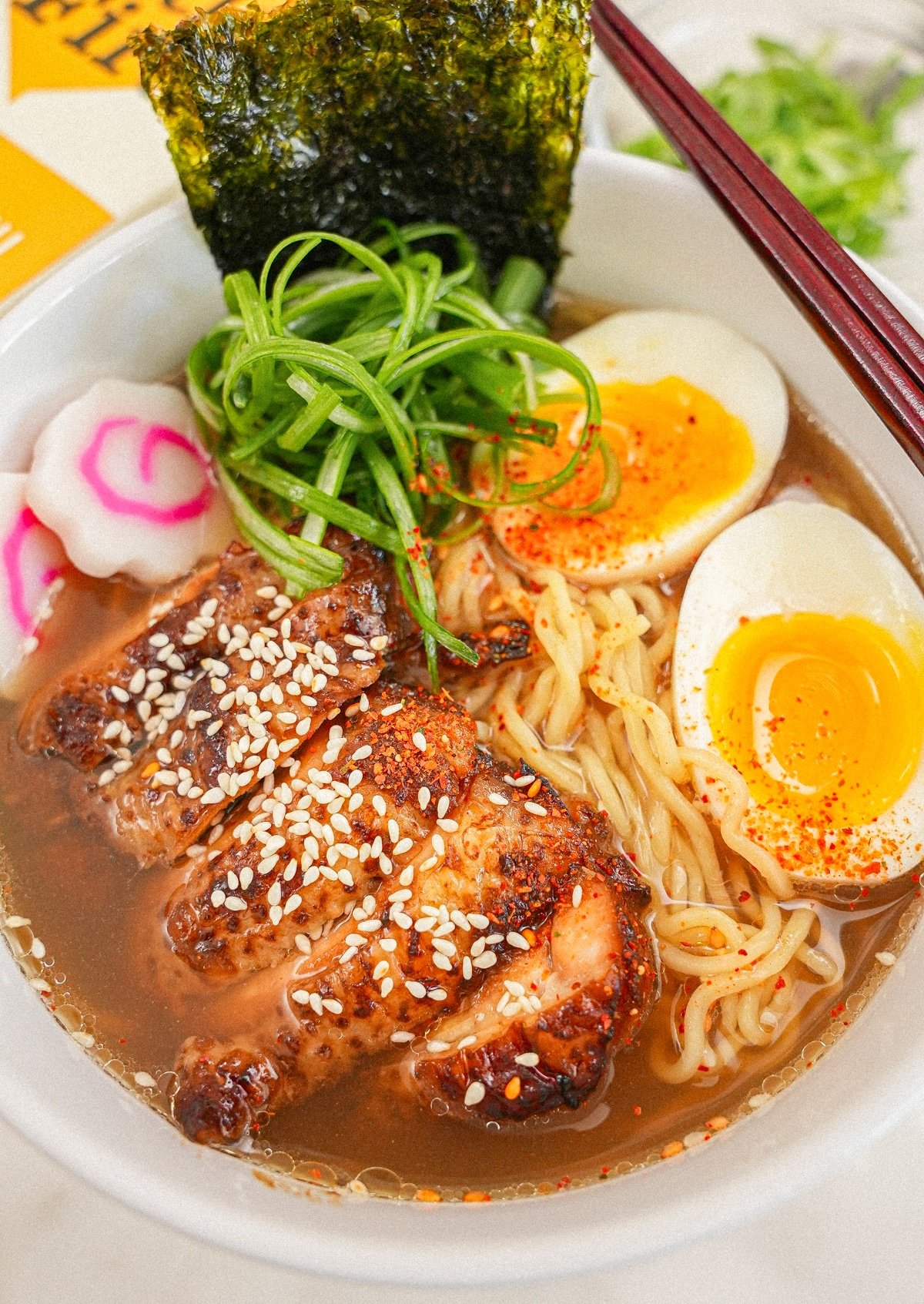
Classic Chicken Ramen
A comforting bowl of homemade chicken ramen with rich broth, tender chicken, and customizable toppings for a satisfying meal. This recipe is a must-try for any occasion.
🥘Ingredients
- 4 cups chicken broth
- 1 tbsp soy sauce
- 1 tbsp sesame oil
- 1 tbsp minced garlic
- 1 tbsp grated ginger
- 1 tsp red pepper flakes (optional)
- 1 cup shredded cooked chicken breast
- 8 oz ramen noodles (uncooked)
- 1 tbsp vegetable oil
- 1 cup sliced green onions
- 1/2 cup chopped cilantro
- 1/2 cup sliced mushrooms
- 1/2 cup diced bell peppers
- 1/2 cup shredded carrots
- 1/2 cup corn kernels
- 1/2 cup sliced avocado (optional)
- 1/4 cup crumbled blue cheese or feta (optional)
- 1/4 cup sliced almonds or sesame seeds
👨🍳Directions
-
1 Cook the chicken breast in a pan with 1 tbsp oil over medium heat until fully cooked (63°C/145°F), then shred with forks. Set aside.
-
2 In a large pot, bring chicken broth to a boil. Reduce heat, add soy sauce, sesame oil, minced garlic, ginger, and red pepper flakes. Simmer for 10 minutes.
-
3 While the broth simmers, boil ramen noodles according to package instructions, drain, and rinse with cold water. Toss with 1 tbsp oil to prevent sticking.
-
4 Divide noodles evenly among serving bowls. Pour hot broth over noodles, then top with shredded chicken.
-
5 Sprinkle sliced green onions, chopped cilantro, mushrooms, bell peppers, carrots, corn, avocado, and optional toppings over each bowl.
🔧Equipment
- Large pot
- Medium saucepan
- Mixing bowls
- Knife and cutting board
- Cutting board
- Colander
- Serving bowls
- Wooden spoon
- Measuring cups and spoons
📊Nutrition Facts (per serving)
📝Notes
Watch Video Of How Classic Chicken Ramen Works
This chicken ramen recipe is always a solid choice for any occasion because it’s hearty enough to feed a crowd while keeping things simple and comforting. It’s perfect for family gatherings—whether you’re hosting a casual weeknight dinner or a weekend potluck—because it’s easy to scale up without losing flavor, and the broth cooks slowly, letting the chicken and spices meld together into something truly satisfying. Plus, it’s a great way to stretch a meal without extra effort, and the leftovers keep well for another day.
❓ Frequently Asked Questions About Chicken Ramen
What is the key difference between traditional Japanese ramen and the chicken ramen recipe I’m trying to make?
The key difference lies in the broth and ingredients. Traditional Japanese ramen often uses pork or beef broth with a rich, umami base, while chicken ramen typically uses a lighter, more aromatic chicken-based broth infused with garlic, ginger, and sometimes soy sauce or miso. The chicken ramen recipe I’m referring to often incorporates a clear, flavorful stock with added aromatics like star anise, fennel, and sometimes a touch of corn or egg for extra richness.
Why does the recipe call for a whole chicken rather than just chicken thighs or breasts?
Using a whole chicken provides a more flavorful, balanced broth since it includes bones, skin, and connective tissue. The bones contribute gelatin for a thicker, more savory broth, while the skin adds depth. Chicken thighs and breasts alone won’t yield the same depth of flavor or richness, especially if you’re making a clear or semi-clear broth. The skin can also be used for crispy fried chicken if you want an additional component.
How do I ensure my chicken ramen broth stays clear and not cloudy?
To keep the broth clear, follow these steps: 1. Use a high-quality chicken stock or make it from scratch using bone-in, skin-on chicken parts (like thighs and drumsticks). 2. Skim off any fat and impurities as it simmers—this prevents cloudiness. 3. Avoid overcooking the chicken; remove it from the pot once it’s cooked through (about 15–20 minutes) and strain the broth. 4. If the broth turns slightly yellow or cloudy, strain it through a fine-mesh sieve or cheesecloth for a smoother finish. 5. Adding a splash of rice vinegar or a pinch of salt at the end can also help clarify it slightly.
Can I substitute any of the aromatics (like star anise or ginger) in the recipe, and if so, what are the good alternatives?
Yes, you can adjust aromatics based on preference, but here are some common substitutions: – Star anise → Substitute with 1 tsp whole cloves or a pinch of cinnamon for warmth. – Fennel seeds → Use ½ tsp anise seeds or a pinch of fennel powder (if available). – Ginger → Fresh ginger is best, but you can use ½ tsp ground ginger if fresh isn’t available. – Garlic → If using powdered garlic, use ½ the amount (e.g., 3–4 cloves fresh = ½ tsp powder). – Miso paste → Adds depth, but if you don’t have it, a splash of soy sauce or a pinch of MSG can mimic its savory umami.
What should I do if the ramen noodles turn out mushy or too firm after cooking?
If your noodles are mushy: – Undercooked noodles: Boil them in fresh, salted water for 1–2 minutes longer than the package instructions (check the packet for exact timing). – Overcooked noodles: If they’re already cooked but still firm, they may have absorbed too much broth. Drain them well, rinse with cold water, and serve immediately with extra broth or sauce.
If your noodles are too firm: – Add a splash of broth before serving to soften them slightly. – Use fresh, high-quality noodles—some brands (like ramen noodles) are pre-cooked and can be added directly to the broth for a softer texture. – Adjust cooking time: If the broth is very hot, the noodles may cook faster. Reduce heat slightly or add them in stages.
How can I make this chicken ramen more flavorful without adding extra ingredients?
Enhance the flavor naturally with these simple tweaks: – Deglaze the pan with a splash of soy sauce, sesame oil, or a splash of vinegar (like rice vinegar or apple cider) after cooking the chicken to deepen the broth’s umami. – Add a splash of fish sauce (½–1 tsp) for a salty, savory punch without overpowering the dish. – Toast whole spices (like star anise or cinnamon) in a dry pan before adding them to the broth for richer aromas. – Use a splash of coconut milk or light cream at the end for richness and a velvety texture. – Finish with fresh herbs like cilantro, green onions, or Thai basil for brightness.