recipe for chicken bone broth

The Best recipe for chicken bone broth
I’ve been making chicken bone broth for years, not just because it’s a staple in my kitchen but because it’s something my whole family actually enjoys—even my picky kids. There’s something about the deep, savory flavor that makes everything taste richer, and honestly, it’s one of those things that feels like a little luxury without costing a fortune. I started making it because I wanted something nourishing for my kids, especially when they were growing through those tough phases where picky eating can be a real struggle. This isn’t just broth—it’s a base for soups, stews, and even sauces that make meals feel special, whether it’s for a simple weeknight dinner or a cozy family meal on a cold night. Plus, there’s something comforting about knowing that every spoonful is packed with minerals and collagen that help keep us healthy, especially when we’re dealing with colds or just need extra energy.
My family loves it because it’s so versatile. We use it in everything—soups, rice dishes, marinades, even as a base for smoothies (yes, really). My kids will eat it straight up with a spoon if it’s the only thing on the table, and honestly, it’s a game-changer for meals when we’re short on time but still want something wholesome. I love that it’s a slow-cooked process, so it’s not just quick and easy—it’s something that feels like a little investment in flavor and nutrition. And the health benefits? Well, bone broth is loaded with amino acids, glycine, and other compounds that support gut health, joint health, and even immune function. It’s like giving your body a little boost without any of the fuss. Plus, it’s so easy to make in bulk and store for weeks, so you always have a pantry staple on hand. It’s the kind of recipe that feels like a no-brainer—something you’ll want to keep making, no matter the occasion.
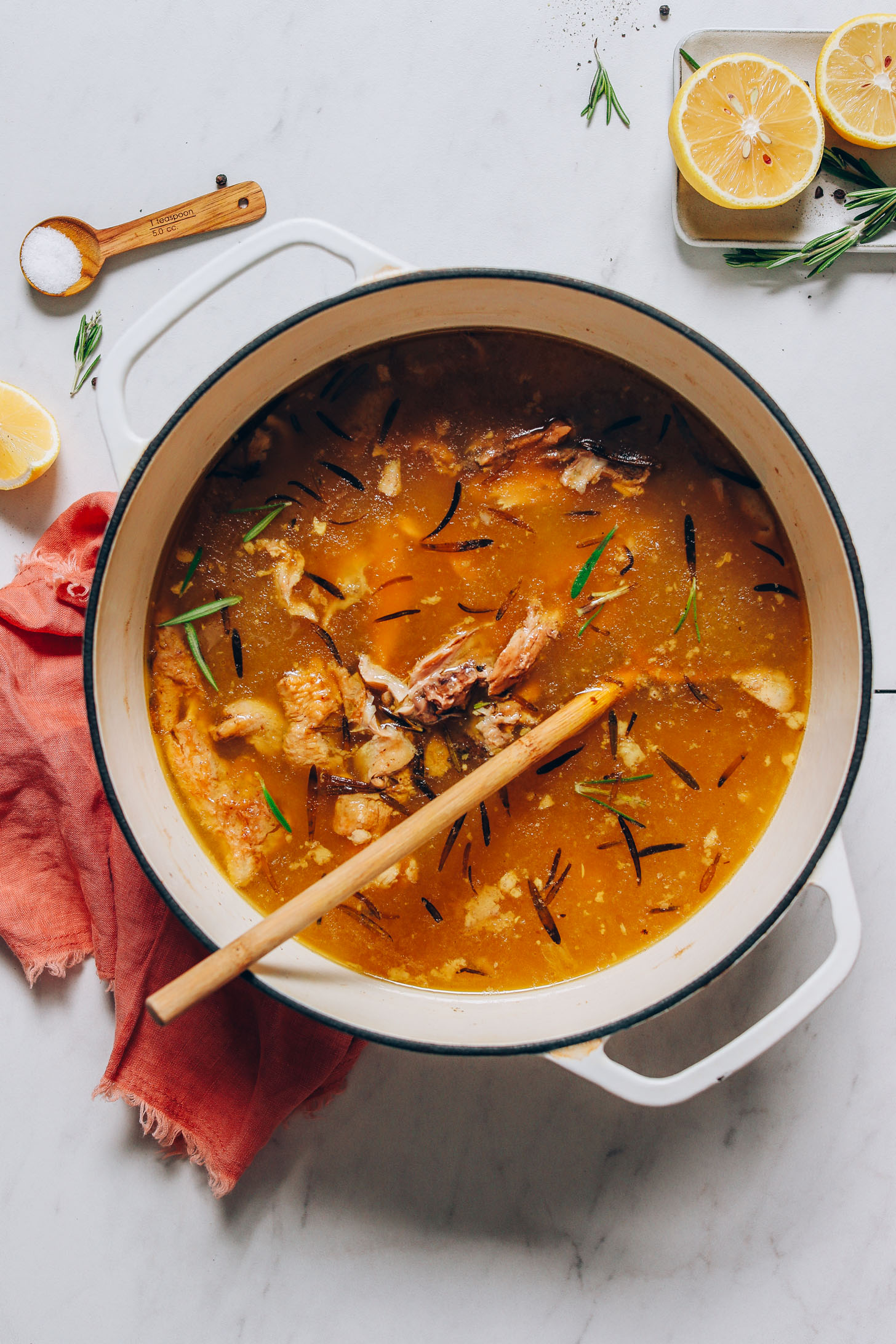
Homemade Chicken Bone Broth
A rich, flavorful bone broth made from chicken bones and vegetables, perfect for soups, stews, and sauces. Low in calories and packed with nutrients.
🥘Ingredients
- 4 lbs chicken bones (necks, backs, or carcasses)
- 1 lb chicken feet (optional)
- 1 large onion, quartered
- 3 carrots, chopped
- 3 celery stalks, chopped
- 5 garlic cloves
- 1 bay leaf
- 1 tsp black peppercorns
- 1 tsp sea salt (or to taste)
- 1 cup apple cider vinegar (or white vinegar)
- 8 cups cold water
- 1 tbsp whole wheat pasta or barley (for extra nutrients)
- 1 cup parsley or other herbs (for garnish)
👨🍳Directions
-
1 Rinse the chicken bones thoroughly under cold water to remove any blood or debris. Place them in a large stockpot.
-
2 Add the onion, carrots, celery, garlic, bay leaf, peppercorns, salt, and vinegar to the pot. Stir gently to combine.
-
3 Pour cold water over the bones and vegetables, ensuring they are fully submerged. Add chicken feet if using.
-
4 Bring the mixture to a boil over high heat, then reduce the heat to a simmer. Skim off any foam or fat that rises to the surface.
-
5 Simmer uncovered for 3 hours, or until the bones are tender and the broth has reduced slightly. Stir occasionally to prevent sticking.
-
6 Remove the pot from heat and let it cool slightly. Use a fine-mesh strainer to remove the bones and vegetables. Press the solids through the strainer with a spoon or clean kitchen towel to extract as much broth as possible.
-
7 Strain the broth through a cheesecloth or fine sieve into a clean container. Discard the solids. If desired, add pasta or barley during the simmering process for extra nutrients.
-
8 Let the broth cool completely before storing it in airtight containers. Refrigerate for up to 5 days or freeze for up to 3 months.
🔧Equipment
- Large stockpot or Dutch oven
- Wooden spoon or silicone spatula
- Fine-mesh strainer
- Cheesecloth or fine sieve
- Large bowl or container for storage
📊Nutrition Facts (per serving)
📝Notes
Watch Video Of How Homemade Chicken Bone Broth Works
This chicken bone broth recipe is always a solid choice for any gathering because it’s simple to make in bulk and tastes even better the next day—no one will guess it’s just leftovers repurposed. It’s the perfect base for soups, stews, or even just a warm bowl of broth to soak your bones in, and it keeps family and guests happy with its rich, comforting flavor. Plus, it’s a great way to use up extra chicken and bones without wasting anything.
❓ Frequently Asked Questions About Chicken Bone Broth
How long should I simmer chicken bone broth for to get the best flavor and nutrients?
For the best flavor and maximum nutrient extraction, simmer your chicken bone broth for at least 6–8 hours on low heat. If possible, let it reduce further for another 2–4 hours to concentrate the flavors. Longer simmering (up to 12 hours) deepens the richness, but avoid boiling vigorously, as it can cause the broth to turn cloudy or lose some collagen.
—
What types of bones are best for homemade chicken bone broth?
The best bones for broth include whole chicken carcasses, chicken necks, backs, wings, and legs (especially with skin on for extra fat). Chicken feet (if you have them) are also excellent for gelatin-rich broth. Avoid using bones from poultry that were treated with antibiotics or processed meat scraps, as they may contain additives.
—
Do I need to strain the broth before storing it?
Yes, straining is highly recommended for a smooth, clear broth. Use a fine-mesh strainer, cheesecloth, or a dedicated broth strainer to remove bones, cartilage, and skin. If you prefer a slightly cloudy broth, you can leave some small particles, but straining ensures a cleaner, more refined result.
—
Can I make chicken bone broth without a pressure cooker or slow cooker?
Absolutely! You can make broth on the stovetop by simmering bones in water for 6–12 hours on low heat. Just ensure the water doesn’t boil excessively, as it can cause the broth to foam or turn bitter. A Dutch oven or heavy-bottomed pot works well for this method.
—
How should I store homemade chicken bone broth to keep it fresh and flavorful?
Store broth in airtight containers in the fridge for up to 4–5 days or freeze it in portions (like ice cube trays) for 3–6 months. For the longest shelf life, freeze it in a single batch and thaw as needed. Thawed broth should be used within 24 hours to maintain freshness. Avoid re-freezing once thawed.