
chicken pastina soup recipe

The Best chicken pastina soup recipe
Chicken pastina soup is one of those simple dishes that feels like a hug in a bowl. I first made it years ago when my kids were little, and it became their favorite comfort food—something quick, filling, and so easy to customize. The pasta, which looks like tiny grains of wheat, holds onto the broth like a cozy blanket, and the chicken adds just the right amount of protein without being heavy. My husband and I always find ourselves reaching for it when we’re tired after a long day or when the kids are cranky and need something warm and nourishing. It’s not just a meal; it’s a way to make something wholesome and satisfying happen in minutes.
What I love most about this soup is how it works for any occasion. It’s perfect for a quick weeknight dinner when you’re short on time but still want to feed the family something hearty. It’s also ideal for gatherings—whether it’s a small family dinner or a potluck where you want to bring something that feels special but isn’t overly complicated. The kids love it because it’s fun to eat, and the adults enjoy how it’s packed with nutrients. The chicken provides lean protein, the pasta adds fiber and carbohydrates for energy, and the vegetables contribute vitamins and minerals. It’s a balanced dish that’s gentle on the stomach but still satisfying. Plus, the way the pasta swells in the broth makes it feel like a little treat, even if it’s just a simple bowl of soup. My kids and I have made it countless times, and it never fails to bring a smile to our faces.
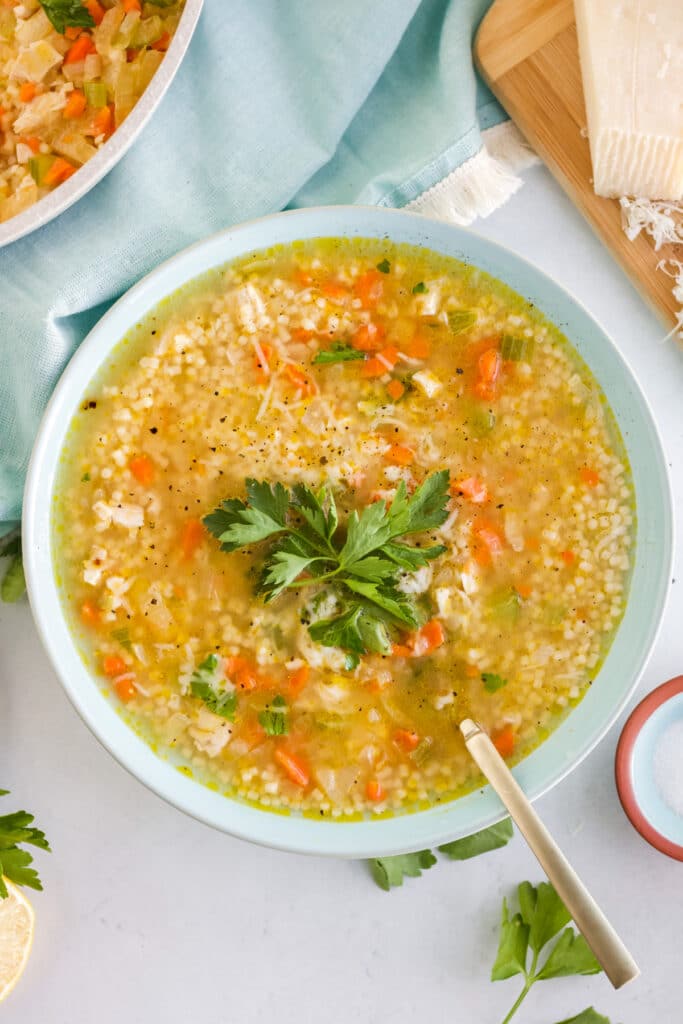
Chicken Pastina Soup
A comforting Italian-inspired soup featuring small pasta shapes (pastina) in a creamy chicken broth with tender chicken and fresh herbs. This recipe is a must-try for any occasion.
🥘Ingredients
- 2 boneless, skinless chicken breasts (about 1 lb)
- 1 tbsp olive oil
- 1 tsp dried thyme
- 1 tsp dried oregano
- 4 cups chicken broth
- 1 large onion, diced
- 3 cloves garlic, minced
- 1 carrot, diced
- 1 celery stalk, diced
- 1 cup whole milk
- 1 cup heavy cream (or half-and-half)
- 1 cup tomato sauce
- 1 bay leaf
- 1 cup small pasta shapes (pastina or ditalini)
- Salt to taste
- Fresh parsley, chopped (for garnish)
👨🍳Directions
-
1 In a pot, heat olive oil over medium heat. Season chicken breasts with thyme and oregano, then cook for 5-6 minutes per side until golden brown. Remove and set aside.
-
2 In the same pot, add diced onion, garlic, carrot, and celery. Sauté for 5 minutes until softened. Pour in chicken broth and bring to a boil.
-
3 Reduce heat to low, add the chicken breasts back into the pot, cover, and simmer for 15 minutes. Remove chicken, shred with forks, and return shredded chicken to the pot.
-
4 In a saucepan, heat milk and cream until warm. Stir in tomato sauce and bay leaf, then simmer for 5 minutes. Remove bay leaf.
-
5 Add the shredded chicken and pasta to the broth. Simmer for 8-10 minutes until pasta is tender. Stir in the warm cream mixture and season with salt.
-
6 Garnish with chopped parsley before serving.
🔧Equipment
- Large pot
- Medium saucepan
- Wooden spoon
- Fine-mesh strainer
- Knife and cutting board
- Measuring cups and spoons
📊Nutrition Facts (per serving)
📝Notes
Watch Video Of How Chicken Pastina Soup Works
This chicken pastina soup is always a lifesaver when you need something quick yet hearty for a family dinner or get-together. It’s comforting in a way that feels like a hug in a bowl, and the pasta’s bite makes it satisfying without being heavy. Plus, it’s easy to customize with extra veggies or a creamy twist, so it works for any occasion—whether you’re feeding kids, hosting guests, or just craving something simple yet delicious.
❓ Frequently Asked Questions About Chicken Pastina Soup
What is the key difference between traditional chicken pastina soup and other creamy soups like bisque?
Answer: Traditional chicken pastina soup is made with tiny, dry pasta shapes (pastina) that absorb broth directly, resulting in a lighter, less creamy texture compared to bisques, which rely on a roux or cream base for richness. The key difference lies in the pasta’s role—pastina dissolves into a velvety, broth-infused consistency, while bisques use thickened ingredients like roux or pureed vegetables for a smoother, creamier finish.
—
Why does the recipe call for a stock cube instead of making fresh chicken stock from scratch?
Answer: Using a stock cube (like Knorr) simplifies the process—it ensures consistent flavor, reduces prep time, and avoids potential inconsistencies from homemade stock (e.g., overcooking or uneven seasoning). For best results, dissolve the cube in hot water before adding to the broth to fully integrate the flavors. If you prefer homemade stock, simmer bones and veggies for at least 60 minutes for depth.
—
Can I substitute any of the vegetables in the recipe, and if so, which ones work best?
Answer: Yes! You can swap carrots and celery for onions, garlic, or leeks (add them later to avoid bitterness). For extra flavor, include fresh herbs like parsley or thyme or a splash of white wine (deglaze the pan before adding broth). Avoid overly pungent veggies like jalapeños or radishes, as they may overpower the soup. A small piece of frozen peas (added at the end) adds color and texture.
—
How do I prevent the pasta from turning mushy or sticking together in the soup?
Answer: The secret is cooking the pasta separately and adding it last. First, boil the tiny pastina shapes in salted water for 2–3 minutes (they should still have a slight bite). Drain them, then toss with a little olive oil to prevent clumping. Stir them gently into the simmering broth just before serving—this ensures they stay intact while infusing flavor.
—
What’s the best way to serve this soup for maximum freshness and presentation?
Answer: For a restaurant-worthy presentation, serve the soup in individual bowls with a drizzle of olive oil, a sprinkle of fresh parsley or chives, and a crusty bread roll on the side. For extra richness, top with crumbled feta, a fried egg, or a dollop of crème fraîche. To keep it fresh, store leftovers in an airtight container and reheat gently with a splash of broth to avoid thickening. Garnish immediately before serving.
