
chicken panang curry recipe

The Best chicken panang curry recipe
Oh, this Chicken Panang Curry is one of those rare recipes that feels like coming home every time I make it. I’ve been making it since my mom taught me how—it’s that kind of dish that makes your kitchen smell like comfort without being heavy, and it’s something my kids actually ask for more than once a week. The rich, spicy-sweet sauce clings to the chicken perfectly, and the coconut milk gives it that creamy depth that makes it feel indulgent but still balanced. It’s not just food; it’s a taste of Southeast Asia that my whole family loves, whether it’s for a casual weeknight dinner or a special gathering where everyone wants seconds. Plus, it’s got that little extra something that makes it feel like a treat without the guilt—because even though it’s packed with flavor, it’s still healthy in a way that feels satisfying.
My kids have grown up eating this, and honestly, they’d rather have Chicken Panang than mac and cheese sometimes. It’s not just the chicken—it’s the way the curry sauce coats every bite and the way it pairs so well with rice or naan. I love that it’s adaptable too; you can make it spicier if you want or milder if you’re not feeling it, and it still tastes great. And the health perks? Well, chicken is lean protein, and the coconut milk adds healthy fats that keep you full, while the spices like turmeric and ginger give it anti-inflammatory benefits. It’s not some fussy recipe, but it’s something that feels special when you sit down to eat it, whether it’s for a family meal or just because you’re craving something warm and flavorful. My husband always says it’s the one curry he can’t get enough of, and I totally understand why.
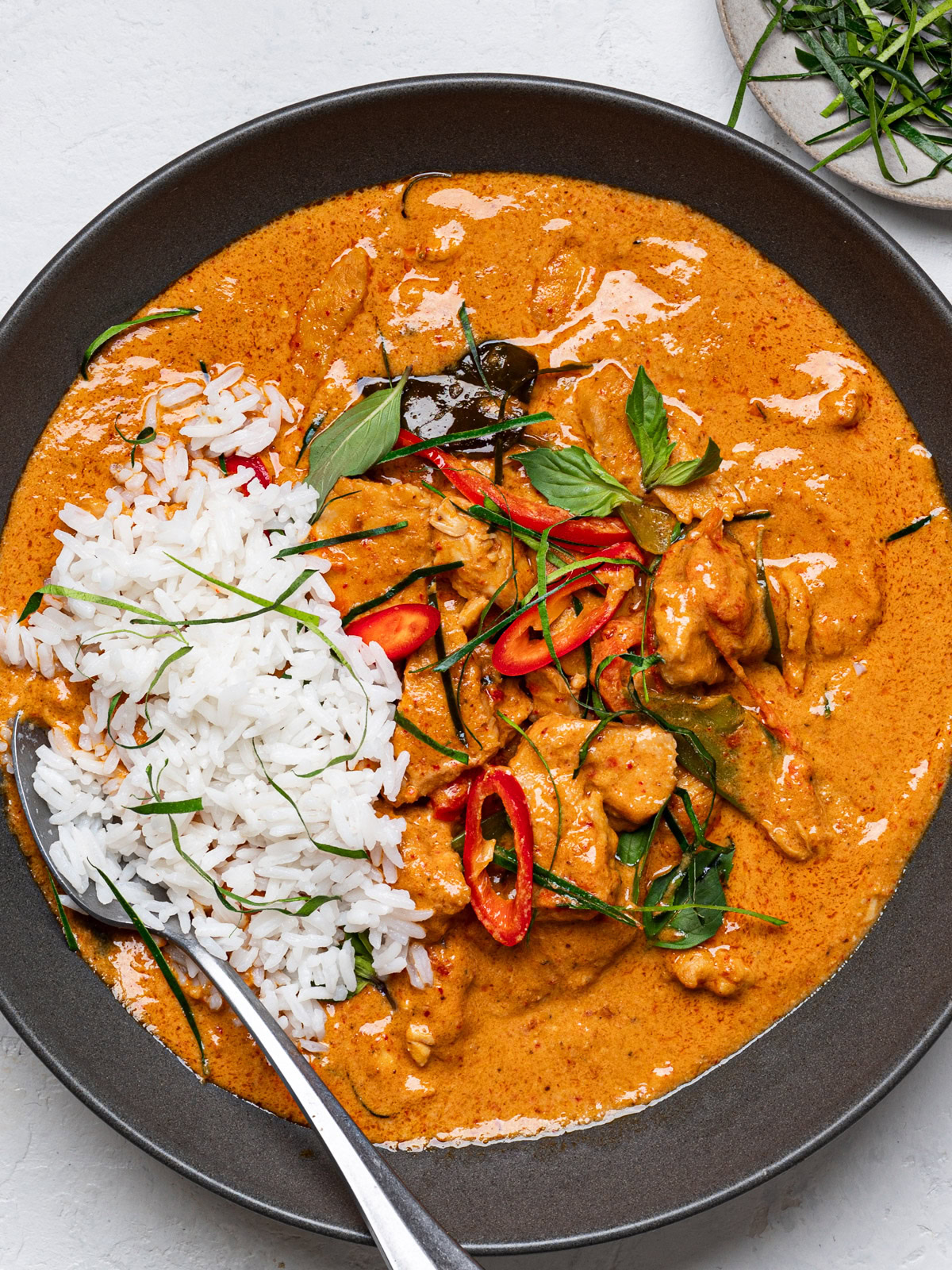
Chicken Panang Curry
A rich and aromatic Thai curry featuring tender chicken in a spicy, coconut-based sauce with peanuts and fresh herbs. This recipe is a must-try for any occasion.
🥘Ingredients
- 2 tbsp coconut oil
- 1 large onion, finely chopped
- 4 cloves garlic, minced
- 2 tbsp Panang curry paste (or 1 tbsp each of red and green curry pastes)
- 1 can (14 oz) coconut milk
- 1 can (14 oz) crushed tomatoes
- 1 tbsp fish sauce
- 1 tsp sugar
- 1 tsp ground ginger
- 1 stalk lemongrass, bruised and cut into 2-inch pieces
- 2-3 Thai chilies, finely chopped (adjust to taste)
- 1 cup chicken broth
- 4 boneless, skinless chicken thighs or breasts, cut into bite-sized pieces
- 1 tbsp soy sauce
- 1 tsp turmeric
- 1 tsp salt
- 1 cup crushed peanuts
- 1/4 cup fresh cilantro, chopped
- 1 lime, cut into wedges
👨🍳Directions
-
1 In a bowl, mix chicken pieces with soy sauce, turmeric, and salt. Set aside.
-
2 In a skillet, heat coconut oil over medium heat. Add chopped onion and sauté until soft (about 3 mins).
-
3 Add minced garlic and Panang curry paste. Stir for 1 minute until fragrant.
-
4 Pour in coconut milk, crushed tomatoes, fish sauce, sugar, ginger, lemongrass, and chilies. Stir well and bring to a simmer.
-
5 Add chicken pieces to the skillet and cook for 10-12 minutes, stirring occasionally, until chicken is cooked through.
-
6 Pour in chicken broth and simmer for another 5 minutes. Adjust seasoning if needed.
-
7 Gently stir in crushed peanuts and cook for 1 minute. Remove from heat.
-
8 Garnish with chopped cilantro and lime wedges. Serve hot with steamed jasmine rice.
🔧Equipment
- Large skillet or deep pan
- Wooden spoon
- Mixing bowl
- Knife and cutting board
📊Nutrition Facts (per serving)
📝Notes
Watch Video Of How Chicken Panang Curry Works
This Chicken Panang Curry is always a crowd-pleaser because it’s rich, flavorful, and simple enough to make without stressing over fancy techniques. Whether you’re serving it for a casual family dinner or a larger gathering, the aromatic spices and tender chicken make it feel special without needing extra effort. Plus, it’s versatile enough to pair with rice or noodles, so you can adjust it to fit whatever’s already on the table.
❓ Frequently Asked Questions About Chicken Panang Curry
What is the key difference between Panang curry and other Thai curry types?
The key difference in Panang curry lies in its spice profile and ingredients. While many Thai curries use red or green chilies, coconut milk, and herbs, Panang curry incorporates whole dried chilies (like bird’s eye chilies in a paste) and a unique blend of spices including coriander seeds, cumin, and fenugreek, which give it a deeper, more complex flavor. It also traditionally includes lemongrass, galangal, and kaffir lime leaves, but sometimes skips the latter for a milder taste. The curry is often served with sticky rice and is known for its rich, slightly sweet, and aromatic taste.
—
Why does the curry taste different when using fresh vs. dried chilies?
Using fresh chilies in Panang curry adds a fresh, vibrant, and slightly tangy flavor, but it can also be too spicy or even bitter if not balanced properly. Fresh chilies contain more volatile oils that intensify heat quickly. On the other hand, dried chilies (like the ones used in the paste) provide a deeper, earthier, and more sustained heat with a milder initial bite. The paste method also allows for better control over spice intensity, as the dried chilies are blended with aromatic spices, oils, and sometimes sugar to balance sharpness. For the best results, some recipes call for a mix—using a portion of fresh chilies for brightness and the paste for depth.
—
Can I substitute coconut milk for another dairy or non-dairy milk in Panang curry?
While full-fat coconut milk is the traditional choice for Panang curry (it adds creaminess and richness), you can substitute it with other milks—but the texture and flavor will change. Here are some alternatives: – Heavy cream or half-and-half (for a richer, almost creamy texture, but may make the curry thicker). – Cashew cream (mix soaked cashews with water and a little salt; adds a neutral, velvety base). – Light coconut milk (use twice as much for a thinner consistency, but it lacks depth). – Chickpea or white bean broth (for a vegan option, but it won’t be as creamy). Note: If substituting, adjust the cooking time slightly—coconut milk curries often simmer longer for balance. The curry will still taste good, but the texture and richness will differ.
—
How do I adjust the spice level in Panang curry if it’s too hot?
Panang curry is already a bold curry, but if it’s too spicy, here’s how to tone it down without losing flavor: 1. Add more coconut milk or broth – This dilutes the heat while keeping the richness. 2. Stir in a splash of lime juice – The acidity cuts through the spice and brightens the dish. 3. Use coconut yogurt or coconut cream – A spoonful adds creaminess and mutes heat. 4. Reduce the amount of chili paste – If you’re making from scratch, less paste = less heat. 5. Add sugar or brown sugar – Balances the heat with caramelized sweetness. 6. Garnish with fresh herbs – Cilantro, Thai basil, or mint adds freshness to counteract spice. Pro tip: If the curry is extremely spicy, serve it with rice or noodles to absorb some of the heat.
—
What proteins work best in Panang curry, and how should I prepare them?
Panang curry is versatile and pairs well with a variety of proteins, but the best choices depend on texture and flavor. Here’s a breakdown: – Chicken or Turkey – Tender, mild, and absorbs the curry’s spices well. Marinate in soy sauce, garlic, ginger, and lime juice for 30 minutes before cooking. Sear in a hot pan or poach until fully cooked. – Pork (Shoulder or Belly) – Adds a savory, fall-off-the-bone quality. Slow-cook with the curry paste for 1.5–2 hours until fork-tender. – Fish or Shrimp – Works best in lighter versions (e.g., fish balls or shrimp). Cook quickly in the curry for 3–5 minutes to avoid overcooking. – Tofu or Tempeh – Great for vegetarian/vegan versions. Press, cube, and pan-fry before adding to the curry. – Beef (Flank or Short Rib) – Works if you simmer it slowly (2+ hours) to keep it tender. Tip: For proteins that absorb too much curry sauce, deglaze the pan with water or broth before adding the curry to prevent overcoating.
