
sweet and sour chicken sauce recipe

The Best sweet and sour chicken sauce recipe
Oh, sweet and sour chicken—this is one of those dishes that feels like a hug in a bowl. I made it growing up, and it’s always been a staple in my house, whether it’s for a quick weeknight dinner or a special occasion like a family gathering. There’s something about the balance of tangy, sweet, and slightly spicy flavors that makes it so satisfying, and it’s that kind of dish that everyone can enjoy—kids love it, and adults will keep coming back for seconds. It’s hearty enough to feel like a meal, but light enough that it doesn’t weigh you down. Plus, it’s versatile—you can serve it over rice, noodles, or even as a side with grilled meats, and it never fails to impress.
I love this recipe because it’s simple enough to make from scratch, but it’s also forgiving if you’re in a hurry. The homemade sauce is so much better than store-bought, and the way the chicken gets glazed in that sticky, glossy sauce is just pure comfort food. My kids have been eating it since they were little, and they’ll always ask for it when we’re having a big meal or just when they’re craving something familiar. It’s also a great way to sneak in some veggies—carrots, bell peppers, and sometimes even snap peas get tossed in, and no one even notices they’re there. Plus, the sauce itself is packed with vitamins from the carrots and peppers, and the protein from the chicken keeps you full longer than you’d expect. It’s the kind of dish that feels indulgent but isn’t too heavy on the calories, making it a solid pick for a balanced meal. And honestly? It’s one of those recipes that never gets old, whether you’re cooking for one person or a whole family.
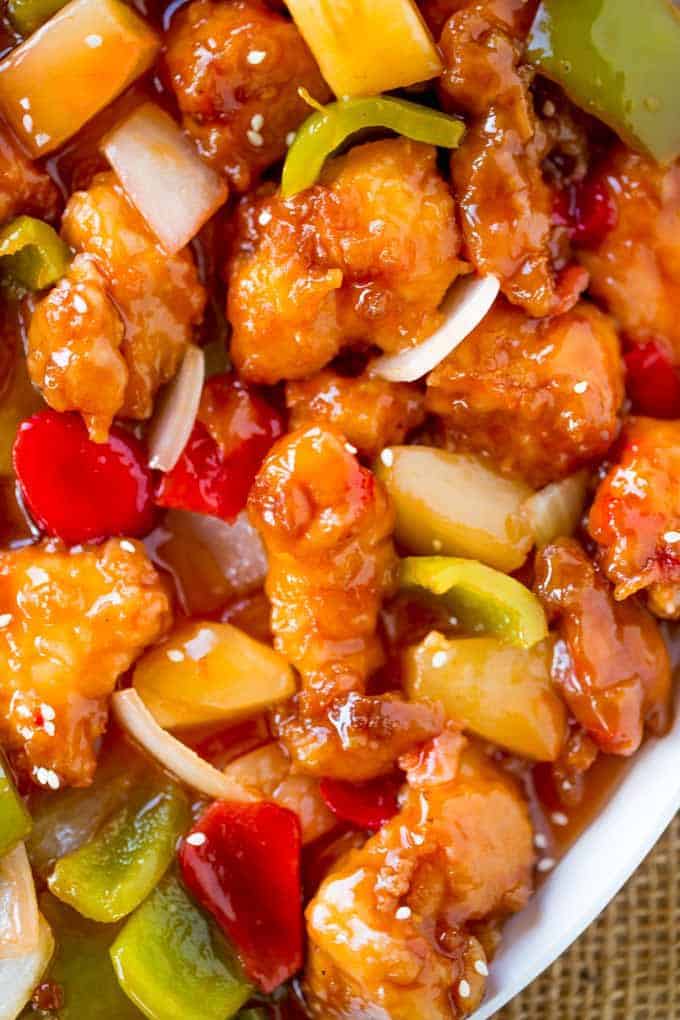
Sweet and Sour Chicken
A classic Chinese-inspired dish featuring tender chicken pieces coated in a vibrant, tangy-sweet sauce with pineapple and bell peppers. This recipe is a must-try for any occasion.
🥘Ingredients
- 1.5 lbs boneless chicken thighs or breasts (cut into bite-sized pieces)
- 1 tbsp cornstarch
- 1 tbsp soy sauce
- 1 cup ketchup
- ½ cup rice vinegar
- ½ cup granulated sugar
- ¼ cup vegetable oil
- 2 cloves garlic (minced)
- 1 tbsp ginger (grated)
- 1 red bell pepper (diced)
- 1 green bell pepper (diced)
- ½ cup pineapple chunks (fresh or canned)
- 1 tbsp tomato paste
- 1 tsp red pepper flakes (optional)
- 1 tsp salt
- Fresh cilantro (chopped)
- Extra pineapple chunks (for garnish)
- Sesame seeds (optional)
👨🍳Directions
-
1 Preheat a skillet or wok over medium-high heat. In a bowl, mix chicken pieces with cornstarch and soy sauce. Set aside.
-
2 In the same skillet, heat vegetable oil. Add chicken and cook until golden brown and cooked through (about 5-6 minutes). Remove chicken and set aside.
-
3 In the same skillet, add minced garlic and grated ginger. Sauté for 30 seconds until fragrant. Add diced bell peppers and pineapple chunks. Cook for 2-3 minutes.
-
4 Pour in ketchup, rice vinegar, granulated sugar, tomato paste, red pepper flakes, and salt. Stir well to combine. Bring to a simmer and cook for 3-4 minutes until slightly thickened.
-
5 Return chicken to the skillet, coating it evenly in the sauce. Simmer for another 2-3 minutes until heated through.
-
6 Garnish with chopped cilantro, extra pineapple chunks, and sesame seeds (if using). Serve hot with steamed rice.
🔧Equipment
- Large skillet or wok
- Mixing bowls
- Knife and cutting board
- Measuring cups and spoons
- Slotted spoon
📊Nutrition Facts (per serving)
📝Notes
Watch Video Of How Sweet and Sour Chicken Works
This sweet and sour chicken sauce is a simple yet foolproof way to elevate any meal, whether it’s a quick weeknight dinner or a crowd-pleasing dish for family gatherings. Its bright, tangy flavors balance perfectly with tender chicken, making it easy to customize with extra garlic, honey, or even a splash of vinegar if you like it more bold. It’s the kind of dish that feels special without the fuss, so it always comes through as a hit no matter the occasion.
❓ Frequently Asked Questions About Sweet and Sour Chicken
What is the best way to prepare sweet and sour chicken for the sauce to stay cohesive and not separate?
To ensure a smooth and cohesive sweet and sour chicken sauce, start by cooking the chicken thoroughly (either by frying or baking) and then setting it aside to cool slightly before adding it to the sauce. Use a heavy-bottomed saucepan or a deep skillet to heat the sauce gently over medium-low heat, stirring occasionally. Avoid boiling the sauce too vigorously, as this can cause it to separate. If the sauce thickens too much, you can thin it slightly with a little water or chicken broth. For extra stability, you can also stir in a small amount of cornstarch mixed with cold water before cooking the sauce to help bind it.
—
Can I use different types of chicken for this recipe, and if so, which ones work best?
Yes, you can use various types of chicken, but some work better than others for the sweet and sour flavor. Thighs and drumsticks are ideal because they stay juicy and flavorful even when cooked in a sauce. Chicken breasts can work if you cut them into bite-sized pieces and avoid overcooking them. For extra tenderness, you can also use chicken wings (if you prefer a crunchier texture) or shredded chicken from a rotisserie. Avoid using very lean cuts like fillets, as they can dry out quickly when exposed to the sauce’s high heat and acidity.
—
Why does my sweet and sour sauce turn out too thick or too thin, and how can I adjust it?
The thickness of sweet and sour sauce depends on the ingredients and cooking method. If it’s too thick, it can be adjusted by adding 1-2 tablespoons of warm water, chicken broth, or even a splash of apple cider vinegar (to balance acidity). For a smoother texture, you can also thin it with a cornstarch slurry (mix 1 tbsp cornstarch with 2 tbsp cold water, then stir into the sauce). If the sauce is too thin, reduce it over low heat until it reaches your desired consistency, stirring frequently to prevent burning. Avoid over-reducing it, as it may become grainy.
—
How can I make the sauce healthier without sacrificing its flavor?
You can modify the classic sweet and sour sauce to be lighter while keeping its bold flavor by making these substitutions: – Use less sugar—reduce it by half or opt for honey, agave, or a touch of stevia for natural sweetness. – Swap vinegar for lemon juice—it adds brightness without the same acidity, making the sauce less tangy. – Replace white vinegar with rice vinegar—it complements Asian flavors better. – Add a little ginger or garlic powder—enhances depth without extra calories. – Use a lighter oil like avocado or olive oil instead of vegetable oil. – Increase protein with veggies—add bell peppers, mushrooms, or snap peas for fiber and volume. – Skip the cornstarch—if you’re avoiding gluten, use a cornstarch-free thickener like arrowroot powder or a small amount of coconut aminos instead of soy sauce. – Use a lower-sodium soy sauce or a mix of soy sauce, coconut aminos, and a pinch of salt to reduce sodium.
—
What common mistakes should I avoid when making sweet and sour chicken?
Avoid these mistakes to ensure your sweet and sour chicken turns out perfectly: 1. Overcooking the chicken – It should be cooked until fully done but still tender. Overcooking makes it dry and tough. 2. Using too much sugar or vinegar – A balanced ratio is key. Too much sugar can make the sauce sticky and overly sweet, while too much vinegar can make it too tangy. 3. Skipping the cornstarch slurry – This helps thicken the sauce evenly. If you skip it, the sauce may stay thin or separate. 4. Cooking the sauce too hot – High heat can burn the sugar and vinegar, giving the sauce an unpleasant burnt taste. Cook gently over medium-low heat. 5. Not letting the sauce cool before adding chicken – If the sauce is too hot, the chicken can steam instead of fry, leading to a mushy texture. 6. Using the wrong type of chicken – Thin cuts like breast can dry out quickly, while thighs stay juicy. If using breast, cut it into small, even pieces. 7. Ignoring the sauce’s consistency – If it’s too thick, thin it with a little broth or water; if too thin, reduce it slowly. 8. Not seasoning properly – Salt and pepper should be added at the end to avoid overpowering the sauce. A pinch of black pepper and a dash of salt can enhance flavors.
