
chettinad chicken recipe

The Best chettinad chicken recipe
Chettinad chicken is one of those dishes that just makes my heart feel warm every time I pull it off the stove. I grew up in a household where food wasn’t just about filling the plate—it was about love, tradition, and making sure every meal felt special, even on the busiest days. This recipe isn’t just chicken; it’s a taste of Kerala’s bold flavors that my kids have come to adore. They’ll beg for seconds because the spices dance on their tongues in a way that’s both comforting and exciting, like a little adventure in every bite. It’s not just a meal; it’s something we pull out for family gatherings, birthdays, or just lazy Sundays when we want to feel like we’re celebrating.
My family loves it because it’s hearty yet balanced—no heavy gravies that make you sluggish, just a perfect blend of spices that keep things interesting without overpowering. And the best part? It’s versatile. We serve it over rice, with naan, or even as a sandwich filling, but honestly, it’s best straight from the pot with some steamed rice. My kids have even started asking for it at school lunches because it’s something they know will taste good, no matter how simple the setting. Plus, it’s got that little something extra—smoky, spicy, and deeply flavorful—that makes every bite feel like a little treat. And the health benefits? Well, the spices in Chettinad chicken—like black pepper, turmeric, and ginger—are packed with antioxidants and anti-inflammatory properties. It’s not just delicious; it’s nourishing too, which is why I always make sure it’s a staple in our weekly rotation.
This recipe is perfect for any occasion. Whether it’s a casual weeknight dinner or a full-blown celebration, the rich, aromatic flavors make it feel special without needing a fancy setting. My kids will eat it straight from the pot, and my husband always says it’s the only dish that makes him feel like he’s really tasting something authentic. And the best part? It’s easy to make ahead and reheats beautifully, so you can prep it in advance and still enjoy that fresh, home-cooked taste. It’s a dish that grows on you, both in the kitchen and in the kitchen table.
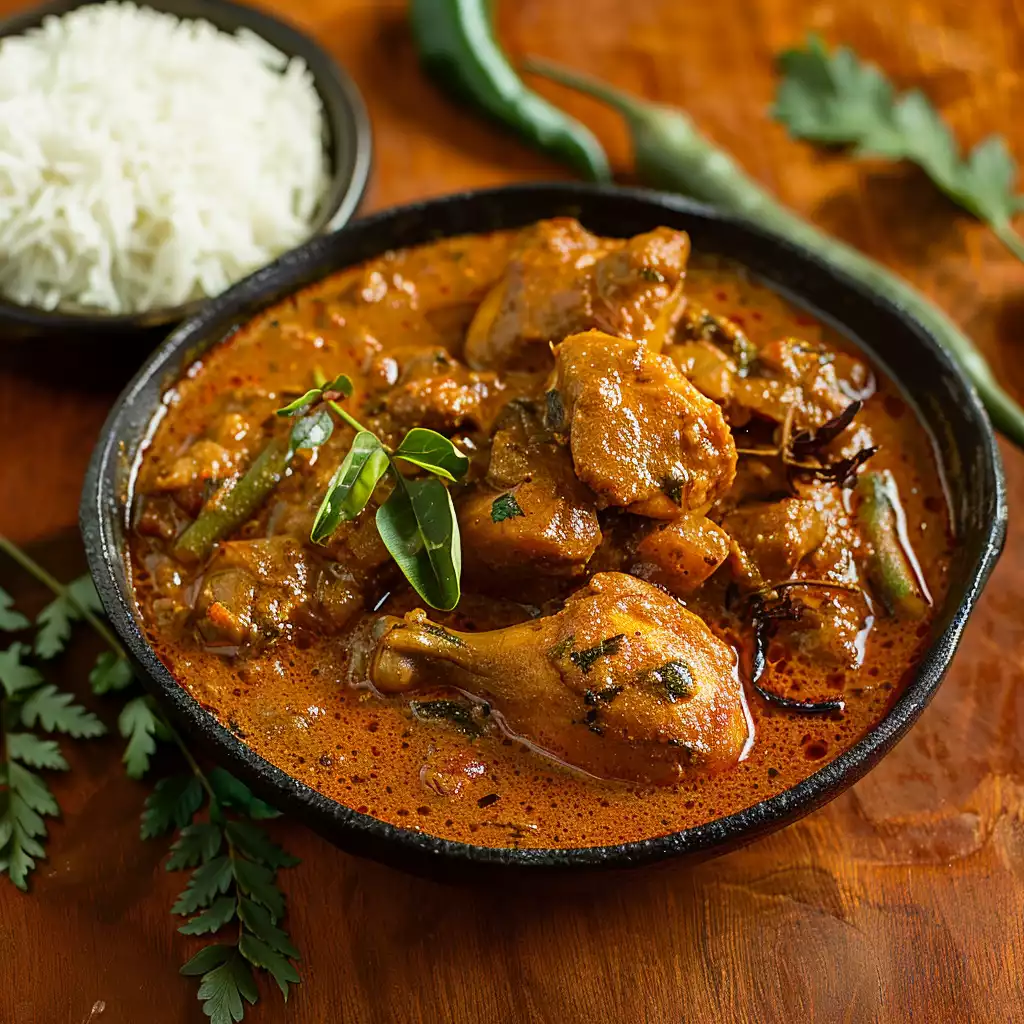
Chettinad Chicken
A rich, aromatic, and spicy South Indian dish featuring tender chicken cooked in a vibrant blend of Chettinad spices, including black pepper, curry leaves, and coconut. Perfect for a flavorful weeknight meal.
🥘Ingredients
- 500g boneless chicken pieces (cut into bite-sized chunks)
- 1 tbsp oil
- 1 tsp turmeric powder
- 1 tsp red chili powder
- 1 tsp coriander powder
- 1 tsp cumin powder
- 1 tsp garam masala
- 1 tsp fenugreek leaves (kasuri methi)
- 1/2 cup grated coconut
- 1/2 cup chopped onions
- 2 cloves garlic
- 1-inch ginger
- 1/2 cup tomato puree
- 1 cup water
- 1 tbsp mustard oil
- 4-5 curry leaves
- 1/2 cup coconut milk
- 1/2 cup fresh cilantro (coriander leaves)
- 1/2 tsp black peppercorns (crushed)
- 1/2 tsp asafoetida (hing)
- 1 tsp salt (adjust to taste)
👨🍳Directions
-
1 In a bowl, mix chicken with turmeric, red chili powder, coriander powder, cumin powder, garam masala, fenugreek leaves, grated coconut, chopped onions, minced garlic, ginger, and salt. Set aside.
-
2 Heat mustard oil in a pan. Add crushed black peppercorns, asafoetida, and curry leaves. Sauté for 30 seconds. Add the marinated chicken and sauté for 5 minutes until lightly browned.
-
3 Pour in tomato puree and cook for 5 minutes until oil separates. Add 1 cup of water and simmer for 10 minutes until the sauce thickens.
-
4 Stir in coconut milk and cook for another 5 minutes. Add chopped cilantro and adjust salt if needed. Remove from heat.
-
5 Serve hot with steamed rice or roti.
🔧Equipment
- Heavy-bottomed pan or pressure cooker
- Mixing bowls
- Blender (for tomato puree)
- Knife and cutting board
- Measuring spoons
📊Nutrition Facts (per serving)
📝Notes
Watch Video Of How Chettinad Chicken Works
This Chettinad chicken recipe is always a crowd-pleaser because the bold, spiced flavors cut through the richness of the dish without overpowering it—perfect for when you want to impress guests without fuss. It’s also incredibly versatile, whether you’re serving it at a casual family dinner or a bigger gathering, because the spices keep it warm and inviting, making it easy to feed everyone comfortably. Plus, the tender chicken and aromatic blend make it a go-to for anyone who enjoys a little heat with every bite.
❓ Frequently Asked Questions About Chettinad Chicken
1. What is the unique flavor profile of Chettinad chicken, and why is it so popular?
Chettinad chicken is renowned for its bold, aromatic, and slightly spicy flavor, thanks to the traditional spices used in its preparation. Unlike many curries, it balances heat with a deep, smoky, and earthy taste, often featuring ingredients like black pepper, mustard seeds, curry leaves, and a blend of chili powders. The use of coconut milk, tamarind, and sometimes fermented ingredients like kallu (fermented rice) or kadala (black gram) adds complexity. Its rich, well-rounded taste makes it a favorite in Kerala and beyond, especially in restaurants like the famous Chettinad House in Mumbai.
—
2. What are the key ingredients in a classic Chettinad chicken recipe, and can you substitute any of them?
A traditional Chettinad chicken dish relies on a few signature ingredients: – Spices: Black peppercorns, mustard seeds, curry leaves, red chili powder, coriander powder, turmeric, and sometimes kallu or fermented kadala. – Aromatics: Onions, garlic, ginger, and green chilies. – Oils/Fats: Mustard oil (traditionally used) or coconut oil. – Proteins: Chicken (bone-in or boneless, marinated well). – Broth: Tamarind pulp, coconut milk, and sometimes tamarind water for tanginess.
Substitutions: – Replace mustard oil with coconut oil or vegetable oil (though the authentic taste will differ). – Use tamarind paste or lemon juice instead of tamarind pulp if unavailable. – For extra richness, add a splash of coconut cream or a pinch of ghee while cooking.
—
3. How long does it take to prepare Chettinad chicken, and what’s the best way to marinate the chicken?
Preparing Chettinad chicken can take 2–3 hours total, including marinating and cooking: – Marination (1–2 hours): Chicken needs a long, slow marinade (at least 1 hour, ideally overnight) in a spice paste of turmeric, red chili powder, coriander powder, black pepper, and sometimes kallu or fermented kadala. Adding ginger-garlic paste and lemon juice enhances flavor. – Cooking (45–60 minutes): The dish simmers in oil with whole spices (cardamom, cloves, cinnamon) and aromatics until the chicken is tender. The broth reduces to a thick gravy.
Pro tip: For deeper flavor, use bone-in chicken and cook it until the meat falls off the bone. If using boneless, add extra spices and simmer longer.
—
4. Can I make Chettinad chicken without tamarind, and what would be a good alternative?
Yes! Tamarind is traditional, but you can replace it with: – Lemon juice or vinegar (for tanginess, mix with a pinch of sugar). – Mango pulp (slightly sweeter, works well in a 1:1 ratio). – Tamarind water (if you have tamarind paste, extract the liquid). – Lime juice + a dash of sugar (to balance acidity).
Note: If substituting, adjust the sugar slightly to avoid an overly sweet or sour taste. The key is to keep the dish’s balance of sour, spicy, and aromatic notes.
—
5. What side dishes pair well with Chettinad chicken, and is it typically served with rice or dosa?
Chettinad chicken is often served with: – Steamed or basmati rice (the classic pairing, as the gravy is rich and tangy). – Coconut rice (sweet and fragrant, balancing the spice). – Rogan josh (another Kerala-style dish, if you’re in a festive mood). – Dosa or idli (less common, but possible—use a lighter rice batter and serve with coconut chutney).
Traditional combo: The dish is often enjoyed with appam (Kerala’s soft pancake) or steamed rice, along with a side of pickled onions or cucumber salad to cut through the richness. Avoid heavy curries or fried sides, as they’ll overpower the delicate flavors.
