
chicken and pork adobo recipe

The Best chicken and pork adobo recipe
Chicken and pork adobo is one of those recipes that feels like a warm hug in the kitchen—simple enough to make every time, but deep enough in flavor to make it feel like a special treat. I first fell in love with it years ago when my mom-in-law would bring it to family gatherings, and it wasn’t just the taste that stuck with me, but how effortlessly it brought people together. The tangy, slightly sweet sauce clings to the meat, making every bite rich and satisfying, and it’s something that feels like a comfort food classic. My kids have grown up eating it regularly, and they’ll always ask for seconds, especially when it’s served with steamed rice and a side of crispy fried plantains. It’s that kind of dish that doesn’t require perfection—just good ingredients and a little patience—and it never disappoints.
What makes this recipe so versatile is how it works for so many different occasions. Whether it’s a casual weeknight dinner after a long day or a meal for a bigger crowd at a holiday feast, adobo always rises to the occasion. My husband and I love making it on Sundays because it’s easy to prep ahead—just marinate the meat overnight—and then cook it slowly so the flavors meld together. My kids especially enjoy it because it’s hearty enough to fill them up, and the sauce is sweet enough to make even picky eaters happy. Plus, it’s packed with protein and healthy fats from the olive oil and vinegar, which keeps us full longer without overdoing it on carbs. It’s a dish that’s as nourishing as it is delicious, and that’s why I always keep it in my rotation.
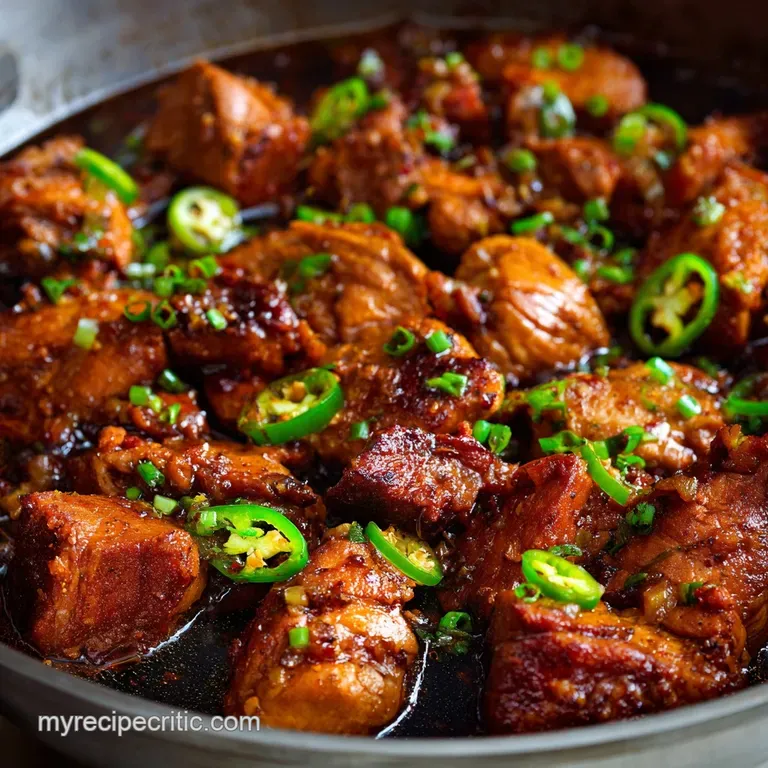
Chicken and Pork Adobo
A classic Filipino dish featuring tender chicken and pork marinated in a tangy, vinegar-based sauce with garlic, soy sauce, and black pepper. Perfect for a flavorful and comforting meal.
🥘Ingredients
- 1.5 lbs boneless chicken thighs
- 1.5 lbs pork shoulder, cut into chunks
- 3 cups soy sauce
- 2 cups vinegar (white or rice vinegar)
- 1 cup tomato sauce
- 12 cloves garlic, minced
- 1 tbsp black peppercorns, crushed
- 1 tsp red pepper flakes (optional)
- 1 cup water
- 1 onion, sliced
- 1 bell pepper, sliced
- 1 cup corn kernels (fresh or frozen)
- 1 cup sliced mushrooms
👨🍳Directions
-
1 In a large pot, combine soy sauce, vinegar, tomato sauce, minced garlic, crushed black peppercorns, red pepper flakes (if using), and water. Bring to a boil.
-
2 Add chicken and pork to the pot. Simmer uncovered for 25-30 minutes, or until meat is tender and sauce has thickened slightly.
-
3 If using optional ingredients, add sliced onion, bell pepper, corn, and mushrooms in the last 10 minutes of cooking.
-
4 Remove meat from the pot and set aside. Strain the sauce through a fine-mesh sieve to remove large chunks of garlic and peppercorns, then return the sauce to the pot. Simmer for another 5 minutes to concentrate flavors.
-
5 Serve the chicken and pork in the sauce over steamed rice.
-
undefined undefined
-
undefined undefined
-
undefined undefined
-
undefined undefined
🔧Equipment
- Large pot or deep skillet
- Mixing bowls
- Knife and cutting board
- Measuring cups and spoons
- Wooden spoon or spatula
📊Nutrition Facts (per serving)
📝Notes
Watch Video Of How Chicken and Pork Adobo Works
This chicken and pork adobo recipe is a simple yet foolproof way to bring warmth to any table, whether it’s a quick weeknight meal or a hearty dish for family gatherings. The tangy, savory sauce clings perfectly to the tender meat, making it easy to prep ahead and reheat, so you’re never stuck scrambling last-minute. It’s the kind of dish that feels special without needing fancy ingredients—just a little vinegar, garlic, and love—and it always brings everyone together.
❓ Frequently Asked Questions About Chicken and Pork Adobo
What is the key difference between traditional and modern variations of chicken and pork adobo?
In traditional Filipino adobo, the marinade is made with vinegar, garlic, bay leaves, and sometimes whole black peppercorns, giving it a tangy and slightly sharp flavor. Modern variations may include soy sauce, brown sugar, or even a splash of beer for depth, while still maintaining the core umami and savory notes. The cooking method also varies—some prefer slow-cooking for tenderness, while others opt for quick stir-frying or steaming.
—
Why does my adobo taste bland or lack depth, even if the ingredients seem right?
Several factors can make adobo taste flat: 1. Vinegar ratio – Too much vinegar can overpower the dish, while too little may leave it weak. A balanced mix (e.g., 1:1 vinegar to soy sauce) works best. 2. Under-seasoned meat – Even if you add salt, some meats (like pork) absorb less salt than others. Brining or marinating for 30+ minutes helps. 3. Overcooking – Adobo benefits from gentle cooking (steaming, slow simmering) to retain moisture and flavor. Overboiling can dry out the meat. 4. Missing key aromatics – Garlic, onions, and bay leaves are essential; skipping them weakens the dish. Fresh ginger can also add warmth. 5. Using expired or low-quality ingredients – Vinegar and soy sauce should be fresh; old spices lose potency.
—
Can I substitute soy sauce for tamarind in the adobo marinade?
No, tamarind is crucial for adobo’s signature tangy-sour flavor. Soy sauce provides saltiness and umami but lacks the bright, fermented acidity tamarind brings. If you must substitute, use 1:1 tamarind pulp + water (simmered to concentrate the juice) or a mix of vinegar + a pinch of sugar to replicate the tang. However, the dish will lose its signature depth.
—
How do I ensure the meat stays tender and doesn’t get mushy in adobo?
For chicken: – Marinate for 1–2 hours (or overnight for deeper flavor) to break down connective tissues. – Steam or poach (not boil) to avoid overcooking. A gentle simmer in the adobo sauce (15–20 mins) works best. – Add cornstarch slurry (1 tbsp cornstarch + 2 tbsp water) to the sauce before adding meat to thicken slightly and prevent mushiness.
For pork: – Use lean cuts (like pork shoulder or tenderloin) and slow-cook (2–3 hours at 160°F/71°C) to keep it juicy. – Brine the pork (1 tbsp salt + 1 tbsp sugar per pound of meat) for 30 minutes before cooking to retain moisture. – Avoid overcrowding the pot—cook in batches if needed.
—
Is it possible to make adobo without vinegar, and if so, what’s the best alternative?
Yes! If you’re avoiding vinegar, you can use: 1. Lemon juice or lime juice (1:1 ratio) – Brings acidity but may need extra salt. 2. Fermented black vinegar (common in Asian cooking) – Adds a complex, tangy depth. 3. Apple cider vinegar or white vinegar (if no other options) – Just reduce the amount slightly (½ cup instead of 1 cup). 4. A mix of soy sauce + a splash of water + sugar (e.g., 2 tbsp soy sauce + 1 tbsp sugar + 1 tsp water) to mimic tanginess.
Note: The dish will still be flavorful but may lack the traditional tang. Balance with extra garlic, ginger, and a pinch of sugar to compensate.
