
chicken piccata recipe white wine

The Best chicken piccata recipe white wine
Chicken piccata has always been one of my favorite dishes because it’s so simple yet feels special—like a dish that’s meant to be enjoyed without fuss. There’s something about the bright, tangy sauce that makes every bite feel fresh and lively, and the chicken comes out tender and golden when cooked just right. I started making it years ago when my kids were little, and they’d always ask for seconds because the sauce is so zesty and satisfying. It’s the kind of dish that feels like a little celebration every time you serve it, whether it’s for a casual weeknight dinner or a dinner party where everyone wants to impress.
My family loves this recipe because it’s easy to customize—you can adjust the wine to taste, whether it’s a crisp white like Sauvignon Blanc or something a little sweeter if you prefer. The kids especially like it because the sauce is sweet and tangy, not too heavy, and it pairs well with simple sides like roasted potatoes or a fresh salad. It’s also a great way to use up chicken that’s been on the bone or even leftovers, making it a practical dish for busy days. Plus, the health benefits are pretty solid—it’s got lean protein from the chicken, healthy fats from the olive oil, and a good dose of vitamins from the lemon and herbs. It’s not too heavy, but it still feels indulgent, which is why I always keep it in my rotation.
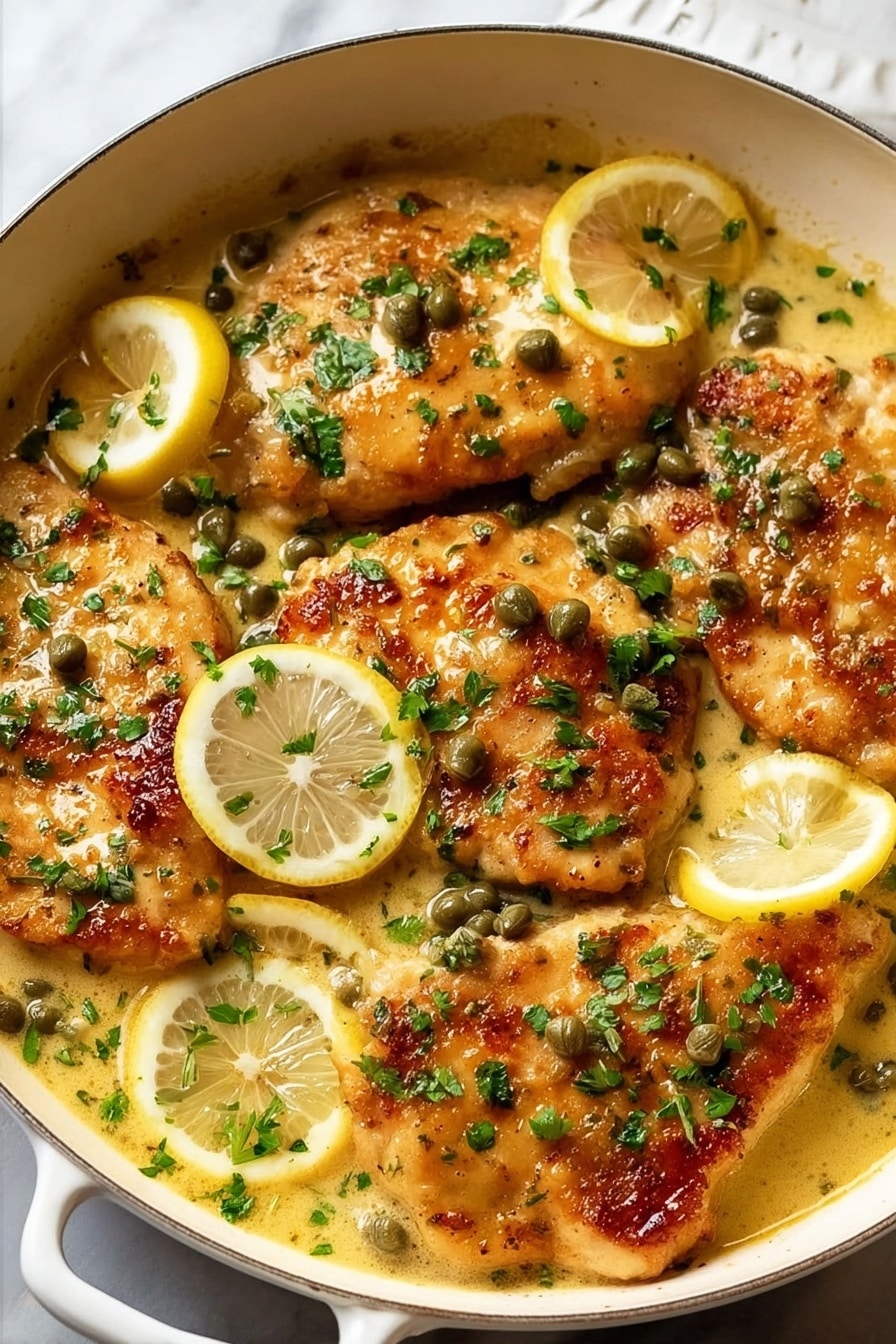
Chicken Piccata with White Wine
A classic Italian dish featuring tender chicken breast pan-seared in a bright, tangy white wine sauce with lemon and capers. This recipe is a must-try for any occasion.
🥘Ingredients
- 4 boneless, skinless chicken breasts
- 1 tbsp olive oil
- 1 tsp salt
- ½ tsp black pepper
- 1 tbsp fresh parsley, chopped
- ½ cup dry white wine
- ½ cup chicken broth
- 2 tbsp butter
- 2 tbsp all-purpose flour
- 2 cloves garlic, minced
- 1 tbsp lemon juice
- 1 tbsp capers, drained
- 1 tbsp fresh parsley, chopped
👨🍳Directions
-
1 Pat chicken breasts dry with paper towels and season with salt and pepper. Heat olive oil in a skillet over medium-high heat. Cook chicken for 5–6 minutes per side until golden and cooked through. Remove from skillet and set aside.
-
2 In the same skillet, reduce heat to medium. Add butter and let it melt. Stir in flour to form a roux, cooking for 1 minute. Add minced garlic and cook for 30 seconds until fragrant.
-
3 Pour in white wine and chicken broth, scraping up any browned bits from the bottom of the pan. Simmer for 3–4 minutes until slightly thickened. Stir in lemon juice, capers, and half of the chopped parsley.
-
4 Return chicken to the skillet, spooning sauce over the top. Cook for 1–2 minutes until chicken is heated through. Garnish with remaining parsley.
🔧Equipment
- Skillet (8-inch)
- Mixing bowl
- Fine-mesh strainer
- Whisk
- Plate
📊Nutrition Facts (per serving)
📝Notes
Watch Video Of How Chicken Piccata with White Wine Works
This chicken piccata recipe is a simple yet elegant choice for any gathering because it’s quick to prepare without sacrificing flavor. The bright acidity of white wine ties everything together beautifully, making it feel special even when served casually. Plus, it works perfectly for family dinners—light enough for a weeknight but still impressive enough for guests.
❓ Frequently Asked Questions About Chicken Piccata with White Wine
What is the key ingredient that defines chicken piccata, and why is white wine essential in this recipe?
The key defining ingredient of chicken piccata is the lemon-herb sauce, often made with butter, lemon juice, and fresh herbs like parsley or chives. White wine is essential because it adds depth and brightness to the sauce, enhancing the flavors of the chicken and herbs. The acidity of the wine also helps tenderize the chicken and balances richness, making the dish more balanced and sophisticated.
—
How should I prepare the chicken breasts to ensure they cook evenly and stay tender?
To ensure even cooking and tenderness, pat the chicken breasts dry with paper towels before seasoning. Season lightly with salt and pepper. For pan-searing, cut them into even pieces (about 1-inch thick) if they’re too large to cook through quickly. Use a high-heat pan and cook each side for 3–4 minutes until golden brown but still slightly pink inside. Avoid overcrowding the pan to maintain high heat. Rest for 5 minutes before slicing.
—
Why does the recipe often call for a mix of butter and white wine in the sauce, and how do you adjust if you don’t have butter?
The combination of butter and white wine in the sauce creates a velvety, rich base that coats the chicken beautifully. The butter adds creaminess, while the wine’s acidity cuts through the richness and adds complexity. If you don’t have butter, you can substitute it with 1 tbsp olive oil or melted coconut oil for a lighter texture, or use 1 extra tbsp of the cooking wine to adjust the liquid content while keeping the sauce flavorful. Avoid skipping the butter entirely unless you’re aiming for a lighter version.
—
Can I use a different type of white wine in chicken piccata, and what are the best substitutes if I prefer a specific flavor profile?
While classic piccata uses a dry white wine like Sauvignon Blanc or Pinot Grigio, you can experiment with other options based on preference: – Crisp & Zesty: Sauvignon Blanc (high acidity balances richness). – Buttery & Smooth: Chardonnay (un-oaked for less butteriness). – Citrusy: Muscadet or Vermentino. – Dry & Light: Riesling (off-dry works well if you like a touch of sweetness). Avoid sweet or heavily oaked wines—they’ll dominate the sauce’s flavor. If using a non-white wine (like a dry rosé), reduce the liquid slightly to avoid a watery sauce.
—
How do I avoid making the sauce too thick or too thin, and what’s the correct consistency for piccata?
The ideal piccata sauce should be smooth, glossy, and slightly syrupy—thicker than gravy but not clingy like a glaze. To achieve this: 1. Deglaze properly: After cooking the chicken, add the wine and scrape up browned bits (fond) for maximum flavor. 2. Simmer gently: Reduce the sauce over medium-low heat for 3–5 minutes, stirring occasionally, until it thickens slightly but still holds a spoon. 3. Adjust thickness: If too thin, simmer longer or add 1 tsp cornstarch slurry (mixed with 1 tbsp cold water). If too thick, add 1–2 tbsp chicken broth or water. Pro tip: Taste as you go—salt and pepper the sauce to enhance flavor before serving.
