
chicken pozole rojo recipe

The Best chicken pozole rojo recipe
Chicken pozole rojo is one of those recipes that feels like a hug in a bowl—warm, hearty, and full of flavor that just makes everything better. I love this dish because it’s simple enough to make from scratch every time, yet it feels like a celebration even on a regular night. There’s something comforting about the tender chicken, the rich broth, and the bright, tangy tomatoes that make it feel like a true Mexican comfort food. My kids—especially my boys—always demand pozole when they’re sick, and honestly, it’s the only thing that gets them through those rough patches. It’s so nourishing, with all the vitamins from the tomatoes, the protein from the chicken, and the fiber from the hominy, that it’s basically a meal in itself. Plus, it’s so versatile—you can serve it with fresh cilantro, lime wedges, and a sprinkle of cotija cheese, or just leave it simple with just a squeeze of lime and a dash of salt. It’s the kind of dish that feels special for holidays, but it also makes a great everyday meal when you’re craving something warm and satisfying.
My family loves pozole rojo because it’s easy to customize. I’ll often make a big pot and let everyone add their own toppings—some like extra avocado, others prefer crumbled queso fresco, and my husband always insists on a handful of radishes. It’s a dish that brings people together, whether it’s a family dinner or a gathering with friends. And the health benefits make it even better—it’s packed with lean protein, complex carbs from the hominy, and antioxidants from the tomatoes. It’s not heavy, but it’s not light either; it’s balanced in a way that keeps you full without making you feel sluggish. Plus, the broth is so deeply flavorful that you don’t even need a lot of extra fat, making it a lighter take on traditional Mexican soups. I’ve had pozole rojo for years, and I never get tired of it—it’s that kind of recipe that just keeps getting better with every serving.
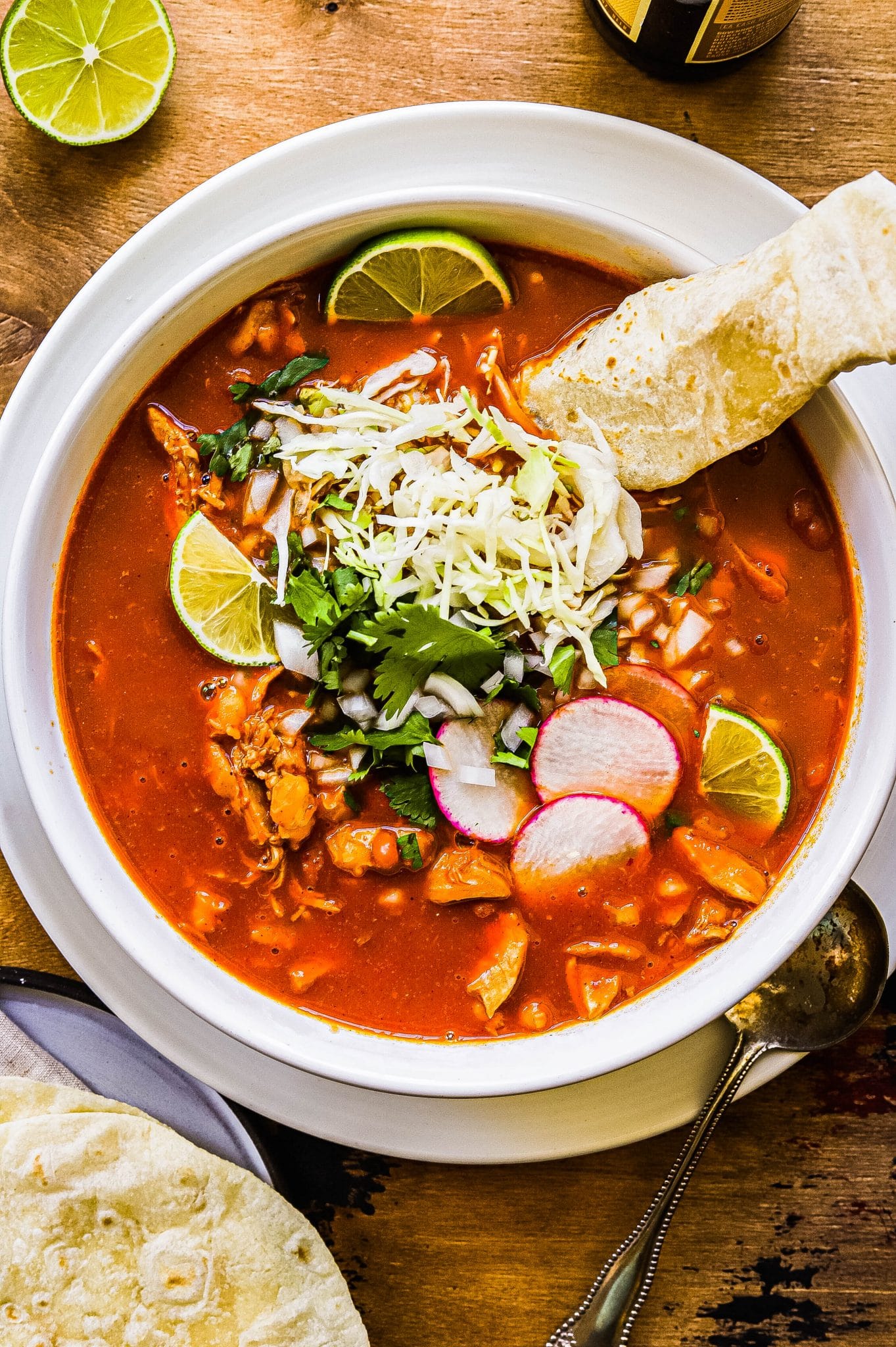
Chicken Pozole Rojo
A hearty and flavorful Mexican soup made with tender chicken, hominy, and a rich tomato-based broth. Perfect for a comforting meal.
🥘Ingredients
- 1 lb boneless chicken thighs
- 4 cups chicken broth
- 1 large onion, chopped
- 4 garlic cloves, peeled
- 1 red bell pepper, chopped
- 1 jalapeño, seeded and chopped
- 1 cup dried hominy (corn kernels)
- 1 can (15 oz) crushed tomatoes
- 2 tbsp tomato paste
- 1 tsp cumin
- 1 tsp oregano
- 1 bay leaf
- Salt to taste
- Fresh cilantro, chopped
- Lime wedges
- Radish slices
- Avocado, sliced
- Crumbled queso fresco
- Diced white onion
👨🍳Directions
-
1 In a large pot, combine chicken, chicken broth, onion, garlic, bell pepper, jalapeño, and bay leaf. Bring to a boil, then reduce heat to low and simmer for 20 minutes.
-
2 Add the dried hominy and simmer for another 10 minutes. Drain and rinse the hominy if it’s very hard.
-
3 In a separate bowl, mix crushed tomatoes, tomato paste, cumin, and oregano. Stir well.
-
4 Pour the tomato mixture into the pot with the chicken and simmer for another 15 minutes. Season with salt to taste.
-
5 Remove the bay leaf and shred the chicken using two forks. Return shredded chicken to the pot.
-
6 Garnish each bowl with chopped cilantro, lime wedges, radish slices, avocado, queso fresco, and diced onion.
🔧Equipment
- Large pot
- Wooden spoon
- Colander
- Cutting board
- Knife
- Mixing bowls
- Serving bowls
📊Nutrition Facts (per serving)
📝Notes
Watch Video Of How Chicken Pozole Rojo Works
This chicken pozole rojo recipe is always a solid choice for family gatherings because it’s hearty, flavorful, and easy to make in large batches. It serves well as a comforting dish for casual meals or special occasions, filling up hungry mouths without needing extra fuss. Plus, the broth’s rich, spicy depth makes it a crowd-pleaser that keeps everyone coming back for seconds.
❓ Frequently Asked Questions About Chicken Pozole Rojo
What is the difference between pozole rojo and pozole verde, and why does the recipe call for it to be “red”?
Pozole rojo is made with red hominy (corn kernels) and chicken broth, giving it its signature red hue, whereas pozole verde uses green hominy and a tomato-based broth. The “red” refers to the color of the hominy and the rich, savory broth that often includes ingredients like guajillo or ancho chiles, tomatoes, and garlic. The color comes from the spices and chiles used to flavor the broth.
How can I ensure the chicken is tender enough for a perfectly cooked pozole?
To achieve tender chicken, start by boiling it in water with a pinch of salt, bay leaves, and a splash of vinegar for about 10–15 minutes. Then, transfer it to a pot with the pozole broth and simmer gently for another 20–30 minutes. Alternatively, you can use pre-cooked chicken (like rotisserie or slow-cooked shredded chicken) to save time.
What are the best substitutions for fresh guajillo chiles if I can’t find them?
If fresh guajillo chiles aren’t available, you can use dried ancho chiles (they have a similar sweet, smoky flavor) or a mix of dried ancho and pasilla chiles for depth. For a milder option, substitute with dried arbol chiles (for heat) or even a small amount of smoked paprika mixed with tomato paste. Always rehydrate dried chiles in hot water before blending.
Why does the recipe include both garlic and onion in the broth, and can I skip them?
Garlic and onion are essential for depth of flavor in pozole. They add a savory, aromatic base that enhances the broth’s richness. While you can skip them, the dish will lack complexity—garlic provides a sharp, slightly pungent note, while onion adds sweetness and a soft texture. If you must omit them, at least use a small amount of onion powder or garlic powder instead.
How do I adjust the spice level in pozole rojo if I prefer it milder or hotter?
For a milder pozole, reduce the amount of chiles (start with half the recommended amount) or blend them with more broth to dilute the heat. You can also add a pinch of cumin or smoked paprika for warmth without spice. For a hotter version, increase the chile count (try adding arbol or habanero chiles for extra heat) or mix in a small amount of cayenne pepper. Always taste as you go!
