
chicken shrimp gumbo recipe

The Best chicken shrimp gumbo recipe
Chicken and shrimp gumbo is one of those dishes that feels like a hug in a bowl—comforting, bold, and just rich enough to make you want to savor every spoonful. I first fell in love with it as a kid, watching my mom stir it over low heat until the roux turned that perfect golden-brown shade, the scent filling the whole house. It’s not just food; it’s tradition, and it’s something my whole family gathered around for. Whether it’s Sunday dinner or a quick weeknight meal, this gumbo is that kind of dish that makes everyone feel special, even if it’s just for a family dinner. The way the flavors meld together—sweet from the roux, tangy from the tomatoes, smoky from the bell peppers, and bright from the shrimp—it’s like a symphony of taste. My kids love it too, especially when we serve it with buttery crusty bread to soak up all the goodness. It’s not just a meal; it’s a memory.
What I love most about this recipe is how adaptable it is. You can swap out the chicken for smoked sausage or even just use shrimp if you prefer, and it still comes together perfectly. It’s also something you can make ahead and reheat, so it’s great for meal prep too. Plus, it’s packed with nutrients—lean protein from the chicken and shrimp, fiber from the vegetables, and healthy fats from the oil in the roux. It’s hearty enough for a big crowd but still manageable for a smaller family. And let’s be honest, there’s nothing quite like the satisfaction of serving up a big pot of gumbo on a cold night, the steam rising as everyone digs in. It’s that kind of dish that makes you feel like you’ve done something good with your time and your ingredients. My husband always says it’s the only thing he ever wants to eat when he’s tired, and I get it. It’s that comforting, that satisfying.
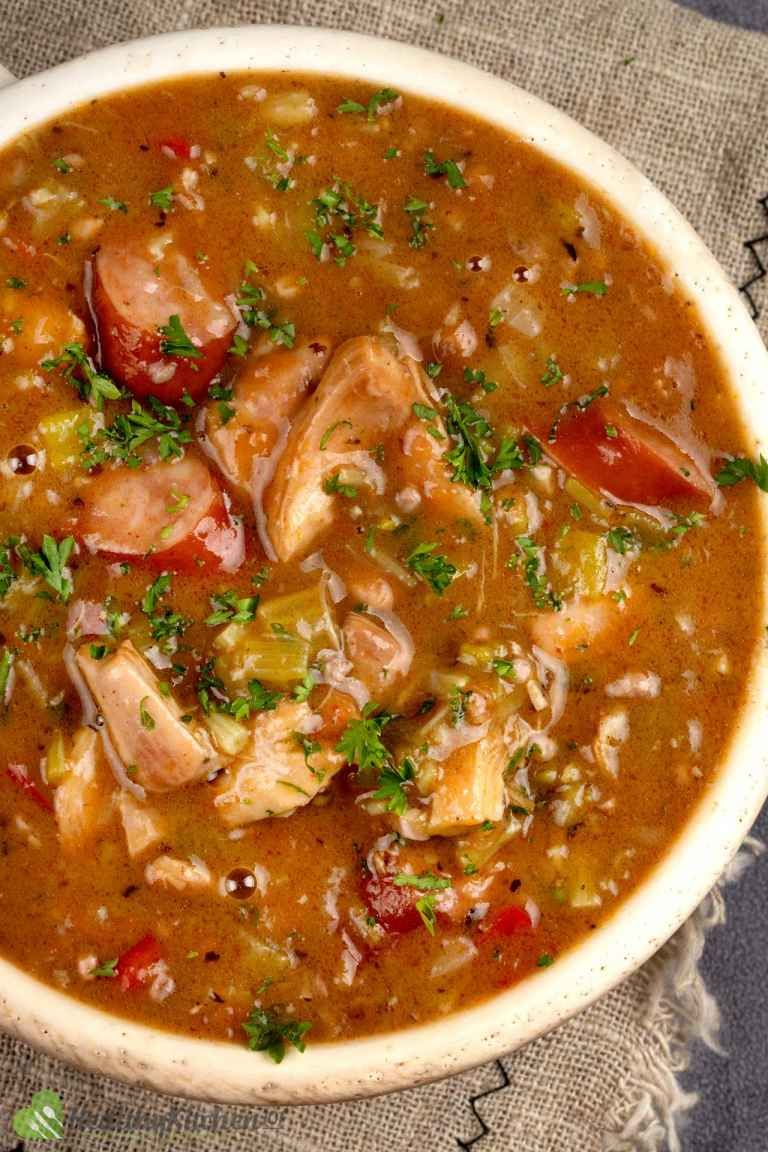
Cajun Chicken and Shrimp Gumbo
A rich, flavorful Cajun stew featuring tender chicken, succulent shrimp, and a hearty roux base, perfect for a satisfying meal with a side of rice. This recipe is a must-try for any occasion.
🥘Ingredients
- 1.5 lbs boneless chicken thighs
- 1 lb large shrimp, peeled and deveined
- 4 tbsp unsalted butter
- 4 tbsp all-purpose flour
- 1 tsp smoked paprika
- 1 tsp garlic powder
- 1 tsp onion powder
- ½ tsp cayenne pepper (adjust to taste)
- 1 cup vegetable oil
- 1 large onion, diced
- 4 cloves garlic, minced
- 1 bell pepper, diced
- 2 celery stalks, diced
- 1 (28 oz) can crushed tomatoes
- 1 (14.5 oz) can tomato sauce
- 4 cups chicken broth
- 2 cups chicken fat or lard (optional for depth)
- 2 bay leaves
- 4 sprigs fresh thyme
- 4 sprigs fresh rosemary
- 1 tsp dried oregano
- 1 tsp black pepper
- 1 tsp salt (adjust to taste)
- 1 cup chopped green onions
- 1 cup rice (long-grain or short-grain)
- 1 cup chopped parsley for garnish
👨🍳Directions
-
1 Preheat oven to 350°F (175°C) if using the oven method for the roux. In a large Dutch oven, melt butter over medium heat. Add flour and stir constantly for 15–20 minutes until the roux turns a deep brown color (a dark chocolate hue).
-
2 Once the roux is done, slowly whisk in vegetable oil while stirring to prevent burning. Add smoked paprika, garlic powder, onion powder, and cayenne. Cook for 2 minutes, then remove from heat.
-
3 In a separate pan, sauté onion, bell pepper, celery, and garlic in a little oil until softened (5–7 mins). Transfer to the Dutch oven and stir to combine with the roux.
-
4 Add crushed tomatoes, tomato sauce, chicken broth, bay leaves, thyme, rosemary, oregano, black pepper, and salt. Stir well and bring to a simmer. Reduce heat to low and let it cook uncovered for 15 minutes.
-
5 Cut chicken thighs into bite-sized pieces and add to the pot. Simmer for 10–12 minutes until chicken is cooked through. Remove chicken and set aside.
-
6 Peel and devein shrimp, then add to the pot with the chicken broth. Simmer for 4–5 minutes until shrimp turn pink. Remove shrimp and set aside.
-
7 Stir in chopped green onions and parsley. Taste and adjust seasoning if needed. Discard bay leaves and herbs.
-
8 Cook rice according to package instructions in a separate pot. Serve gumbo hot over rice, garnished with chopped parsley.
🔧Equipment
- Large Dutch oven or heavy pot
- Cutting board and knife set
- Mixing bowls
- Wooden spoon
- Slotted spoon
- Kitchen torch (optional, for roux browning)
📊Nutrition Facts (per serving)
📝Notes
Watch Video Of How Cajun Chicken and Shrimp Gumbo Works
This chicken and shrimp gumbo recipe is always a solid choice for any gathering because it’s hearty, flavorful, and easy to scale up for a crowd. Whether you’re serving it at a casual family dinner or a holiday feast, the rich, smoky broth and tender mix of meats and veggies make it a crowd-pleaser that never disappoints. Plus, it’s comforting enough to feel like a home-cooked meal, no matter how many people you feed.
❓ Frequently Asked Questions About Cajun Chicken and Shrimp Gumbo
1. What is the best way to prepare the shrimp for gumbo to ensure they stay tender and flavorful?
To ensure shrimp stay tender and flavorful in gumbo, start by peeling and deveining them, then pat them dry with a paper towel. Lightly season with salt and a pinch of black pepper before cooking. Cook them in a hot, well-seasoned pot or Dutch oven for about 2-3 minutes per side until they turn pink. Avoid overcooking, as shrimp can become mushy. You can also blanch them briefly in boiling water (1-2 minutes) before adding them to the gumbo to help retain their texture.
—
2. Can I substitute any of the ingredients in the classic chicken shrimp gumbo recipe, and if so, what are the best alternatives?
Yes, you can make substitutions, but some work better than others. Common swaps include: – Chicken thighs instead of chicken breasts (they’re more flavorful and juicier). – Shrimp can be replaced with fish fillets (like red snapper or cod) or chicken thighs (though shrimp adds a unique texture). – Andouille sausage can be swapped with smoked sausage (like kielbasa) or chicken sausage (though Andouille is traditional for its smoky depth). – Tomato paste can be omitted if you dislike it, but it adds richness. – Celery, onions, and bell peppers can be adjusted based on preference, but the classic Cajun “Holy Trinity” is key for depth. – Cayenne pepper can be reduced or skipped if you prefer milder heat, but a little goes a long way.
—
3. How long should I simmer the gumbo, and what are the signs that it’s ready?
Simmer gumbo until it reaches a thick, rich consistency—typically 20–30 minutes after all ingredients are combined. The key signs it’s ready are: – The broth should thicken enough to coat the back of a spoon (though you can adjust with a roux or broth if needed). – The shrimp and chicken should be fully cooked (shrimp should be opaque, chicken internal temp should reach 165°F/74°C). – The roux should be deep brown (not light or dark) for maximum flavor. – The gumbo should have a slightly bubbly, aromatic texture—it’s not done if it’s too thin or undercooked.
If the gumbo is too thick, stir in a little broth or water. If it’s too thin, reduce heat and let it thicken further.
—
4. Should I make the roux in a heavy-bottomed pot, and what’s the best way to avoid burning it?
Yes, a heavy-bottomed pot or Dutch oven is ideal for making a roux because it distributes heat evenly and prevents hot spots that can cause burning. To avoid burning: – Use neutral oils like vegetable, canola, or peanut oil (avoid butter, which burns easily). – Start with a small amount of oil (about ¼ cup) and gradually add dry ingredients (flour, celery, onion, bell pepper). – Cook on medium-low heat and stir constantly with a wooden spoon or silicone spatula. – Add ingredients one at a time (first celery, then onion, then bell pepper, then flour) to prevent clumping. – The roux is done when it reaches your desired color—light brown for mild, dark brown for deep flavor, or black for a smoky taste. – If it starts to burn, remove it from heat and stir in a little oil or butter to cool it down.
—
5. How can I enhance the flavor of my gumbo without adding extra ingredients?
You can boost the flavor of your gumbo with these simple techniques: – Deglaze the pot: After cooking the Holy Trinity, scrape up any browned bits from the bottom of the pot and deglaze with a splash of liquid (like broth, wine, or beer) to extract extra flavor. – Use a splash of hot sauce or Cajun seasoning: A pinch of smoked paprika, garlic powder, or a dash of hot sauce can add depth without extra ingredients. – Simmer longer: Let the gumbo simmer for an extra 5–10 minutes to let the flavors meld and the broth develop richness. – Toast spices: If you have freshly cracked black pepper, cayenne, or a bay leaf, add them directly to the pot at the end for a quick flavor boost. – Acid balance: A small amount of lemon juice, vinegar, or a splash of tomato juice at the end can brighten the dish and cut through richness. – Fresh herbs: Stir in fresh parsley or thyme at the end for brightness.
