
chicken thai red curry recipe

The Best chicken thai red curry recipe
Oh man, let me tell you, there’s something about a good Thai red curry that just hits the spot—like a warm hug for your taste buds. I’ve been making this recipe for years, and honestly, it’s one of those rare dishes that feels like home, but with a whole new level of flavor. The way the coconut milk clings to the spices, the smoky depth of the curry paste, and that perfect balance of sweet, spicy, and tangy—it’s like nothing else. My kids eat it like it’s the best thing ever, and honestly, I don’t blame them. It’s comforting enough for a lazy Sunday dinner but also exciting enough to impress when we’re hosting a little get-together. Plus, it’s got this little something extra that makes it feel special, whether it’s for a family meal or just a night in.
I love that this recipe isn’t just about the heat—it’s about the whole experience. The kids always ask for seconds because it’s so good, and I don’t mind. It’s got all the right textures too: the tender chicken, the silky coconut milk, and those little crunchy veggies that make it feel fresh. And don’t even get me started on the health benefits—it’s got protein, healthy fats from the coconut milk, and all the vitamins and nutrients from the veggies. It’s not some heavy, greasy meal, but it still tastes like indulgence. That’s what makes it so great, really. It’s that kind of dish that makes you feel good inside, whether you’re cooking for the whole family or just treating yourself. Plus, it’s easy enough to make ahead and reheat, so you can save time on busy nights. My kids and I have been eating it for years, and it’s still one of our favorites.
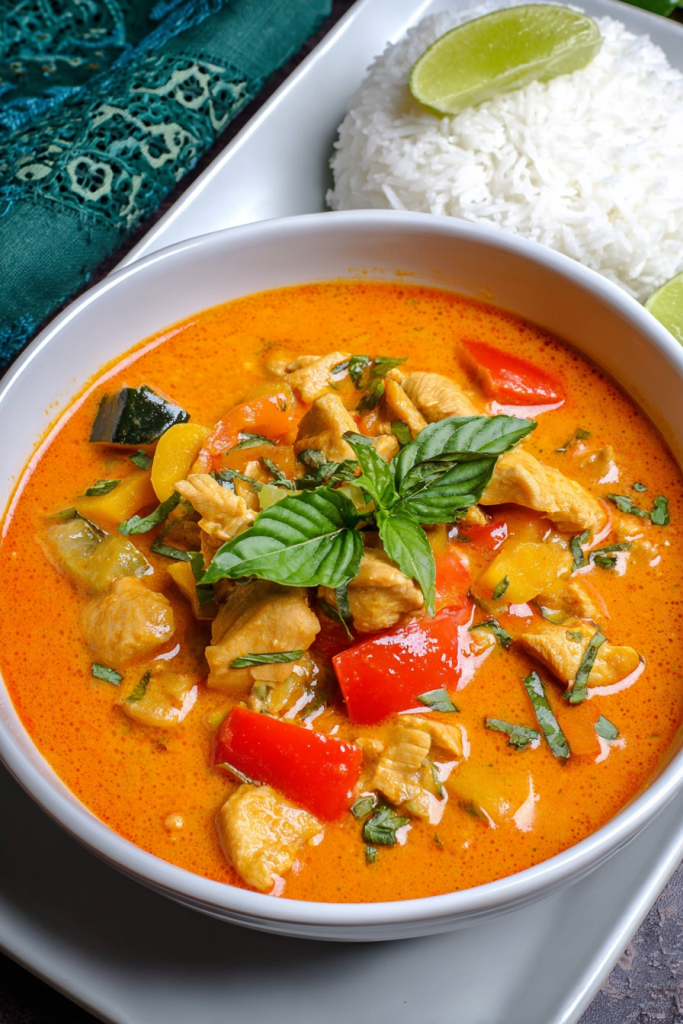
Thai Red Curry Chicken
A rich and aromatic Thai red curry dish featuring tender chicken in a spicy, coconut milk-based sauce with bell peppers, tomatoes, and aromatic herbs. This recipe is a must-try for any occasion.
🥘Ingredients
- 2 tbsp red curry paste
- 1 can (14 oz) coconut milk
- 1 cup chicken broth
- 1 cup diced tomatoes
- 1 bell pepper, sliced
- 1 onion, sliced
- 2 cloves garlic, minced
- 1 stalk lemongrass, bruised and cut into 2-inch pieces
- 1-inch ginger, sliced
- 1 tbsp fish sauce
- 1 tsp sugar
- 1/2 cup chicken pieces, cubed
- Fresh cilantro, chopped
- Lime wedges
- Crushed peanuts
👨🍳Directions
-
1 In a large skillet, heat 1 tbsp of oil over medium-high heat. Add the chicken pieces and cook until browned (5-7 mins). Remove chicken and set aside.
-
2 In the same skillet, add remaining oil if needed. Add onion, bell pepper, garlic, lemongrass, and ginger. Sauté for 3-4 mins until fragrant.
-
3 Stir in the red curry paste, coconut milk, chicken broth, tomatoes, and fish sauce. Bring to a simmer and cook for 5 mins.
-
4 Return the chicken to the skillet. Add sugar and cook for another 10-12 mins, stirring occasionally, until the sauce thickens and chicken is cooked through.
-
5 Adjust seasoning with more fish sauce or sugar if needed. Remove from heat and let it rest for 2 mins.
-
6 Garnish with chopped cilantro, lime wedges, and crushed peanuts before serving.
🔧Equipment
- Large skillet or pot
- Wooden spoon
- Knife and cutting board
- Measuring cups and spoons
- Mixing bowl
📊Nutrition Facts (per serving)
📝Notes
Watch Video Of How Thai Red Curry Chicken Works
This Thai red curry recipe is always a crowd-pleaser because it’s hearty enough to feed a whole family without being too heavy, and the bold flavors make it feel special—even when it’s just a regular weeknight dinner. It’s the kind of dish that doesn’t require fancy skills, yet still feels like a celebration, whether you’re hosting a casual potluck or keeping things simple for a busy weekend meal. Plus, the spices and coconut milk balance out so well that everyone, from picky eaters to adventurous ones, usually ends up loving it.
❓ Frequently Asked Questions About Thai Red Curry Chicken
What is the key difference between Thai red curry and green curry in terms of ingredients?
The key difference lies primarily in the main spice used: Thai red curry relies heavily on red curry paste, which contains ingredients like chili peppers (bird’s eye chilis), galangal, lemongrass, and kaffir lime leaves, giving it a deeper, redder hue and a more robust, slightly fruity heat. In contrast, Thai green curry uses a green curry paste with green chilies, galangal, lemongrass, and coconut milk, resulting in a brighter green color and a milder, more balanced heat.
—
Why does the curry thicken so quickly when cooking, and how can I prevent it from getting too sticky?
The curry thickens quickly due to the coconut milk’s natural fat content and the starches from the vegetables and paste, which break down during cooking. To prevent it from getting too thick or sticky: – Stir frequently while cooking to distribute heat evenly. – Use a low-to-medium heat to avoid burning the paste. – Add a splash of water or chicken broth (1–2 tbsp) if it starts to thicken too fast. – Simmer gently for the last 5–10 minutes instead of boiling vigorously. – If it becomes too thick, you can whisk in a little coconut milk or cornstarch slurry (mixed with cold water) to thin it out.
—
Can I substitute coconut milk with another dairy product, and if so, which one works best?
While coconut milk is essential for authentic Thai red curry flavor, you can use a lightly thickened dairy alternative if needed, but the results won’t be identical. The best substitutes are: – Heavy cream (half-and-half) – Adds richness but lacks the coconut’s unique depth. Use 1:1 ratio but reduce cooking time slightly. – Evaporated milk – Thicker than regular milk but still works well. Mix equal parts coconut milk and evaporated milk for a closer texture. – Soy milk (unsweetened) – Not recommended unless you want a lighter, less creamy version (may dilute the flavor). – Butter or oil – Can be added at the end for extra richness, but this won’t replace the coconut’s aromatic base.
For the best results, stick to coconut milk, but if you must substitute, heavy cream or evaporated milk are the closest alternatives.
—
How do I adjust the spice level in Thai red curry to suit my taste?
Thai red curry is spicier than green curry, but you can control the heat by: 1. Reducing the amount of paste – Use half the recommended amount for a milder version. 2. Removing chilies before cooking – If the paste is too hot, blend it without the chilies or strain out the seeds before adding. 3. Using milder chilies – Replace bird’s eye chilies with fresher, less fiery chilies (like Thai bird’s eye or serrano peppers). 4. Adding extra coconut milk – The fat in coconut milk dulls the heat, so increasing it (even by a cup) can mellow the spice. 5. Balancing with sweetness – A pinch of sugar or palm sugar can help cool the heat while enhancing the curry’s natural sweetness. 6. Adding herbs for freshness – Fresh cilantro, Thai basil, or mint can brighten the dish without adding heat.
For maximum control, start with a moderate amount of paste and adjust to taste.
—
What common mistakes should I avoid when making Thai red curry to ensure success?
Here are the most common mistakes and how to fix them: 1. Using expired or low-quality paste – Old or watery paste can make the curry taste flat. Use fresh, high-quality paste (or make your own). 2. Overcooking the curry – It can turn bitter or mushy. Cook on low heat and remove from heat just before the meat is tender. 3. Skipping the coconut milk – This is the heart of the curry’s flavor. If omitted, the dish will lack richness and depth. 4. Not balancing flavors – Thai curry relies on acidity (lime juice), salt, and sweetness. Taste as you go and adjust with sugar, fish sauce, or lime. 5. Using the wrong protein – Pork, chicken, or tofu work best, but beef or lamb can make the curry too gamey. Avoid raw meat (it should be cooked through). 6. Ignoring the veggies – Bell peppers, eggplant, and bamboo shoots add texture. Overcooking veggies makes them mushy; cook them last (5–7 minutes). 7. Not resting the curry – Let it sit for 5–10 minutes after cooking to let flavors meld. This is especially important for chicken or tofu. 8. Using too much salt – Thai curry is balanced with fish sauce, not heavy on salt. Taste before adding extra. 9. Not using fresh herbs – Cilantro, Thai basil, and mint add freshness. If using dried herbs, use half the amount. 10. Forgetting to adjust heat – Always taste before serving and add more lime, sugar, or fish sauce if needed.
