dog food recipe with chicken

The Best dog food recipe with chicken
I’ve been making this homemade chicken dog food recipe for years, and it’s one of those things that feels like a no-brainer—simple, reliable, and always a hit with my dogs. Chicken is a staple in my kitchen because it’s affordable, easy to prepare, and packed with protein that keeps their energy up without overloading them with fillers. My two pups, Max and Luna, have been eating this since they were puppies, and honestly, they’ve never had a preference for store-bought kibble. It’s not just about the taste—it’s about the consistency. When I make it, I know exactly what’s going into their bowls, and they know it’s something special, whether it’s for a weekly meal or a little treat after a long day of play.
What really makes this recipe work for my family is how versatile it is. We don’t have to complicate things—just chop up some chicken, add some veggies or grains if we’re feeling extra, and let it simmer until everything’s tender. It’s perfect for busy days when I don’t want to spend hours in the kitchen, but it also feels like a little effort when I’m making it for a special occasion, like a birthday or a vacation. My kids love watching me cook, and they’re always excited to help with the prep—chopping veggies or stirring the pot—so it’s a fun part of our routine. Plus, the health benefits are undeniable. No artificial preservatives, no junk fillers, and a balanced mix of protein and fiber that keeps their digestion smooth. It’s not just good for them; it’s good for me too, knowing I’m feeding them something real and nourishing.
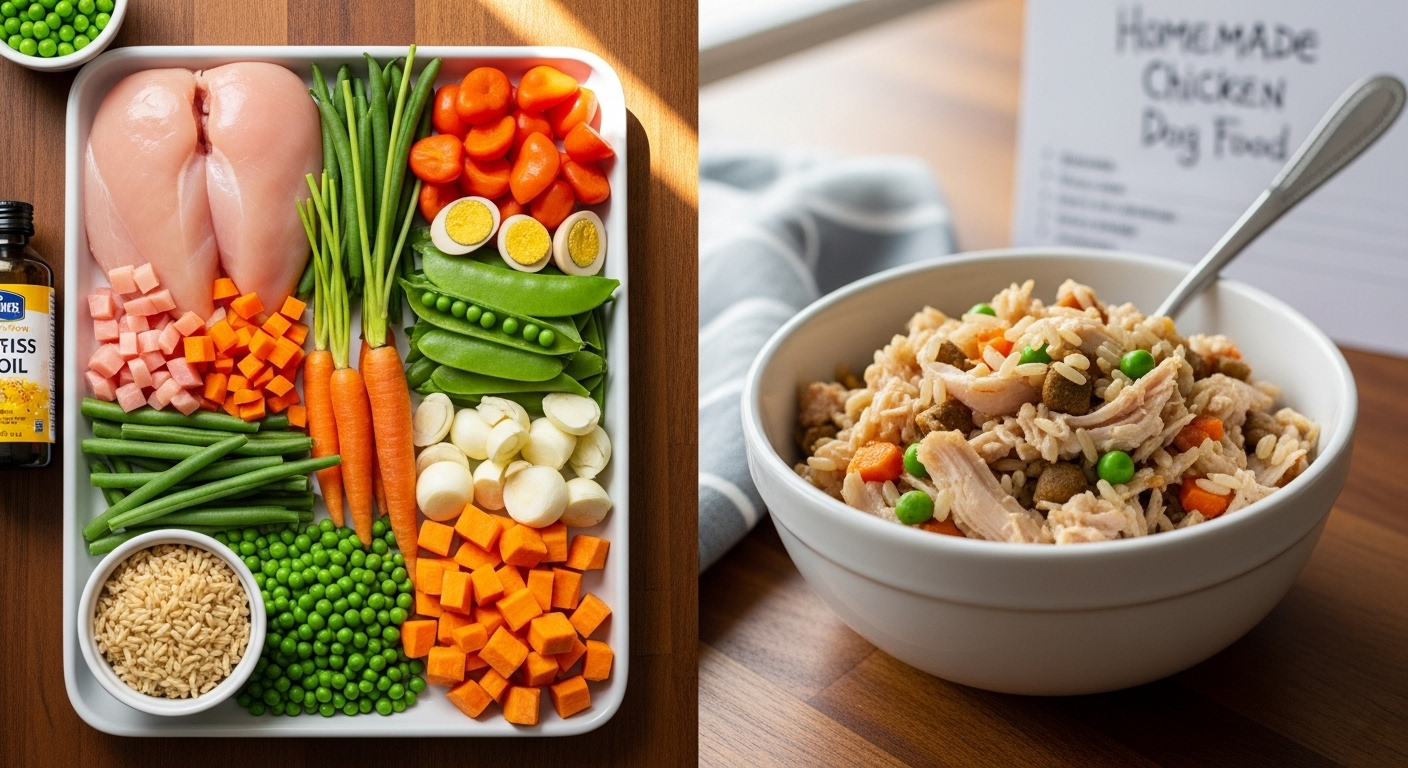
Homemade Chicken & Rice Dog Food
A simple, balanced recipe made with lean chicken and wholesome rice to provide essential nutrients for your dog’s diet. This recipe is a must-try for any occasion.
🥘Ingredients
- 2 cups cooked boneless, skinless chicken breast (chopped)
- 1 cup cooked ground turkey (optional)
- 2 cups cooked white rice or brown rice
- 1 cup cooked sweet potato (diced)
- 1 cup steamed carrots (chopped)
- 1/2 cup plain pumpkin puree (unsweetened)
- 1 tsp olive oil
👨🍳Directions
-
1 Cook chicken breast and ground turkey (if using) in a pot with a little water until fully done. Drain excess liquid.
-
2 Cook rice and sweet potato separately in the same pot until tender. Set aside.
-
3 Steam carrots until soft. Mix pumpkin puree with olive oil.
-
4 Combine all cooked ingredients in a large bowl. Mix well until evenly distributed.
-
5 Portion into dog-safe containers or freeze in ice cube trays for easy serving.
🔧Equipment
- Mixing bowl
- Steamer or pot
- Food processor (optional)
- Baking sheet
- Oven
📊Nutrition Facts (per serving)
📝Notes
Watch Video Of How Homemade Chicken & Rice Dog Food Works
This chicken dog food recipe is always a lifesaver for quick, easy prep—whether you’re feeding your pups after a long day or hosting a family gathering where you need something hearty but simple. It’s the kind of meal that feels special without taking forever, and it’s perfect for when you want to keep things balanced and tasty without overcomplicating things. Plus, it’s always a hit with dogs and humans alike, making it a reliable go-to for any occasion.
❓ Frequently Asked Questions About Chicken & Rice Dog Food
What are the key ingredients typically included in homemade dog food recipes with chicken?
The key ingredients usually include bone-free chicken breast or thigh (cooked and deboned), high-quality chicken broth or water, whole grains like brown rice, quinoa, or oats, vegetables such as carrots, spinach, or sweet potatoes, healthy fats like olive oil or flaxseed oil, a protein supplement like egg or fish oil, and a balanced vitamin and mineral mix to ensure nutritional completeness.
—
How do I ensure the homemade chicken-based dog food recipe is balanced and safe for my dog?
To ensure balance and safety, follow these steps: 1. Use a vet-approved recipe that meets AAFCO (Association of American Feed Control Officials) standards for adult or puppy dogs. 2. Include a high-quality protein source (like chicken) as the primary ingredient (at least 50% of the dry matter). 3. Add a balanced vitamin/mineral supplement (e.g., calcium, phosphorus, taurine) to prevent deficiencies. 4. Avoid toxic foods like onions, garlic, grapes, raisins, or xylitol. 5. Monitor your dog’s weight and energy levels—adjust portions or ingredients if they show signs of imbalance (e.g., excessive thirst, lethargy). 6. Consult your vet before transitioning your dog to homemade food, especially if they have health conditions.
—
Can I use cooked chicken bones in homemade dog food, and what are the risks?
No, you should never use cooked chicken bones in homemade dog food. The risks include: – Splintering and choking hazards (cooked bones become brittle and can break into sharp fragments). – Internal injuries (perforated intestines or blockages from bone fragments). – Toxicity concerns (some bones may contain harmful salts or contaminants). Instead, opt for bone-free, deboned chicken (e.g., breast or thigh meat) to ensure safety and digestibility.
—
How often should I feed homemade chicken-based dog food, and how much should I serve?
Feeding frequency and portion sizes depend on your dog’s age, weight, activity level, and metabolism. Here’s a general guideline: – Adult dogs: Feed 2–3 times daily, with portions calculated at 2–3% of their body weight per day (e.g., a 20 lb dog eats ~40–60g per meal). – Puppies: Feed 3–4 times daily, with higher portions (up to 5% of body weight per day). – Senior dogs: May need smaller, more frequent meals or adjusted portions due to slower metabolism. – Transition slowly: Mix homemade food with your dog’s current kibble over 7–10 days to avoid digestive upset. Always adjust based on your dog’s energy levels, stool quality, and weight—consult your vet for personalized recommendations.
—
Are there any common mistakes to avoid when making homemade chicken dog food?
Yes, here are the most common mistakes to avoid: 1. Skipping the vitamin/mineral supplement—homemade diets lack natural nutrients, so a supplement is essential. 2. Overloading on chicken—while protein is important, too much can lead to imbalances (e.g., excess fat or sodium). 3. Using low-quality or spoiled ingredients—ensure meat is fresh, free from antibiotics, and cooked properly (no raw chicken unless you’re experienced). 4. Ignoring portion control—feeding too much or too little can cause obesity or malnutrition. 5. Mixing incompatible ingredients (e.g., onions, garlic, or dairy if your dog is lactose intolerant). 6. Not rotating proteins (e.g., chicken, turkey, beef) to prevent nutrient deficiencies over time. 7. Forgetting hydration—dogs on homemade diets may need extra water or wet food to stay hydrated.