how to cook a whole chicken recipe


The Best how to cook a whole chicken recipe
I’ve been making this whole roasted chicken recipe for years, and it’s one of those dishes that never gets old. It’s simple, reliable, and always turns out juicy and flavorful—exactly what I need when I want something that feels special but doesn’t require a ton of effort.
My kids request it all the time, especially on Sundays when we’re all home together. There’s something about the smell of a chicken roasting in the oven that just makes the house feel cozy, and it’s one of those meals that everyone looks forward to.
Click here for: hidden valley ranch chicken recipe
What I love most about this recipe is how versatile it is. You can serve it for a weeknight dinner when you’re short on time, or dress it up with some fresh herbs and roasted vegetables for a weekend gathering.
Plus, it’s packed with protein and leaves you with leftovers that can be used in so many other meals—sandwiches, soups, salads, you name it. It’s also a great way to control what goes into your food, since you’re not dealing with any processed ingredients or mystery additives. Just good, wholesome chicken that tastes even better the next day.
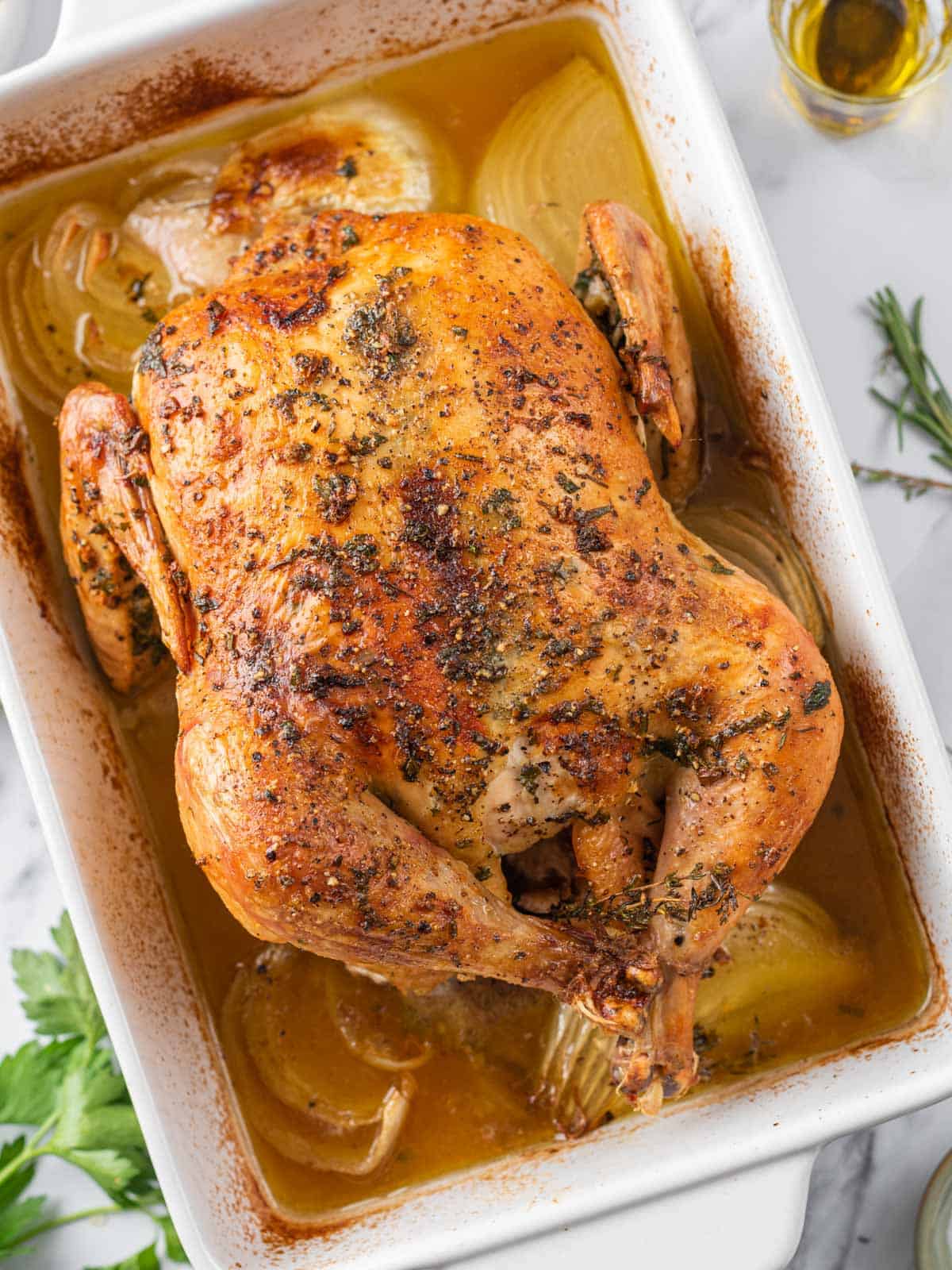
Perfect Roast Whole Chicken
A juicy and flavorful whole chicken roasted to golden perfection with aromatic herbs and garlic. This simple yet impressive dish is perfect for family dinners or special occasions.
🥘Ingredients
- 1 whole chicken (about 4-5 lbs)
- 2 tbsp olive oil
- 1 tsp salt
- 1 tsp black pepper
- 1 tsp paprika
- 1 tsp garlic powder
- 1 tsp dried thyme
- 1 tsp dried rosemary
- 1 lemon, halved
- 1 head of garlic, cut in half crosswise
- 1 small onion, quartered
- 4 sprigs fresh thyme
- 4 sprigs fresh rosemary
👨🍳Directions
-
1 Preheat your oven to 425°F (220°C). Remove the chicken from the refrigerator 30 minutes before cooking to bring it to room temperature.
-
2 Pat the chicken dry with paper towels inside and out. This helps the skin crisp up during roasting.
-
3 In a small bowl, mix together the olive oil, salt, black pepper, paprika, garlic powder, dried thyme, and dried rosemary. Rub this mixture all over the chicken, including under the skin.
-
4 Stuff the chicken cavity with the lemon halves, halved garlic head, quartered onion, fresh thyme, and fresh rosemary sprigs.
-
5 Place the chicken breast-side up on a rack in a roasting pan. Tuck the wings under the body and tie the legs together with kitchen twine if desired.
-
6 Roast the chicken in the preheated oven for 20 minutes. Then, reduce the oven temperature to 375°F (190°C) and continue roasting for about 50-60 minutes, or until the internal temperature reaches 165°F (74°C) in the thickest part of the thigh.
-
7 Baste the chicken with its juices halfway through the cooking time to keep it moist and flavorful.
-
8 Once done, remove the chicken from the oven and let it rest for 15 minutes before carving. This allows the juices to redistribute throughout the meat.
-
9 Carve the chicken and serve with your favorite sides, such as roasted vegetables or mashed potatoes.
🔧Equipment
- Roasting pan with rack
- Mixing bowl
- Measuring spoons
- Chef’s knife
- Cutting board
- Basting brush
- Meat thermometer
- Aluminum foil
📊Nutrition Facts (per serving)
📝Notes
Watch Video Of How Perfect Roast Whole Chicken Works
Cooking a whole chicken is one of the easiest and most reliable meals I always turn to, whether it’s a weeknight dinner or a big family gathering. It’s simple to prepare, feeds a crowd without a ton of effort, and the leftovers stretch into sandwiches, soups, or salads for days. Plus, nothing beats the smell of a perfectly roasted chicken filling the house—it’s comfort food that never lets you down.
Click here for: instant pot chicken legs recipe
❓ Frequently Asked Questions About Roast Whole Chicken
1. What is the best way to season a whole chicken for roasting?
The best way to season a whole chicken is to keep it simple yet flavorful. Start by patting the chicken dry with paper towels, then rub it generously with olive oil or melted butter. Season both the outside and inside cavity with salt and black pepper. For extra flavor, add herbs like thyme, rosemary, or sage, along with minced garlic, lemon zest, or paprika. You can also stuff the cavity with lemon halves, garlic cloves, or onion wedges for added aroma.
2. How long should I cook a whole chicken, and at what temperature?
A general rule for roasting a whole chicken is to cook it at 375°F (190°C) for about 20 minutes per pound (450g). For example, a 4-pound (1.8kg) chicken would take roughly 1 hour and 20 minutes. However, the most reliable method is to use a meat thermometer—insert it into the thickest part of the thigh (without touching the bone) and ensure it reaches 165°F (74°C). Let the chicken rest for 10-15 minutes before carving to retain its juices.
3. Should I truss the chicken before roasting, and why?
Trussing (tying the legs together with kitchen twine) is optional but recommended for even cooking. It helps the chicken maintain a compact shape, ensuring the breast and thighs cook at the same rate. Trussing also improves presentation and makes it easier to handle. If you skip trussing, the wings and legs may cook faster, leading to uneven doneness.
4. How can I keep the chicken moist while roasting?
To keep the chicken moist, avoid overcooking it—use a meat thermometer to check doneness. Basting the chicken with its own juices or melted butter every 20-30 minutes also helps. Another trick is to place the chicken on a bed of vegetables (like carrots, onions, or potatoes) to elevate it and allow air circulation. Covering the chicken loosely with foil for the first half of cooking can prevent the breast from drying out.
5. Can I use a whole chicken for other recipes after roasting?
Absolutely! Roasted whole chicken is incredibly versatile. Use the leftover meat for sandwiches, salads, tacos, or soups. The carcass can be simmered with vegetables and herbs to make a rich homemade chicken stock. Shred the meat for casseroles, pasta dishes, or pot pies. Just store leftovers in an airtight container in the fridge for up to 4 days or freeze for longer storage.