
pesto chicken thigh recipe

The Best pesto chicken thigh recipe
This pesto chicken thigh recipe has been a staple in our kitchen for years—not because it’s fancy or requires a Michelin-level technique, but because it’s simple, flavorful, and holds up so well. I started making it after my kids grew tired of the same old chicken nuggets and mac and cheese, and honestly, I was glad to find something that wasn’t just a processed mess. The thick, juicy chicken thighs stay tender after baking, and the creamy pesto sauce—with its bright green herbs, garlic, and a touch of Parmesan—gives it a rich, satisfying bite that feels indulgent but isn’t. It’s the kind of dish that makes you feel like you’re cooking for a special occasion, even if it’s just for the family dinner table. My husband and kids both love it, and honestly, I don’t think we’ve had a meal where someone didn’t ask for seconds.
What really makes this recipe special is how versatile it is. You can serve it over pasta, as a side with roasted veggies, or even as a standalone meal with a simple side salad. The health benefits are pretty solid too—lean protein from the chicken thighs, fiber from the pesto’s herbs and whole-grain bread if you use it, and a good dose of vitamins from the garlic, basil, and olive oil. It’s not some extreme “health food” thing, but it’s not junk food either. Plus, the pesto stuffing inside the chicken thighs keeps it moist and flavorful without needing a ton of extra oil or butter. My kids used to complain about “boring” meals, but once they tried this, they begged for it again and again. It’s that kind of recipe—comforting, easy, and always a hit.
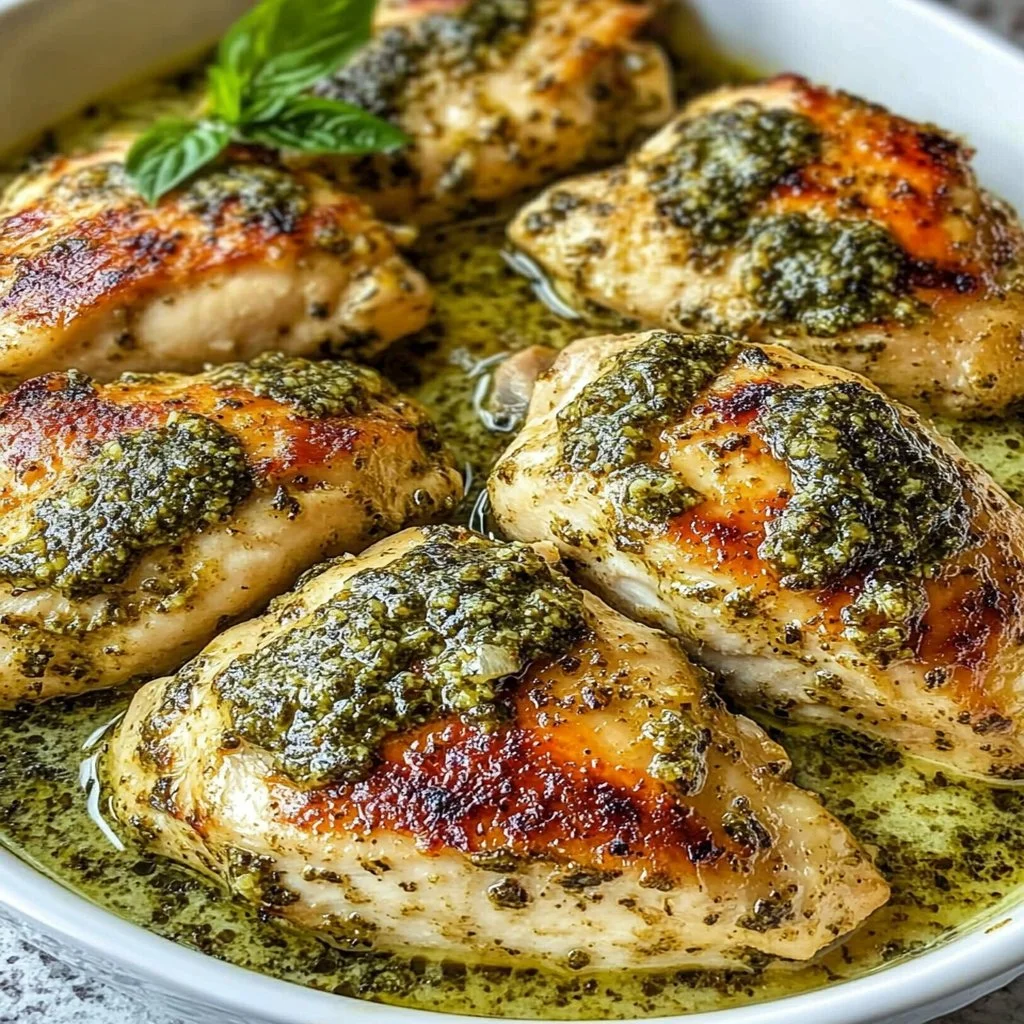
Pesto Chicken Thighs
A flavorful and aromatic dish featuring tender chicken thighs coated in homemade pesto and baked to perfection. The pesto adds a vibrant green color and rich flavor, making this a delightful weeknight meal.
🥘Ingredients
- 6 boneless, skinless chicken thighs
- 1 tbsp olive oil
- 1 tsp dried oregano
- 1 tsp garlic powder
- ½ tsp salt
- ½ tsp black pepper
- 2 cups fresh basil leaves
- ½ cup pine nuts
- ¼ cup grated Parmesan cheese
- 3 cloves garlic
- 2 tbsp olive oil
- 2 tbsp lemon juice
- ½ tsp salt
- 1 cup pesto sauce (store-bought or homemade)
- 1 tbsp butter (optional, for extra richness)
👨🍳Directions
-
1 Preheat oven to 400°F (200°C). Line a baking sheet with parchment paper.
-
2 Prepare the pesto: In a food processor, combine basil leaves, pine nuts, Parmesan cheese, garlic, olive oil, lemon juice, and salt. Pulse until finely chopped but not completely pureed.
-
3 Season the chicken thighs with olive oil, oregano, garlic powder, salt, and pepper. Set aside.
-
4 In a shallow dish, mix the pesto sauce with a little water to thin it out slightly. Place chicken thighs in the dish, coating them evenly with the pesto mixture. Let them marinate for 10 minutes.
-
5 Preheat the oven to 400°F (200°C). Place the chicken thighs on the prepared baking sheet, skin-side up. Bake for 25-30 minutes or until the internal temperature reaches 165°F (74°C).
-
6 While the chicken is baking, melt butter (if using) in a small pan and set aside. Once the chicken is done, brush the tops with melted butter and a little extra pesto.
🔧Equipment
- Mixing bowls
- Food processor or blender
- Baking sheet
- Knife and cutting board
- Measuring cups and spoons
- Oven
📊Nutrition Facts (per serving)
📝Notes
Watch Video Of How Pesto Chicken Thighs Works
This pesto chicken thigh recipe is always a crowd-pleaser because it’s quick to prepare yet still feels special, making it perfect for any casual get-together or family meal. The rich, herby pesto clings beautifully to the tender meat, giving it that restaurant-quality flavor without the fuss, and it pairs well with simple sides like roasted veggies or crusty bread. It’s a go-to for busy weeknights or holiday gatherings because it’s hearty enough to feed a crowd without requiring last-minute stress.
❓ Frequently Asked Questions About Pesto Chicken Thighs
What is the best way to prepare pesto chicken thighs for the best texture and flavor?
To achieve the best texture and flavor, marinate the chicken thighs in a mix of olive oil, minced garlic, lemon juice, and Italian herbs (like thyme or rosemary) for at least 30 minutes before cooking. Then, cook them in a hot skillet with a little butter or olive oil until they reach an internal temperature of 165°F (74°C). For extra juiciness, consider brining the chicken for 15–30 minutes before cooking.
—
Can I substitute pesto for any other sauce or herb blend in this recipe?
Yes, you can! While traditional pesto is made with basil, pine nuts, Parmesan, and garlic, you can use a mix of fresh herbs like parsley, cilantro, or dill combined with olive oil and a sprinkle of cheese (like feta or mozzarella) for a different flavor profile. For a nut-free option, try sunflower seeds instead of pine nuts.
—
How long should I cook chicken thighs to ensure they are fully cooked without drying out?
Chicken thighs are more forgiving than breasts, but they should still be cooked to an internal temperature of 165°F (74°C). For skin-on thighs, cook them in a hot skillet for 6–7 minutes per side (or until the juices run clear). For skinless thighs, aim for 5–6 minutes per side. Avoid overcrowding the pan to ensure even cooking.
—
What are some great sides to serve with pesto chicken thighs?
Pesto chicken thighs pair well with a variety of sides! Try: – Garlic bread or crusty bread to soak up the sauce. – Roasted vegetables (zucchini, bell peppers, or asparagus) for a fresh contrast. – Couscous or quinoa for a light, fluffy base. – Simple arugula salad with lemon vinaigrette. – Warm polenta or mashed potatoes for a heartier meal. – Crispy roasted potatoes or fries for extra crunch.
—
Do I need to use fresh pesto, or can I make it ahead and store it for later?
Fresh pesto tastes best, but you can make it a day ahead and store it in an airtight container in the fridge for 3–4 days. For longer storage, freeze it in ice cube trays (for small portions) or a freezer-safe container (up to 3 months). Thaw in the fridge before using to maintain texture. If you’re making pesto from scratch, blend it just before cooking to avoid bitterness from oxidation.
