
pho chicken soup recipe

The Best pho chicken soup recipe
I’ve been making pho chicken soup for years, and there’s nothing quite like it—it’s the kind of dish that feels like home, even when you’re eating it somewhere else. I love how it’s simple enough to whip up in a pinch but also rich and satisfying enough to make it feel special. My kids always ask for it after school, especially when they’re feeling under the weather, and it’s the one thing that makes their day better. It’s comforting, it’s flavorful, and it’s something you can make in big batches if you have company over or just want leftovers for the week.
This recipe is perfect for any occasion—whether it’s a casual weeknight dinner or a weekend gathering with friends. My family loves it because it’s hearty but not too heavy, and the broth is so deeply savory that it makes everything else taste better. Plus, the chicken is tender and the herbs are fresh, so it’s not just about the meal—it’s about the experience. And honestly? It’s one of those dishes that’s actually pretty good for you if you make it right. The ginger and garlic add natural anti-inflammatory benefits, and the lean protein keeps you full without overdoing it. It’s the kind of food that makes you feel good inside and out.
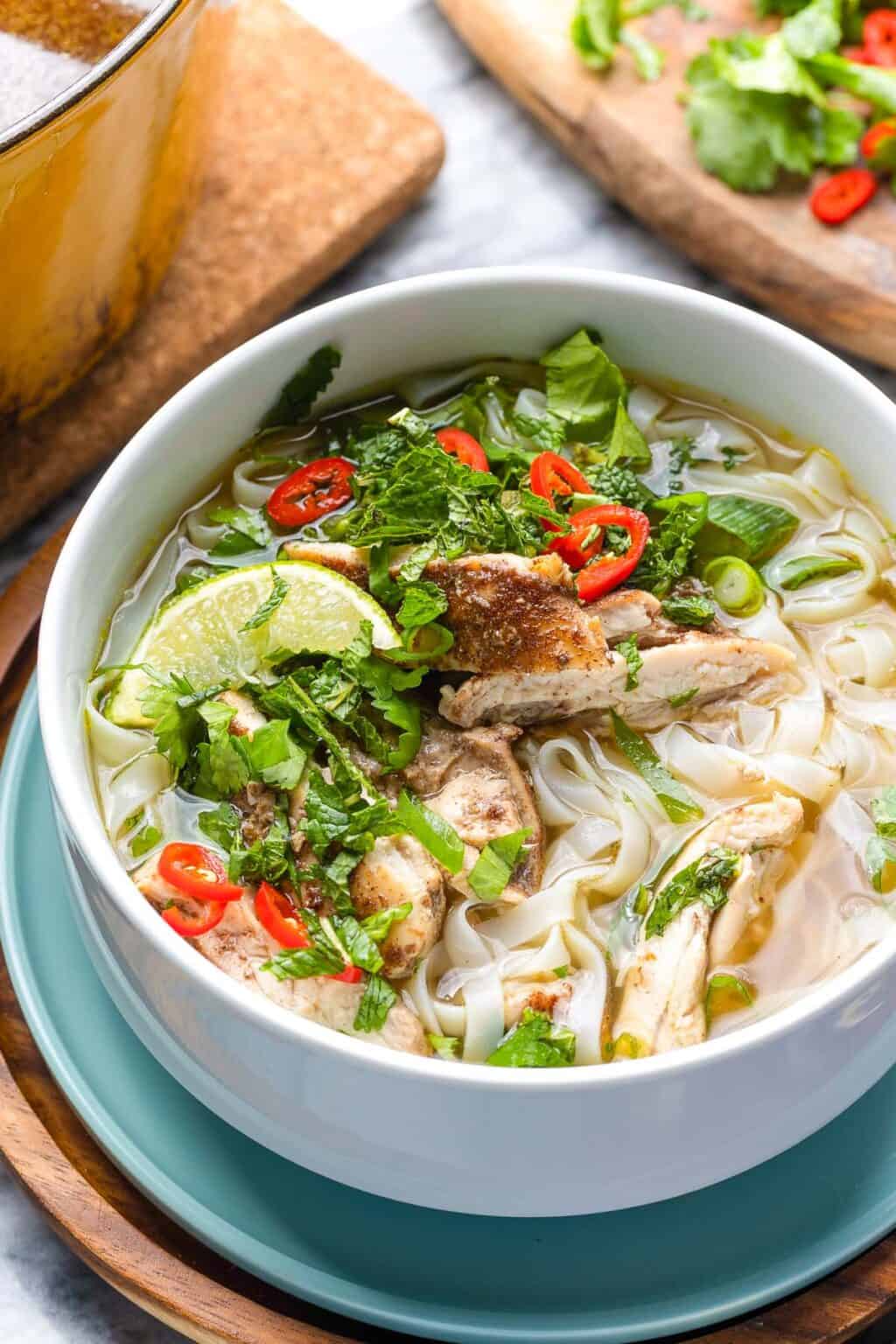
Classic Vietnamese Pho Chicken Soup
A fragrant and comforting Vietnamese noodle soup featuring tender chicken, aromatic herbs, and rich broth. Perfect for a cozy meal!
🥘Ingredients
- 4 cups chicken broth (low-sodium)
- 1 lb boneless chicken thighs (cut into pieces)
- 1 large onion (sliced)
- 4 star anise pods
- 4 cinnamon sticks
- 2 cloves
- 1-inch ginger (sliced)
- 1 tbsp fish sauce
- 1 tbsp soy sauce
- 1 tbsp brown sugar
- 1 tbsp vegetable oil
- 8 oz rice noodles (pho noodles)
- 1/2 cup water
- Fresh cilantro (chopped)
- Thai basil (chopped)
- Thinly sliced green onions
- Lime wedges
- Crushed peanuts
- Jalapeños (optional)
- Chili oil
👨🍳Directions
-
1 In a pot, heat vegetable oil over medium heat. Add sliced onions and sauté until soft (~3 mins). Add chicken pieces and cook until lightly browned (~5 mins).
-
2 Add star anise, cinnamon sticks, cloves, and ginger to the pot. Stir for 1 minute to release their aromas.
-
3 Pour in chicken broth, fish sauce, soy sauce, and brown sugar. Bring to a boil, then reduce heat to low. Simmer for 30-35 mins until chicken is tender.
-
4 While the broth simmers, boil water in a pot. Add rice noodles and cook according to package instructions (~3-5 mins). Drain and rinse with cold water to stop cooking.
-
5 Divide noodles among bowls. Pour hot broth over noodles, then add shredded chicken. Garnish with cilantro, Thai basil, green onions, lime wedges, crushed peanuts, jalapeños (if using), and chili oil.
🔧Equipment
- Large pot
- Knife and cutting board
- Wooden spoon
- Steamer basket
- Serving bowls
- Slotted spoon
📊Nutrition Facts (per serving)
📝Notes
Watch Video Of How Classic Vietnamese Pho Chicken Soup Works
This Pho Chicken Soup recipe is always a go-to for me because it’s hearty enough to feed a crowd without being too heavy, and the flavors keep getting better as they simmer. It’s perfect for family gatherings because it’s comforting, customizable—you can adjust the spice level or add extra herbs—and it feels special without needing fancy ingredients. Plus, it’s a great way to bring everyone together around a warm bowl, whether it’s a casual weeknight meal or a holiday spread.
❓ Frequently Asked Questions About Vietnamese Pho Chicken Soup
What is the key difference between pho and other Vietnamese noodle soups like bun cha or bun bo hue?
The key difference lies in the broth, ingredients, and preparation. Pho is a beef-based broth soup with thin rice noodles (phở), aromatic herbs, and a balance of sweet, sour, spicy, and salty flavors. Unlike bun cha (grilled pork with fresh noodles), which is more focused on the meat and fresh herbs, or bun bo hue (pork with chili peppers and herbs), pho emphasizes the rich, deeply flavored beef broth and the simplicity of the noodles. The broth is typically made from beef bones and simmered for hours to create a gelatinous, savory base.
—
Why does the pho broth need to be simmered for so long?
Simmering the pho broth for 4–6 hours (or even longer) is essential for two main reasons: depth of flavor and gelatinous texture. The long simmering process allows the collagen and connective tissues in the beef bones to break down, creating a rich, velvety broth that’s both deeply flavorful and easy to digest. Without this time, the broth would be thin, watery, and lack the signature “phở” umami. Additionally, the caramelization of sugars and the development of complex aromatics from the spices (like star anise, cinnamon, and cloves) further enhance the flavor profile.
—
Can I use any type of beef for pho broth, or is there a specific cut recommended?
While you can technically use any beef cut, bone-in, fatty cuts (like shank, brisket, or knuckle) are ideal for pho broth. These cuts contain more collagen and fat, which contribute to a richer, more gelatinous broth. Avoid very lean or tough cuts (like flank steak) unless you’re using them in small amounts for the actual pho noodles. If you’re short on bones, you can use a mix of beef broth cubes (high-quality, like Homemade Secret or Knorr Premium) as a base, but homemade broth will always taste better. For extra richness, some cooks add a splash of beef fat (like tallow) at the end.
—
What herbs and spices are essential for authentic pho flavor, and can I substitute any of them?
The classic pho spice blend includes: – Star anise (essential for its licorice-like aroma) – Cinnamon stick (adds warmth and sweetness) – Cloves (contribute to the deep, spicy depth) – Fennel seeds (optional but traditional in some recipes) – Black peppercorns (for a subtle kick) – Galangal or ginger (fresh root for brightness) – Cardamom pods (sometimes used instead of fennel)
Substitutions (if needed): – Star anise can be replaced with 1 tsp ground star anise (but the whole form is preferred for aroma). – Cinnamon can be swapped for cassia bark (a stronger, more authentic alternative). – Galangal is hard to find—fresh ginger works in a pinch, but it won’t be as fragrant. – Fresh herbs like mint, cilantro, Thai basil, or lemongrass (if using) should be added at the end to preserve their freshness.
Avoid overpowering the broth with too many spices; the goal is balance.
—
How do I know if my pho broth is ready, and what should I check before serving?
A well-made pho broth should meet these criteria: 1. Color: Deep, rich brown or amber (not pale or muddy). This indicates proper simmering and caramelization. 2. Texture: Gelatinous and velvety—it should cling slightly to the back of a spoon when cold, but not be overly thick. 3. Flavor: Balanced—savory, slightly sweet, with a hint of spice and umami. It should taste like a savory, aromatic broth, not just watery or bland. 4. Aroma: Warm, spicy, and complex—the scent should be inviting and deeply aromatic when the pot is open. 5. Fat content: A slight sheen on top (from rendered fat) is normal, but it should not be greasy or overly fatty.
Before serving: – Strain the broth through a fine-mesh sieve to remove any large bones or spices (unless you’re serving them separately). – Adjust seasoning: Taste and add salt, sugar, or a splash of vinegar if needed to balance flavors. – Keep it warm: If serving immediately, keep the broth at a gentle simmer (not boiling) to prevent it from turning cloudy or losing its richness. If prepping ahead, reheat slowly over low heat.
—
What’s the best way to customize pho toppings, and how do thin the broth if it’s too thick?
Topping Variations (Classic & Creative): – Meat: Thinly sliced beef rib (phở bò), pork shoulder (phở thị), or chicken thigh (for a lighter option). – Herbs: Fresh mint, cilantro, Thai basil, lemongrass, or galangal slices. – Acid: Lime wedges, fish sauce (for umami), or a squeeze of lime juice. – Spice: Fresh chili slices, crushed red pepper flakes, or a dash of sriracha. – Crunch: Crushed peanuts, sesame seeds, or crushed coriander leaves. – Sweetness: Honey, brown sugar, or a drizzle of caramelized onions.
Thinning Thick Pho Broth: If your broth is too thick (especially after straining), try these methods: 1. Strain and thin with water: Strain the broth, then add 1–2 cups of hot water (or broth) and simmer gently for 5 minutes. Stir in 1 tsp sugar to balance. 2. Use a roux: Mix 1 tbsp flour + 2 tbsp water, cook into a paste, then stir into the broth to thicken slightly (but avoid overdoing it). 3. Add a splash of vinegar or fish sauce: A ½ tsp white vinegar or 1 tbsp fish sauce can help adjust thickness and enhance flavor. 4. Simmer longer: If you have time, let it reduce slightly (but not too much) to concentrate flavors.
Pro Tip: If your broth is too watery, simmer it uncovered for 10–15 minutes to evaporate excess liquid. Balance with salt, sugar, or a touch of vinegar before serving.
