
recipe chinese curry chicken

The Best recipe chinese curry chicken
Chinese curry chicken is one of those dishes that feels like a warm hug on a cold night, and honestly, I’ve been making it for years because it never disappoints. There’s something about that rich, aromatic curry sauce—deep and slightly sweet with just the right kick—that makes it feel special, even if it’s just sitting on the table after a long day. My kids will eat it straight from the bowl, and honestly, I don’t even need to tell them to clean their plates. It’s that good. I love that it’s versatile too—whether it’s for a quick weeknight dinner or something we pull out for a little family get-together, it always works. Plus, it’s not too heavy, but it’s comforting enough to make you feel like you’re indulging without feeling guilty. The chicken stays tender, the veggies stay bright and crisp, and the sauce clings just right—no soggy mess, no dry bites. It’s that kind of dish that makes you feel like you’ve done something good with your time, even if you’re just making it from scratch.
I also love how this recipe is actually pretty healthy for what it is. Sure, there’s some oil and some spices that can add up, but the chicken is lean, and the veggies—bell peppers, carrots, onions—bring in all those vitamins and fiber. It’s not like you’re drowning in cream or heavy sauces, so it’s got that balance where you can eat it often without feeling like you’re missing out. My kids don’t even notice how much fresh stuff is in there; they just love the flavors. And honestly, it’s a great way to sneak some veggies into their meals if they’re being picky. The curry itself is packed with flavor, so it’s not like they’re missing out on anything—it’s just a different kind of taste. Plus, it’s easy to adjust the spices to suit whatever’s in the pantry, so it’s always fresh and new. I’ve made it with more coconut milk than usual, or with a little extra ginger for spice, and it’s always a hit. It’s that kind of dish that feels like a treat but isn’t.
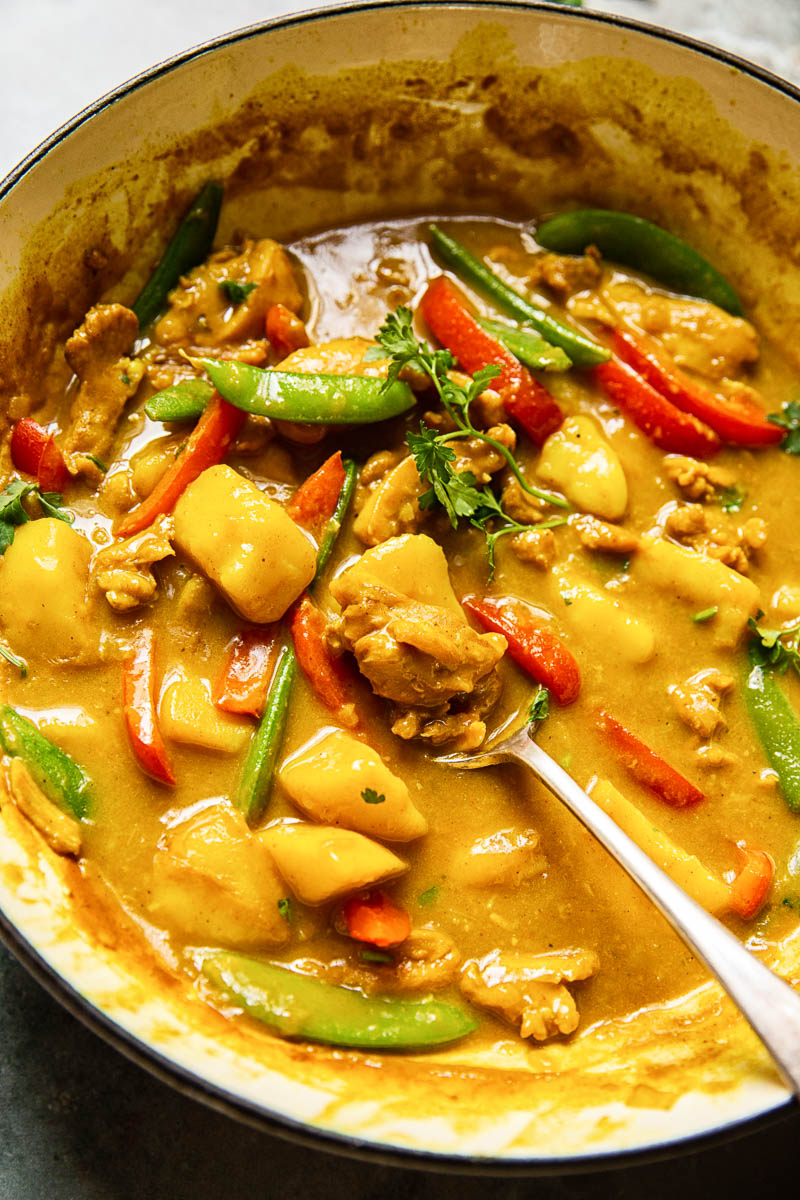
Chinese Curry Chicken
A flavorful and aromatic dish featuring tender chicken pieces simmered in a rich curry sauce with vegetables and served with steamed rice. This recipe is a must-try for any occasion.
🥘Ingredients
- 1.5 lbs boneless chicken thighs
- 2 tbsp soy sauce
- 1 tbsp ginger, grated
- 2 cloves garlic, minced
- 1 tbsp vegetable oil
- 1 tbsp curry powder
- 1 tsp turmeric
- 1 tsp cumin
- 1 can (14 oz) diced tomatoes
- 1 cup chicken broth
- 1 cup coconut milk
- 1 bell pepper, sliced
- 1 small onion, diced
- 1 cup frozen peas
- 2 cups jasmine rice, cooked
👨🍳Directions
-
1 Preheat oven to 375°F (190°C) if baking chicken separately. In a bowl, mix chicken thighs with soy sauce, grated ginger, and minced garlic. Set aside.
-
2 In a large pot or deep skillet, heat vegetable oil over medium heat. Add curry powder, turmeric, and cumin, stirring for 30 seconds until fragrant.
-
3 Add diced onion, bell pepper, and chicken pieces to the pot. Cook for 5 minutes until the chicken starts to brown.
-
4 Pour in diced tomatoes (with juice), chicken broth, and coconut milk. Bring to a boil, then reduce heat to low, cover, and simmer for 25-30 minutes, or until chicken is cooked through and sauce thickens.
-
5 Stir in frozen peas and cook for an additional 2-3 minutes. Taste and adjust seasoning if needed.
-
6 Serve hot with steamed jasmine rice.
🔧Equipment
- Large pot or deep skillet
- Mixing bowls
- Knife and cutting board
- Measuring cups and spoons
- Wooden spoon or spatula
📊Nutrition Facts (per serving)
📝Notes
Watch Video Of How Chinese Curry Chicken Works
This Chinese curry chicken recipe is always a crowd-pleaser because it’s simple enough to make ahead and still tastes fresh when served, making it perfect for busy weeknights or when you need a hearty dish for family gatherings. The rich, aromatic sauce balances perfectly with the tender chicken and veggies, so it feels special without needing fancy ingredients or hours of prep—just enough to bring everyone together. It’s that kind of dish that feels comforting no matter the occasion, whether it’s a casual weeknight meal or a Sunday dinner with the whole family.
❓ Frequently Asked Questions About Chinese Curry Chicken
What is the key difference between traditional Chinese curry and the version used in this recipe?
In this recipe, we use a Chinese-style curry paste that’s typically made with ingredients like garlic, ginger, lemongrass, galangal, and spices like coriander, cumin, and turmeric. Unlike Western curry pastes, it often includes fresh herbs like Thai basil or cilantro and is less sweet. The dish also often incorporates stir-frying techniques rather than slow-cooking, which keeps the chicken tender and flavors vibrant.
—
Why does the recipe call for stir-frying the chicken before adding the curry paste?
Stir-frying the chicken first ensures it cooks quickly and evenly, preventing it from becoming tough or rubbery. The high heat also helps release the juices, making the final dish juicy and flavorful. Additionally, this method allows the curry paste to develop its aromas more effectively by caramelizing the spices and herbs before they’re mixed with the sauce.
—
Can I substitute any of the fresh ingredients in the curry paste, and if so, what are the best replacements?
Yes! Here are some practical swaps: – Galangal → Ginger (use a small piece, it adds a similar earthy warmth). – Thai basil → Regular basil or parsley (though Thai basil’s anise flavor is unique; it won’t be identical). – Lemongrass → A pinch of lemon zest + ½ tsp lemon juice (for brightness). – Fresh turmeric → Ground turmeric (use ½ the amount, as it’s stronger). For the curry paste itself, a mix of 50% Chinese curry paste + 50% coconut milk-based curry paste (like Thai or Indian) works well if you’re short on time.
—
How can I make sure the curry sauce isn’t too watery or too thick?
To control consistency: – For a thinner sauce: Add 1–2 tbsp of water or chicken broth while simmering, then reduce heat to let it evaporate. Stirring in a small amount of cornstarch slurry (1 tbsp cornstarch + 2 tbsp water) can also thicken it gradually. – For a thicker sauce: Simmer longer, or reduce the sauce by half before adding the chicken. If it’s too thick, gently warm it with a splash of coconut milk or broth. – Pro tip: After cooking, strain the sauce through a fine sieve to remove any lumps from the paste, which can make it appear watery.
—
What’s the best way to store leftovers, and how long will they last?
Store leftovers in an airtight container in the fridge for up to 4 days. To reheat: – Stovetop: Warm on low heat, stirring occasionally, until bubbly (about 5–7 minutes). – Microwave: Cover with a damp paper towel and heat in 30-second bursts, stirring in between, until piping hot. For longer storage (up to 3 months), freeze in portions. Thaw overnight in the fridge before reheating. The flavors may soften slightly after freezing, so slightly more oil or broth can help revive the dish.
