
recipe for chicken livers

The Best recipe for chicken livers
Chicken livers are one of those ingredients that seem intimidating at first—like stepping into a kitchen full of unfamiliar tools—but once you get the hang of it, they’re actually one of the most rewarding and flavorful things you can cook. I’ve been making them since I was raising my kids, and honestly, I never thought I’d love them so much. They’re rich, slightly earthy, and packed with iron and vitamin B12, which means they’re a real powerhouse for energy and keeping everyone in my family strong. My kids used to think they were weird at first, but once they tasted how they taste when cooked just right—tender, caramelized, and full of depth—they’d beg for seconds. It’s not just a meal; it’s a moment. Whether it’s for a special dinner or just a quiet night in, these livers make everything feel special.
I love this recipe because it’s simple enough to pull off even on busy days, but it feels like a little treat when you’re done. My family and I love it for its bold flavor, but also because it’s so versatile. You can serve it with crusty bread, a fresh salad, or even just a simple green vegetable to keep things light. The kids always ask if we can make it again, and honestly, I don’t blame them. It’s one of those dishes that feels like a little luxury without being overly complicated. Plus, when you’re cooking with livers, you’re getting a real nutritional boost—more iron than most red meats, and a protein that helps keep things running smoothly. It’s not just food; it’s nourishment in every bite. And honestly? It’s a great way to introduce kids to healthier eating without making them feel like they’re being forced to eat something they don’t like.
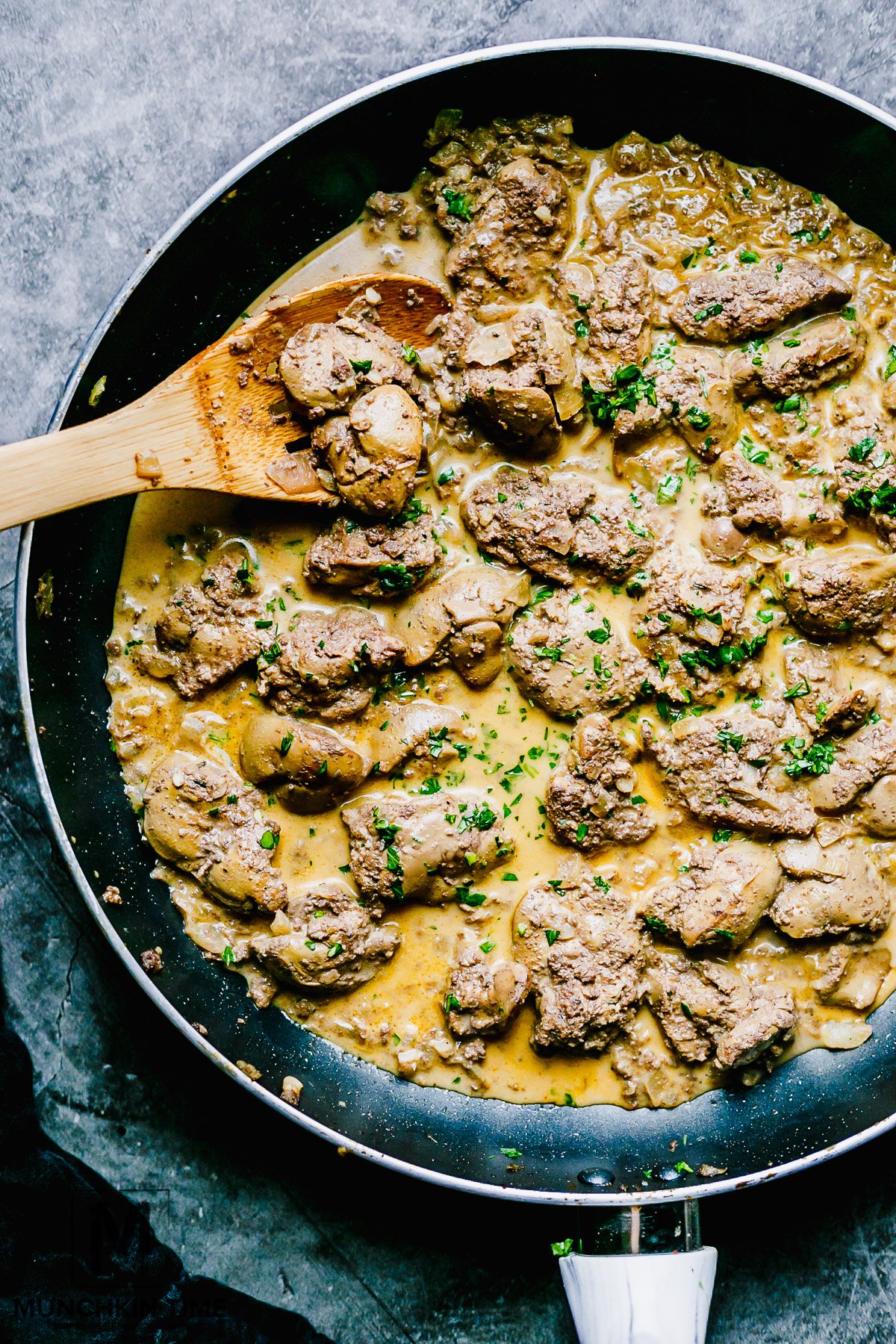
Pan-Seared Chicken Livers with Garlic Butter
A rich and flavorful dish featuring tender chicken livers cooked in a garlicky butter sauce, perfect for a special occasion or a gourmet meal. This recipe is a must-try for any occasion.
🥘Ingredients
- 400g chicken livers, cleaned and patted dry
- 2 tbsp olive oil
- 2 tbsp butter
- 4 cloves garlic, minced
- 1 tsp fresh thyme (or ½ tsp dried)
- 2 tbsp all-purpose flour
- 1 cup beef or chicken stock
- 1 tbsp Dijon mustard
- 1 tbsp balsamic vinegar
- Salt and black pepper to taste
- Fresh parsley, chopped
- 1 tbsp parsley oil
👨🍳Directions
-
1 Pat the chicken livers dry with paper towels to remove excess moisture. Season lightly with salt and pepper.
-
2 In a large skillet, heat olive oil and butter over medium-high heat. Add the minced garlic and thyme, sautéing for 30 seconds until fragrant.
-
3 Add the chicken livers to the skillet in a single layer. Cook for 3–4 minutes per side until golden brown and cooked through (internal temperature should reach 165°F/74°C). Remove from skillet and set aside.
-
4 In the same skillet, sprinkle the flour evenly over the livers. Stir well to coat, then add beef or chicken stock. Stir continuously for 2–3 minutes until the sauce thickens slightly.
-
5 Reduce heat to low, add Dijon mustard and balsamic vinegar, then simmer for 3–4 minutes until the sauce is glossy and slightly reduced.
-
6 Return the livers to the skillet, spooning the sauce over them. Cook for an additional 1–2 minutes to warm through. Adjust seasoning if needed.
-
7 Garnish with chopped parsley and a drizzle of parsley oil before serving.
🔧Equipment
- Large skillet or Dutch oven
- Knife and cutting board
- Mixing bowls
- Measuring spoons
- Wooden spoon
- Oven (for optional baking if preferred)
📊Nutrition Facts (per serving)
📝Notes
Watch Video Of How Pan-Seared Chicken Livers with Garlic Butter Works
This chicken liver recipe is always a solid choice for family gatherings because it’s rich, flavorful, and surprisingly easy to make without being overly complicated. Whether you’re serving it at a casual dinner or a more formal meal, it adds a special touch that impresses guests while keeping prep simple—perfect for when you want to elevate a dish without spending hours in the kitchen. Plus, it’s a great way to use up any leftover livers or even store-bought ones, making it a practical and crowd-pleasing option.
❓ Frequently Asked Questions About Pan-Seared Chicken Livers with Garlic Butter
1. What is the best way to prepare chicken livers for cooking? The best way to prepare chicken livers is to first rinse them under cold water to remove any blood or impurities. Pat them dry with paper towels and trim off any excess fat or connective tissue. You can also marinate them in a mixture of olive oil, garlic, lemon juice, and herbs like parsley or thyme for about 30 minutes to enhance flavor.
2. How do I know if chicken livers are fresh and safe to eat? Fresh chicken livers should have a vibrant color—usually a deep red or pinkish hue. They should feel firm to the touch and not overly slimy or mushy. Avoid livers that have a strong, unpleasant odor, as this can indicate spoilage. Additionally, check the packaging for any signs of freezer burn if you purchased frozen livers.
3. What are some common flavor combinations to pair with chicken livers? Chicken livers pair beautifully with a variety of flavors. Classic combinations include sautéing them in garlic butter, pan-searing with shallots and white wine, or cooking them in a rich gravy with mushrooms and herbs. For a Mediterranean twist, try marinating them in olive oil, lemon, and oregano before grilling. Another popular option is to mix them with onions, carrots, and celery in a stew or braise.
4. How should I cook chicken livers to ensure they are cooked through and tender? To ensure chicken livers are fully cooked and tender, cook them at a high heat for about 3–5 minutes per side. Overcooking can make them tough and dry, so it’s best to use a non-stick pan and avoid overcrowding the pan. You can also consider poaching them in broth or simmering them in a sauce for a softer texture. If you’re serving them in a dish like pâté or a stew, cooking them gently in a sauce will help retain their moisture.
5. What are some creative ways to use chicken livers beyond traditional dishes like pâté? Beyond classic dishes like pâté, chicken livers can be used in many creative ways. You can blend them into a creamy sauce for pasta, mix them into a risotto with mushrooms and white wine, or stuff them into vegetables like bell peppers or zucchini. They also work well in savory tarts, quiches, or even as a filling for stuffed shells. For a quick meal, you can also make a simple stir-fry with them, peppers, and onions.
