
red curry chicken recipe thai

The Best red curry chicken recipe thai
I’ve been making Thai red curry chicken for years, and it’s one of those dishes that feels like a hug in a bowl. There’s something about the deep, spicy-sweet heat of the curry that makes it feel special, whether it’s for a weeknight dinner or a weekend gathering. My kids—especially my little one who’s just learning to enjoy bold flavors—always ask for seconds, and honestly, it’s one of the few meals they’ll eat more than once. The way the coconut milk thickens into a velvety sauce and the chicken glistens with the spices? It’s comforting in the best way, like a cozy blanket for your taste buds.
This recipe isn’t just about flavor; it’s practical too. It’s easy enough to make ahead and reheat, so it’s perfect for meal prep when I’m short on time but still want something hearty. My husband loves it because it’s filling without being heavy, and it’s a great way to use up chicken that’s been in the fridge for a bit—no waste, just deliciousness. And the health benefits? Well, the chicken is lean, and the spices in the curry—like turmeric and ginger—have been shown to have anti-inflammatory properties. It’s not just a meal; it’s a way to eat well without feeling like you’re missing out on anything fun.
I love that this dish works for different occasions. It’s rich enough to feel like a celebration, but simple enough to be a daily staple. My family doesn’t even notice when I swap out some of the red curry paste for a lighter version—just a bit less sugar and more herbs—and it still tastes amazing. It’s that kind of recipe that feels like home, whether you’re serving it for a holiday dinner or just because you’re craving something warm and flavorful. Plus, the kids love the way the chicken sticks to their fork, and the sauce is always a hit with dipping bread or rice. It’s a win-win.
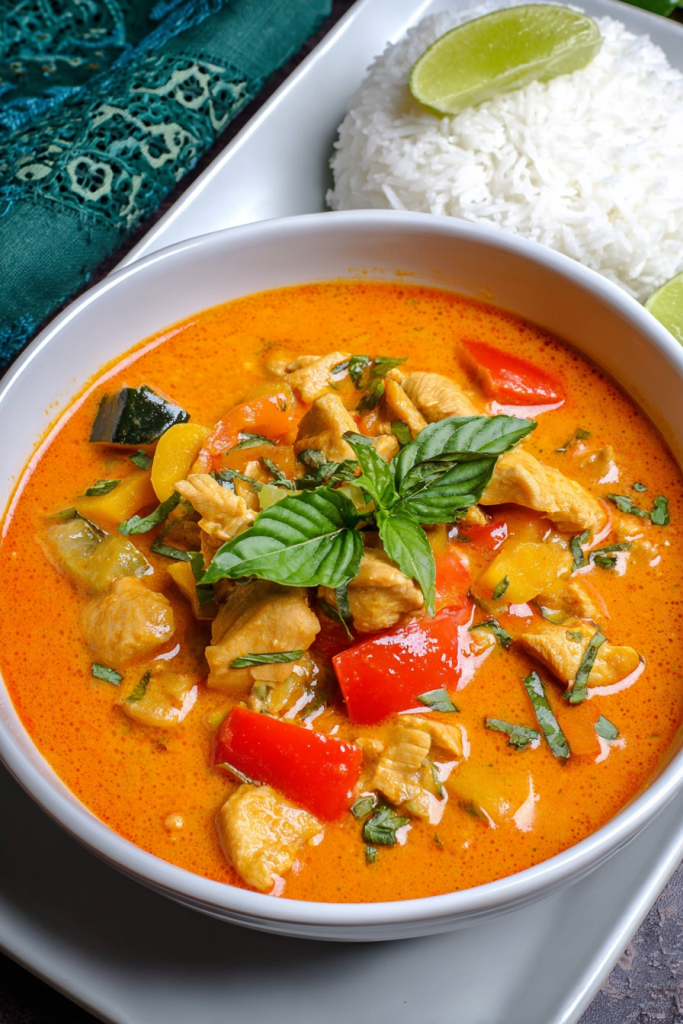
Thai Red Curry Chicken
A flavorful and aromatic Thai red curry chicken dish featuring tender chicken in a rich, spicy red curry sauce with coconut milk, tomatoes, and aromatic herbs. This recipe is a must-try for any occasion.
🥘Ingredients
- 1.5 lbs boneless, skinless chicken thighs
- 1 tbsp fish sauce
- 1 tbsp lime juice
- 1 tsp salt
- 1 tsp black pepper
- 2 tbsp red curry paste
- 1 can (13.5 oz) coconut milk
- 1 can (14.5 oz) crushed tomatoes
- 1 tbsp palm sugar or brown sugar
- 1 tbsp soy sauce
- 1 stalk lemongrass, bruised and chopped
- 3 cloves garlic, minced
- 1-inch galangal or ginger, sliced
- 1 tbsp vegetable oil
- 1 cup Thai basil leaves
- 1 bell pepper, sliced
- 1 cup Thai eggplant or zucchini, cubed
- 1 cup bamboo shoots, drained
👨🍳Directions
-
1 Pat chicken thighs dry with a paper towel and season with fish sauce, lime juice, salt, and black pepper. Set aside.
-
2 In a large skillet or wok, heat vegetable oil over medium-high heat. Add lemongrass, garlic, and galangal (or ginger). Sauté for 1 minute until fragrant.
-
3 Add red curry paste to the skillet and stir for 1 minute to remove raw paste smell and develop flavor.
-
4 Pour in coconut milk and crushed tomatoes. Stir well and bring to a gentle simmer. Add sugar and soy sauce, stirring until sugar dissolves.
-
5 Add chicken thighs to the skillet, ensuring they are submerged in the sauce. Simmer for 15-20 minutes, or until chicken is cooked through and tender.
-
6 If using optional add-ins, add them in the last 5 minutes of cooking. Stir in Thai basil leaves just before serving.
-
7 Taste and adjust seasoning if needed (add more fish sauce for saltiness or lime juice for tang). Serve hot with steamed jasmine rice.
🔧Equipment
- Large skillet or wok
- Wooden spoon
- Mixing bowls
- Knife and cutting board
- Measuring cups and spoons
📊Nutrition Facts (per serving)
📝Notes
Watch Video Of How Thai Red Curry Chicken Works
This Thai red curry chicken recipe is always a crowd-pleaser because it’s simple enough to make ahead and still tastes fresh when served, making it perfect for busy family gatherings. Whether it’s a weeknight dinner or a weekend potluck, the bold flavors and comforting texture make it a reliable choice that everyone will love—no fuss, just great taste. Plus, it’s forgiving enough that even if someone’s not a seasoned cook, they’ll still end up with something delicious.
❓ Frequently Asked Questions About Thai Red Curry Chicken
1. What is the key difference between Thai red curry and green curry in terms of ingredients?
The key difference lies primarily in the base spices and color. Thai red curry uses a paste made with red chili peppers, galangal, lemongrass, kaffir lime leaves, and thai chilies, which give it a deeper, spicier, and slightly fruity flavor with a vibrant red hue. In contrast, green curry incorporates green chilies, mint, and coriander leaves, resulting in a fresher, more herbaceous, and less intense heat profile.
—
2. Can I substitute the red curry paste for green curry paste in this recipe?
No, it’s not recommended. The red curry paste has a distinct spicier, earthier, and slightly sweet profile due to its ingredients like galangal and red chilies. Using green curry paste would alter the flavor significantly, making the dish taste more herbaceous and less balanced. If you’re short on red paste, you could make a simple red curry paste at home using dried red chilies, galangal, and lemongrass, but authentic taste is best achieved with store-bought paste.
—
3. How do I adjust the spice level if the red curry is too hot for my taste?
To reduce the heat, start by removing a few whole red chilies from the paste before cooking (or use a milder red chili paste if available). You can also: – Simmer the curry longer to let the chilies soften slightly. – Add more coconut milk (which is cooling) to dilute the spice. – Strain out some of the paste and use a lighter one (like a mix of red and green paste). – Sweeten the curry with a bit of palm sugar or brown sugar to balance the heat. Always taste as you go and adjust gradually—Thai cuisine often relies on balance, not just heat.
—
4. Why does my red curry chicken sometimes taste bland or lack depth?
A few common reasons include: – Underutilized aromatics: Ensure you’re using galangal, lemongrass, and kaffir lime leaves (fresh if possible) in the paste. Skipping these can make the dish flat. – Not enough coconut milk: This is a key fat that carries the flavors. Use full-fat coconut milk (not watery light coconut milk) and add it gradually to avoid watering down the curry. – Overcooking the chicken: Thai curries are best served medium-rare to medium. Overcooking dries out the meat and removes its natural juices. – Missing umami: A pinch of fish sauce (or soy sauce for vegetarians) and a splash of lime juice at the end can add depth. Some chefs also use a tiny bit of dried shrimp or mushrooms for extra richness. – Paste quality: Cheap or inconsistent pastes can lack complexity. If possible, buy from a trusted Thai market or make your own.
—
5. How do I serve Thai red curry chicken properly to enhance the dining experience?
To make the dish feel authentic and impressive: – Garnish creatively: Top with cilantro, lime wedges, and pickled vegetables (like Thai eggplant or daikon). – Pair with fresh sides: Serve with steamed jasmine rice, Thai cucumber salad (som tam), or warm naan. – Use the right utensils: A banh pho spoon (a long wooden spoon) is traditional for scooping curry. – Balance textures: Offer a crunchy element like crushed peanuts or toasted sesame seeds. – Adjust seasoning at the table: Thai curries are often served with fish sauce, lime, and chili flakes for personalization. – Serve with a side of pickled mustard greens (for tanginess) or a simple mango salad to cut through the richness.
—
6. Can I make this red curry chicken ahead of time and reheat it?
Yes, but with caution: – Best reheated fresh: Thai curries taste best when served immediately after cooking, as flavors intensify while hot. If reheating, do it gently in a low oven (200°F/95°C) for 10–15 minutes to avoid breaking down the coconut milk or drying out the chicken. – Storage tips: – Store in an airtight container in the fridge for up to 3 days. – Reheat with a splash of coconut milk or water to restore moisture. – Avoid freezing: Freezing can alter the texture, especially of the chicken or coconut milk. – Add fresh ingredients last: If reheating, stir in any garnishes (like herbs or lime) just before serving.
