
thai green chicken recipe

The Best thai green chicken recipe
I’ve made this Thai green chicken recipe more times than I can count, and it’s one of those dishes that never gets old. It’s creamy, fragrant, and just spicy enough to keep things interesting without overwhelming the flavors. My kids ask for it at least once a week, and honestly, I don’t blame them—it’s that good. The best part is how quick it comes together, especially on busy weeknights when I need something flavorful but don’t have hours to spend in the kitchen.
What I love most about this recipe is how balanced it is. The coconut milk adds richness, the green curry paste brings the heat and depth, and the fresh herbs like basil and cilantro brighten everything up. Plus, it’s packed with protein from the chicken and nutrients from the veggies, making it a meal I feel good about serving my family. It’s versatile too—serve it over jasmine rice for a hearty dinner, or pair it with rice noodles for a lighter option. Either way, it’s a crowd-pleaser that works just as well for a casual weeknight as it does for a weekend gathering with friends.
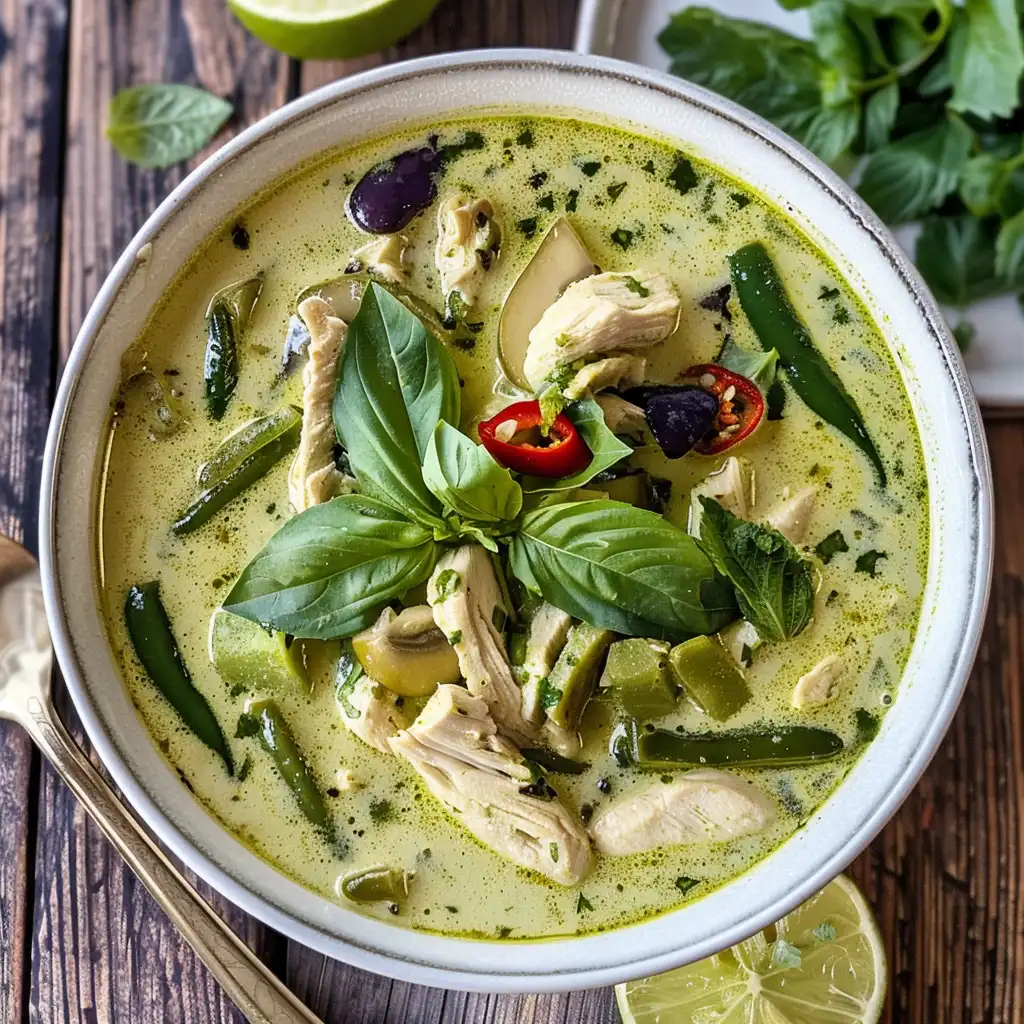
Thai Green Chicken Curry
A fragrant and creamy Thai green curry with tender chicken, fresh vegetables, and aromatic herbs. This dish is packed with bold flavors and comes together quickly for a satisfying weeknight meal.
🥘Ingredients
- 2-3 tbsp Thai green curry paste (store-bought or homemade)
- 1 stalk lemongrass, finely chopped (white part only)
- 1-inch piece galangal or ginger, sliced
- 3 cloves garlic, minced
- 1 shallot, chopped
- 1-2 green chilies, chopped (adjust to taste)
- 1 tsp coriander seeds, toasted and ground
- 1 tsp cumin seeds, toasted and ground
- 1 tbsp lime zest
- 1 tbsp cilantro stems, chopped
- 1 lb (450g) boneless, skinless chicken thighs or breasts, sliced into thin strips
- 1 can (14 oz) coconut milk, divided
- 1 cup chicken broth
- 1 tbsp fish sauce
- 1 tbsp palm sugar or brown sugar
- 1 tbsp soy sauce
- 1 red bell pepper, sliced
- 1 cup Thai eggplant or zucchini, sliced
- 1 cup bamboo shoots, drained and rinsed
- 4-5 kaffir lime leaves, torn
- 1 cup Thai basil leaves
- 1 tbsp vegetable oil
- Fresh cilantro leaves
- Thai basil leaves
- Sliced red chilies
- Lime wedges
👨🍳Directions
-
1 If making homemade curry paste, combine lemongrass, galangal, garlic, shallot, green chilies, coriander seeds, cumin seeds, lime zest, and cilantro stems in a mortar and pestle or blender. Grind or blend into a smooth paste, adding a little water if needed. (Skip this step if using store-bought paste.)
-
2 Heat vegetable oil in a large skillet or wok over medium heat. Add 2-3 tbsp of green curry paste and stir-fry for 1-2 minutes until fragrant.
-
3 Pour in about 1/4 cup of the thick coconut cream (the solid part from the top of the can) and stir well to combine with the paste. Cook for 2-3 minutes until the oil begins to separate slightly.
-
4 Add the chicken strips and cook for 3-4 minutes, stirring occasionally, until the chicken is no longer pink on the outside.
-
5 Pour in the remaining coconut milk and chicken broth. Stir in fish sauce, palm sugar, and soy sauce. Bring to a gentle simmer.
-
6 Add the bell pepper, eggplant (or zucchini), bamboo shoots, and kaffir lime leaves. Simmer for 8-10 minutes, or until the vegetables are tender and the chicken is cooked through.
-
7 Stir in the Thai basil leaves and remove from heat. Taste and adjust seasoning with more fish sauce or sugar if needed.
-
8 Serve hot, garnished with fresh cilantro, Thai basil, sliced red chilies, and lime wedges. Pair with steamed jasmine rice.
🔧Equipment
- Mortar and pestle (or blender)
- Large skillet or wok
- Wooden spoon
- Cutting board
- Chef’s knife
- Measuring spoons
📊Nutrition Facts (per serving)
📝Notes
Watch Video Of How Thai Green Chicken Curry Works
This Thai green chicken recipe is one of those dishes that always delivers—flavorful, easy to make, and perfect for any occasion. Whether it’s a weeknight dinner or a family gathering, the balance of creamy coconut, spicy green curry, and tender chicken makes it a crowd-pleaser every time. I love that it’s quick enough for busy nights but still feels special enough to serve to guests.
❓ Frequently Asked Questions About Thai Green Chicken Curry
1. What makes Thai green chicken curry different from other Thai curries?
Thai green chicken curry stands out due to its vibrant green color, which comes from fresh green chilies and herbs like cilantro, basil, and kaffir lime leaves. Unlike red or yellow curries, which use dried chilies or turmeric for color, the green curry has a fresher, more aromatic flavor with a balance of spicy, sweet, and savory notes. It’s also typically creamier due to the use of coconut milk.
2. Can I make Thai green chicken curry less spicy?
Yes! To reduce the heat, you can adjust the number of green chilies in the curry paste or remove the seeds before blending. Adding more coconut milk or a touch of palm sugar can also help mellow the spiciness. If you’re using store-bought paste, check the label for heat levels—some brands offer mild versions.
3. What’s the best protein substitute for chicken in this recipe?
Thai green curry is versatile! Popular substitutes include shrimp, tofu, beef, or pork. For seafood, add shrimp or fish fillets toward the end of cooking to prevent overcooking. Tofu works well for a vegetarian option—pan-fry it first for a crispier texture. Beef or pork should be thinly sliced and simmered until tender.
4. How do I store and reheat leftover Thai green chicken curry?
Store leftovers in an airtight container in the fridge for up to 3–4 days or freeze for up to 3 months. To reheat, warm it gently on the stove over low heat, adding a splash of water or coconut milk to restore creaminess. Avoid microwaving if possible, as it can separate the coconut milk. Always ensure the curry reaches a boil before serving.
5. What vegetables pair well with Thai green chicken curry?
Classic additions include Thai eggplant, bamboo shoots, bell peppers, and green beans. For extra freshness, stir in baby corn, zucchini, or snap peas. Leafy greens like spinach or bok choy can be added at the end for a quick wilt. Avoid overcooking vegetables to maintain their texture.
