
low carb kung pao chicken recipe

The Best low carb kung pao chicken recipe
I’ve been making this low-carb Kung Pao chicken for years, and it’s one of those recipes that just sticks because it’s simple, flavorful, and actually works for our busy weeknights. My kids ask for it all the time—even my picky eater, who usually turns his nose up at anything with veggies, inhales it without complaint. The best part? It comes together in about 20 minutes, so it’s perfect for those nights when I don’t have the energy to fuss with a complicated meal but still want something that tastes like takeout, minus the guilt.
What I love most about this version is how it keeps all the bold, spicy-sweet flavors of the classic dish without the heavy sugar or unnecessary carbs. I swap out the traditional cornstarch for a light coating of almond flour, and instead of sugary sauces, I use a mix of coconut aminos and a touch of erythritol to balance the heat. It’s still packed with protein, healthy fats, and fiber from the bell peppers and peanuts, so it keeps us full without the crash afterward. Plus, it reheats like a dream, which means leftovers are just as good the next day—something I always appreciate when I’m meal prepping for the week.
This dish is versatile enough for a quick family dinner but also nice enough to serve if we have friends over. I’ve made it for potlucks and casual get-togethers, and it’s always a hit. The spice level is easy to adjust, so if you’ve got little ones or heat-sensitive eaters, you can dial it back without losing the depth of flavor. And because it’s naturally low-carb and gluten-free, it fits into a lot of different dietary needs without feeling like a compromise. Honestly, it’s one of those recipes I keep coming back to because it checks all the boxes—tasty, easy, healthy, and something everyone at the table will actually eat.
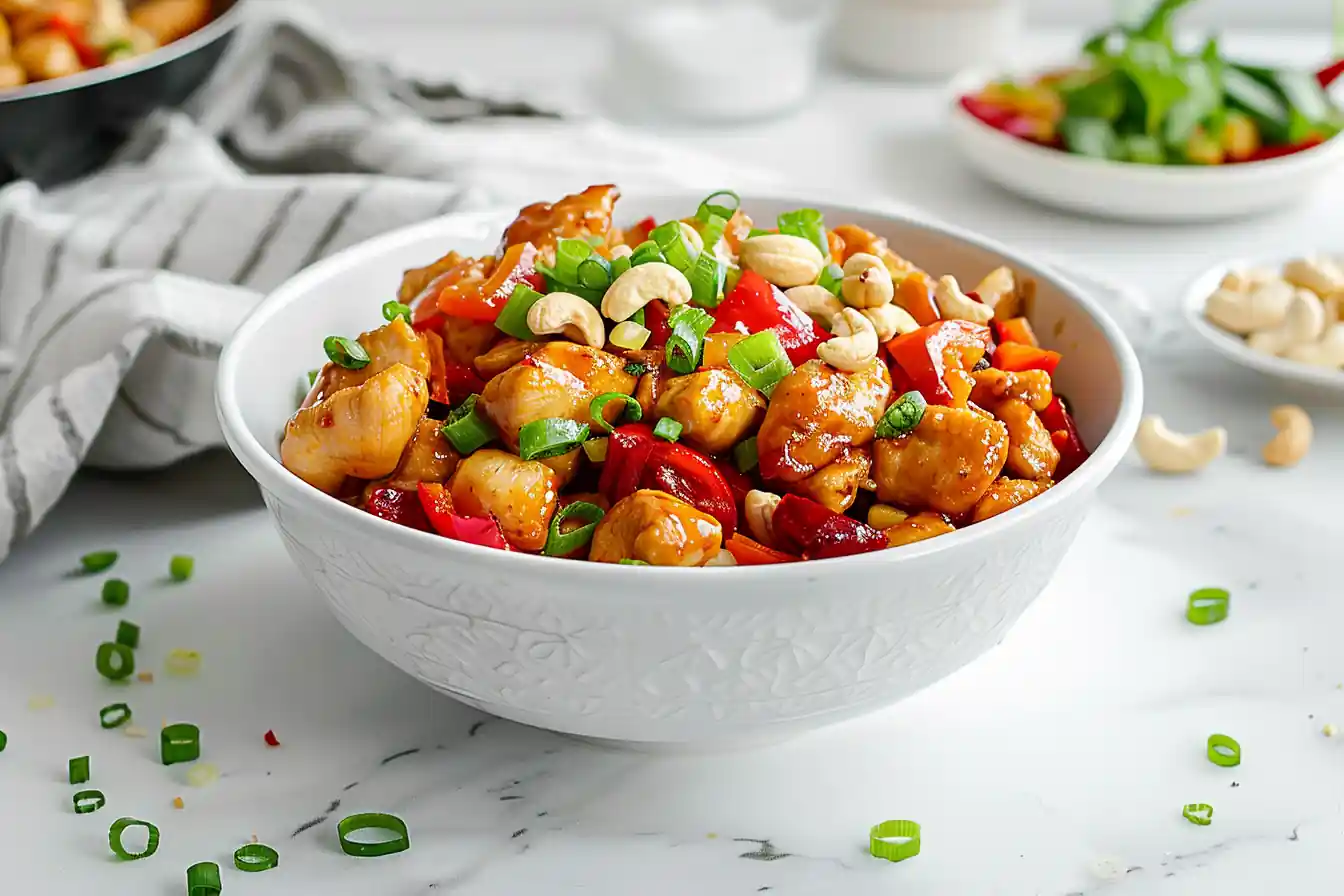
Low Carb Kung Pao Chicken
A spicy and savory Chinese classic reimagined with low-carb ingredients. This dish features tender chicken, crunchy peanuts, and a bold sauce with just the right amount of heat, all while keeping carbs in check.
🥘Ingredients
- 1.5 lbs (680g) boneless, skinless chicken thighs, cut into 1-inch pieces
- 2 tbsp soy sauce (or coconut aminos for lower sodium)
- 1 tbsp Shaoxing wine (or dry sherry)
- 1 tbsp cornstarch (or arrowroot powder for lower carb)
- 1 tbsp avocado oil (or other high-smoke-point oil)
- 3 tbsp soy sauce (or coconut aminos)
- 2 tbsp rice vinegar
- 1 tbsp erythritol (or monk fruit sweetener)
- 1 tbsp sugar-free chili garlic sauce (or 1 tsp red pepper flakes)
- 1 tsp sesame oil
- 1 tsp grated ginger
- 2 cloves garlic, minced
- 1/2 cup chicken broth (low-sodium)
- 1 tsp xanthan gum (or 1/2 tsp glucomannan powder, optional for thickening)
- 2 tbsp avocado oil (divided)
- 1/2 cup dry-roasted peanuts (or almonds for variation)
- 2-3 dried red chilies (adjust to taste)
- 3 green onions, cut into 1-inch pieces
- 1 red bell pepper, diced (optional for extra crunch)
👨🍳Directions
-
1 In a bowl, combine chicken pieces with soy sauce, Shaoxing wine, cornstarch, and 1 tbsp avocado oil. Toss to coat evenly and let marinate for 10 minutes.
-
2 In a separate bowl, whisk together all sauce ingredients except xanthan gum. Set aside.
-
3 Heat 1 tbsp avocado oil in a large skillet or wok over medium-high heat. Add chicken in a single layer and cook for 3-4 minutes per side until browned and cooked through. Remove chicken from skillet and set aside.
-
4 In the same skillet, add remaining 1 tbsp avocado oil. Add dried chilies and stir for 10 seconds until fragrant. Add peanuts and stir for another 30 seconds until lightly toasted.
-
5 Add bell pepper (if using) and green onions to the skillet. Stir-fry for 1-2 minutes until vegetables are slightly softened.
-
6 Return chicken to the skillet. Pour in the sauce mixture and stir to combine. If using xanthan gum, sprinkle it over the dish while stirring to thicken the sauce. Cook for 1-2 minutes until the sauce has thickened and everything is well-coated.
-
7 Remove from heat and drizzle with a little extra sesame oil if desired. Garnish with additional green onions and serve hot.
🔧Equipment
- Large skillet or wok
- Mixing bowls
- Whisk
- Tongs or spatula
- Measuring spoons and cups
- Knife and cutting board
📊Nutrition Facts (per serving)
📝Notes
Watch Video Of How Low Carb Kung Pao Chicken Works
This low carb Kung Pao chicken is one of those recipes I always reach for because it’s quick, flavorful, and works for just about any occasion. It’s packed with protein, keeps carbs in check, and still delivers that bold, spicy-sweet taste everyone loves—whether it’s a weeknight dinner or a family get-together. Plus, it’s easy to double or triple the batch, so you can feed a crowd without extra fuss.
❓ Frequently Asked Questions About Low Carb Kung Pao Chicken
1. What makes this Kung Pao Chicken low-carb?
This recipe is low-carb because it replaces traditional sugar with a sugar-free sweetener (like erythritol or monk fruit) and uses cornstarch alternatives such as xanthan gum or arrowroot powder for thickening. It also skips the deep-frying step, reducing unnecessary carbs from batter or breading.
2. Can I make this Kung Pao Chicken without peanuts?
Yes! You can substitute peanuts with other low-carb nuts like almonds, cashews, or walnuts. For a nut-free version, try using roasted pumpkin seeds or simply omit them entirely—the dish will still be flavorful.
3. How do I adjust the spice level in this recipe?
To control the heat, adjust the amount of dried red chilies or Sichuan peppercorns. For a milder version, remove the seeds from the chilies or reduce their quantity. For extra spice, add a pinch of cayenne pepper or a dash of hot sauce.
4. Can I meal prep this Kung Pao Chicken?
Absolutely! Store the cooked chicken in an airtight container in the fridge for up to 4 days. Reheat gently in a pan or microwave, adding a splash of water or broth to prevent drying. The peanuts may lose some crunch, so consider adding them fresh when serving.
5. What sides pair well with low-carb Kung Pao Chicken?
Great low-carb side options include cauliflower rice, zucchini noodles, or stir-fried bok choy. For extra texture, serve with steamed broccoli or a simple cucumber salad. Avoid traditional rice or noodles to keep it keto-friendly.
