
chicken thigh recipe cast iron

- The Best chicken thigh recipe cast iron
- Crispy Cast Iron Chicken Thighs with Garlic Butter Sauce
- 🥘Ingredients
- 👨🍳Directions
- 🔧Equipment
- 📊Nutrition Facts (per serving)
- 📝Notes
- Watch Video Of How Crispy Cast Iron Chicken Thighs with Garlic Butter Sauce Works
- ❓ Frequently Asked Questions About Crispy Cast Iron Chicken Thighs with Garlic Butter Sauce
The Best chicken thigh recipe cast iron
Chicken thighs are my go-to protein for so many reasons—especially when roasted in a cast iron skillet. They stay juicy and flavorful even after being cooked, which is something thin-cut breasts just can’t match. I’ve been making this recipe for years, and it’s always a hit with my family, especially on busy weeknights when everyone’s hungry but not in the mood to fuss over complicated sides. My kids love the crispy skin, and my husband always says they’re the perfect balance of tender and hearty, not too dry, not too mushy. It’s a recipe that works for everything—weekday dinners, game-day snacks, or even a simple meal when we’re all just tired of the same old thing.
What really makes this dish special is how easy it is to customize. You can season it with just salt and pepper, or go all out with garlic, paprika, and a little honey for a sweet-savory kick. The cast iron skillet holds onto the heat and flavor better than anything else, so the chicken stays crispy on the outside while staying moist inside. And because it’s just chicken and a few simple ingredients, it’s also one of the healthier options I serve—lean protein with no added sugars or unhealthy fats. My kids don’t even notice how good it is for them, and honestly? Neither do I. It’s that kind of simple, satisfying meal that doesn’t feel like a chore to make. Plus, the cast iron skillet is a staple in my kitchen, and this recipe proves why—it’s versatile, reliable, and always delivers.
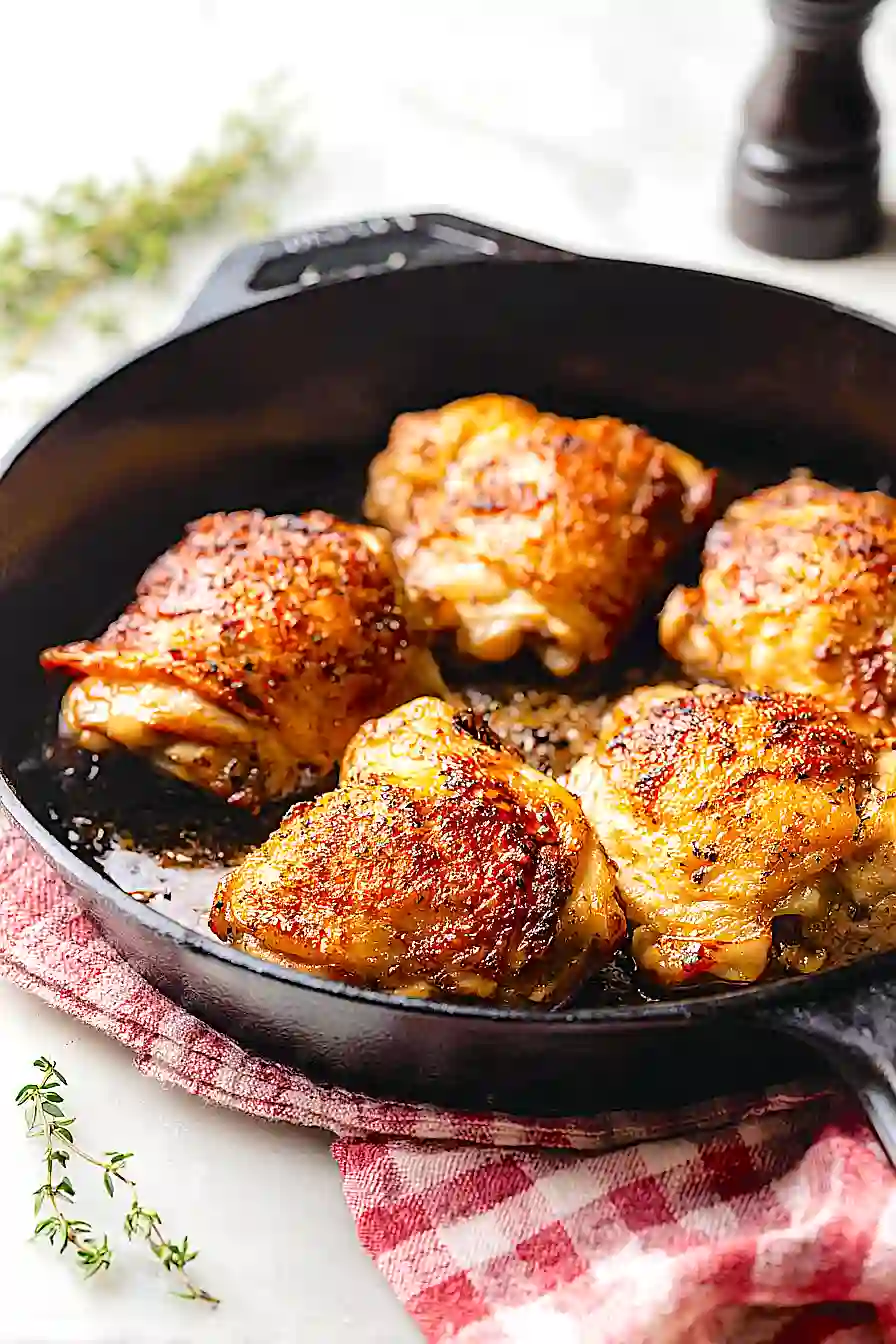
Crispy Cast Iron Chicken Thighs with Garlic Butter Sauce
Juicy, crispy chicken thighs baked in a cast iron skillet with a rich garlic butter sauce. Perfect for a weeknight dinner with minimal effort.
🥘Ingredients
- 4 bone-in, skin-on chicken thighs
- 2 tbsp olive oil
- 1 tsp salt
- 1 tsp black pepper
- 1 tsp paprika
- 3 tbsp unsalted butter
- 4 cloves garlic, minced
- 1/2 cup chicken broth
- 1 tbsp lemon juice
- 1/4 cup chopped fresh parsley
👨🍳Directions
-
1 Preheat oven to 400°F (200°C). Season chicken thighs with salt, pepper, and paprika.
-
2 Heat olive oil in the cast iron skillet over medium-high heat. Add chicken thighs skin-side down and sear for 5-6 minutes until golden brown. Flip and sear the other side for another 5 minutes.
-
3 Transfer chicken to a baking sheet and place in the oven. Bake for 20-25 minutes until internal temperature reaches 165°F (74°C).
-
4 In a separate pan, melt butter over medium heat. Add minced garlic and sauté for 30 seconds until fragrant. Pour in chicken broth and lemon juice, simmer for 2 minutes. Stir in parsley.
-
5 Once chicken is done, remove from oven and let rest for 5 minutes. Pour the garlic butter sauce into the cast iron skillet, add the chicken, and let it warm through. Garnish with extra parsley if desired.
🔧Equipment
- Cast iron skillet
- Mixing bowl
- Knife and cutting board
- Wooden spoon
📊Nutrition Facts (per serving)
📝Notes
Watch Video Of How Crispy Cast Iron Chicken Thighs with Garlic Butter Sauce Works
This recipe for cast iron-cooked chicken thighs is always a crowd-pleaser because it stays juicy and flavorful even when served family-style, no matter how busy the occasion. The even heat of the cast iron ensures crispy skin without drying out the meat, making it perfect for potlucks, game days, or just a simple weeknight meal when everyone’s hungry. No fuss, just delicious, hearty food that feels like a little extra effort—without the stress.
❓ Frequently Asked Questions About Crispy Cast Iron Chicken Thighs with Garlic Butter Sauce
Why is cast iron the best pan for cooking chicken thighs?
Cast iron is ideal for chicken thighs because it distributes heat evenly, preventing burning while ensuring a crispy, golden-brown exterior. The nonstick properties develop over time with proper seasoning, making it easy to cook without sticking. Additionally, cast iron retains heat well, allowing for a seared crust that keeps the juices locked inside the meat.
How do I properly season my cast iron skillet before cooking chicken thighs?
To season your cast iron, first clean it thoroughly with hot, soapy water and dry it completely. Apply a thin layer of high-smoke-point oil (like flaxseed or vegetable oil) and heat it over medium-high until it smokes. Let it cool, then repeat 2-3 times. Store it in a dry place. For extra crispiness, lightly oil the skillet before cooking chicken thighs.
What’s the best oil to use for cooking chicken thighs in cast iron?
Use oils with a high smoke point—avoid olive oil if you’re cooking at high heat. Good choices include: – Avocado oil (high smoke point, neutral flavor) – Peanut oil (great for searing) – Vegetable or canola oil (affordable and effective) Avoid butter or low-smoke-point oils, as they can break down and leave a bitter taste.
How do I ensure chicken thighs stay juicy while getting a crispy skin?
For juicy, crispy chicken thighs: 1. Pat dry thoroughly with paper towels before seasoning. 2. Season generously inside and out with salt and pepper (or a dry rub). 3. Don’t overcrowd the pan—cook in batches if needed to avoid steaming. 4. Cook to 165°F (74°C) internal temp (use a meat thermometer). 5. Rest for 5 minutes before slicing to redistribute juices. For extra crispiness, brush the skin with oil before cooking and cook over medium-high heat.
What’s the ideal cooking temperature and time for perfect cast iron chicken thighs?
– Heat the cast iron to medium-high until hot but not smoking. – Cook thighs skin-side down first for 5–6 minutes until golden. – Flip and cook another 5–6 minutes until internal temp reaches 165°F (74°C). – For crispier skin, add 1–2 minutes of searing at the end. – If using a slow cooker method (less common in cast iron), cook on low for 3–4 hours or high for 2–2.5 hours until tender.
