
chicken casserole dinner recipe

The Best chicken casserole dinner recipe
Chicken casserole has always been a go-to dish for me, something that feels like home—simple enough to make when life gets busy but hearty enough to fill a big table. There’s something comforting about layers of tender chicken, creamy sauce, and crispy potatoes or veggies, all baked together until golden and satisfying. It’s the kind of meal that doesn’t require fancy ingredients or hours in the kitchen, yet it still tastes like something special. My kids grew up eating it regularly, and honestly, they still reach for it when they’re craving something warm and familiar. It’s that kind of dish that makes you feel like you’re feeding them, not just a meal.
I love this recipe for occasions too—birthdays, holidays, or just when the family is over for dinner. It’s easy to double the batch and serve slices or portions, and it never goes to waste. Plus, it’s versatile enough to swap out ingredients if you’re feeling adventurous—maybe add some extra cheese for a cheesy twist or swap in carrots or peas for a lighter version. And honestly, it’s not just about taste—it’s also practical. The slow cooking method means less stress, and the flavors meld together beautifully, making every bite feel nourishing. My family and I have found that it’s a balanced meal, with protein from the chicken, fiber from the veggies, and a touch of healthy fats from the sauce, so it’s not just comforting—it’s also something we can feel good about. It’s one of those dishes that makes me smile just thinking about it.
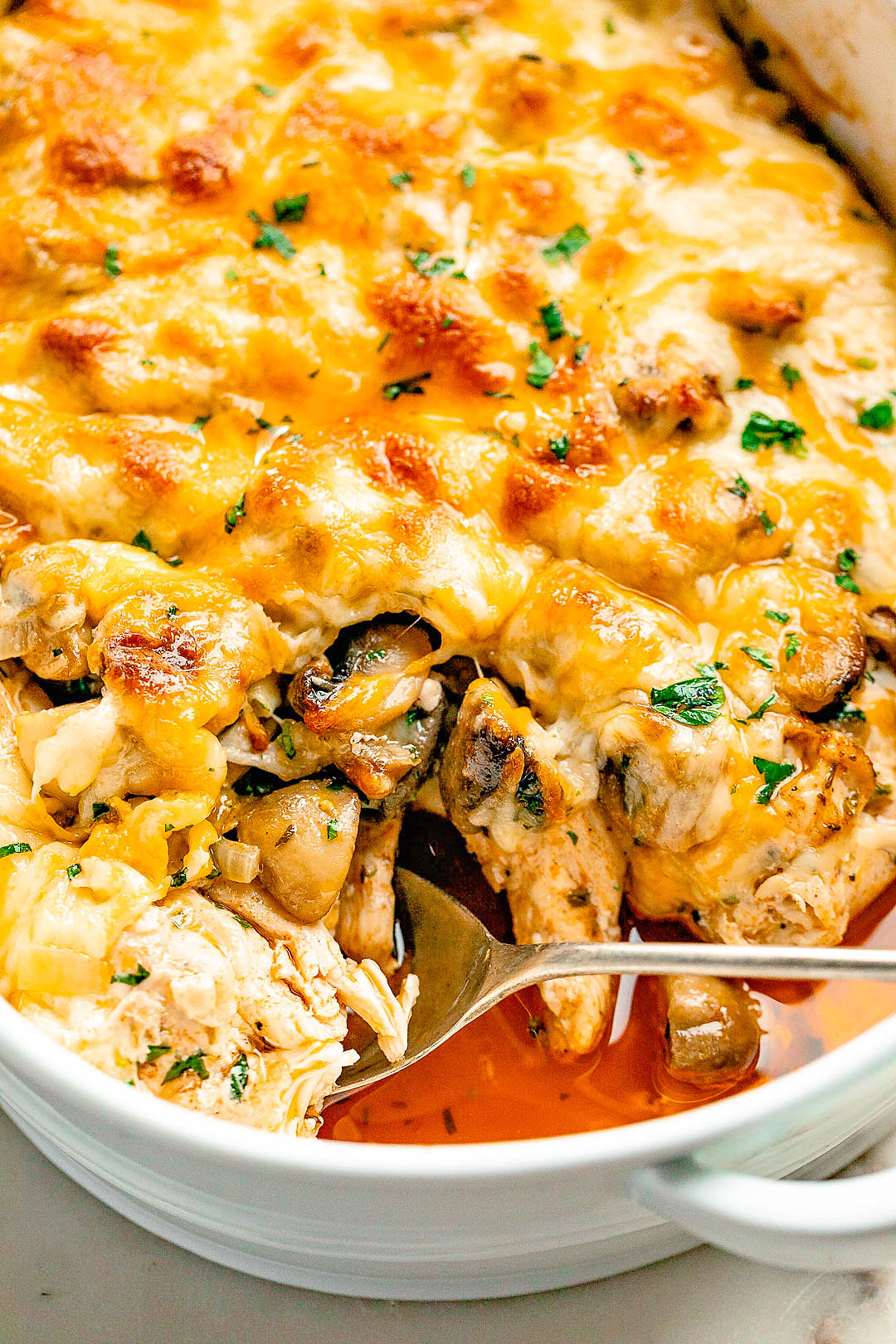
Classic Chicken Casserole
A comforting, one-pan dish featuring tender chicken, creamy sauce, and a fluffy baked breadcrumb topping. This recipe is a must-try for any occasion.
🥘Ingredients
- 2 lbs boneless, skinless chicken breasts or thighs
- 1 tbsp olive oil
- 1 tsp garlic powder
- 1 tsp onion powder
- ½ tsp paprika
- ½ tsp salt
- ½ tsp black pepper
- 1 cup (240ml) chicken broth
- 1 cup (240ml) heavy cream or half-and-half
- 1 cup (240ml) shredded cheddar cheese
- 1 cup (240ml) diced tomatoes (canned, no salt added)
- 2 cloves garlic, minced
- 1 small onion, finely diced
- 1 tsp dried thyme
- ½ tsp dried oregano
- ½ tsp salt
- ¼ tsp black pepper
- 1 cup (125g) breadcrumbs (plain or panko)
- ½ cup (50g) grated Parmesan cheese
- 1 egg, beaten
- 1 tbsp milk or water
- ½ tsp garlic powder
- ½ tsp dried parsley
👨🍳Directions
-
1 Preheat oven to 375°F (190°C). In a bowl, mix olive oil, garlic powder, onion powder, paprika, salt, and black pepper. Rub the mixture evenly over the chicken pieces.
-
2 In a large skillet, cook chicken over medium heat until fully cooked (about 6-7 minutes per side). Remove chicken from skillet and set aside. In the same skillet, sauté onion and garlic for 2 minutes until softened. Pour in chicken broth and let it simmer for 2 minutes.
-
3 In a saucepan, heat heavy cream over medium heat until warm. Stir in shredded cheese until melted. Remove from heat and stir in diced tomatoes, thyme, oregano, remaining salt, and black pepper. Let the sauce cool slightly.
-
4 In a shallow bowl, combine breadcrumbs, Parmesan cheese, beaten egg, milk, garlic powder, and parsley. Mix well.
-
5 Arrange cooked chicken pieces in a single layer in the prepared baking dish. Pour the cheese sauce over the chicken, spreading evenly. Sprinkle the breadcrumb mixture evenly over the sauce.
-
6 Bake in the preheated oven for 20-25 minutes, or until the top is golden and the filling is bubbly. Let rest for 5 minutes before serving.
🔧Equipment
- 1 large baking dish (9×13 inches)
- Mixing bowls
- Knife and cutting board
- Measuring cups and spoons
- Fork or chicken tenderizer
- Oven
- Whisk
- Spatula
📊Nutrition Facts (per serving)
📝Notes
Watch Video Of How Classic Chicken Casserole Works
This chicken casserole dinner is a simple yet reliable choice for any gathering because it’s easy to prepare ahead and always comes together perfectly. Whether it’s a weeknight family meal or a casual Sunday dinner, the comforting flavors and hearty texture make it a crowd-pleaser that feels special without the fuss. Plus, it’s forgiving—if you forget to add something, it still tastes great, and leftovers reheat beautifully for days. That’s why I always reach for this recipe when I need something warm, satisfying, and stress-free for my family.
❓ Frequently Asked Questions About Chicken Casserole
What is the best way to prepare the chicken casserole for optimal texture and flavor?
The best way to prepare chicken casserole for optimal texture and flavor is to start by browning the chicken pieces thoroughly in a skillet or oven-safe dish before adding the remaining ingredients. This step ensures a crispy exterior and rich flavor. After browning, mix in the diced vegetables, sauce (like cream of mushroom or chicken broth-based gravy), and seasonings. Bake until the chicken reaches an internal temperature of 165°F (74°C) and the sauce is bubbly and slightly thickened.
—
Can I substitute any ingredients in the classic chicken casserole recipe?
Yes, you can make substitutions in chicken casserole, but some changes may affect texture or taste. Common swaps include: – Chicken: Use thighs instead of breasts for juicier results, or swap for turkey or ham for a different flavor profile. – Vegetables: Replace potatoes with sweet potatoes, cauliflower, or even a mix of carrots and peas. For extra creaminess, add diced zucchini or green beans. – Sauce: Cream of chicken or mushroom gravy works well, but you can use a homemade roux-based sauce or even a light tomato-based one for a different twist. – Cheese: Parmesan or cheddar are classic, but Gruyère, feta, or even a sprinkle of nutritional yeast can add depth. Avoid overloading with cheese to prevent a soggy casserole.
—
How long should I bake the chicken casserole, and what temperature should I use?
For a traditional chicken casserole, bake it at 375°F (190°C) for 25–35 minutes, depending on the dish’s size and thickness. Preheat your oven to this temperature before adding the casserole to the oven. Check the internal temperature of the thickest part of the chicken with a meat thermometer—it should reach 165°F (74°C). If the dish is in a deep pan, reduce baking time slightly to avoid overcooking.
—
What tips can help prevent the chicken casserole from turning out dry or mushy?
To keep your chicken casserole moist and well-textured: 1. Don’t overbake – Remove it from the oven as soon as the chicken reaches 165°F (74°C) to prevent drying out. 2. Use enough liquid – Ensure the sauce or broth is sufficient to coat the chicken and veggies, but avoid overcrowding the dish. 3. Add moisture later – If the casserole seems dry, cover it loosely with foil and return it to the oven for 5–10 minutes before serving. 4. Choose the right ingredients – Use tender cuts of chicken (like thighs) and avoid overcooking the vegetables. Potatoes and carrots can be slightly undercooked initially and finished in the oven. 5. Bake on a sheet pan – If using a baking dish, transfer the casserole to a sheet pan for the last 10 minutes to prevent steam buildup and sogginess. 6. Let it rest – After baking, let the casserole sit for 5 minutes before serving to allow the juices to redistribute.
—
How can I make this chicken casserole ahead of time and still keep it delicious?
You can prep chicken casserole in advance, but proper storage and reheating are key to maintaining flavor and texture: – Make the sauce first – Prepare the gravy or cream sauce separately and store it in the fridge for up to 3 days or freeze for longer storage. Reheat it gently before combining with other ingredients. – Assemble ahead – Mix the chicken, veggies, and sauce in a single bowl, then transfer to an airtight container. Refrigerate for up to 2 days or freeze for up to 3 months. – Reheat carefully – When ready to bake, transfer the casserole to a baking dish and reheat at 350°F (175°C) for 20–25 minutes, covered with foil, until heated through. For a freezer-friendly version, bake from frozen at 375°F (190°C) for 40–45 minutes, adding extra liquid if needed. – Add fresh toppings – If making ahead, hold back on cheese or herbs until serving to prevent sogginess. Sprinkle them on top just before baking or reheating.
