
korean chicken recipe

The Best korean chicken recipe
I’ve been making Korean chicken, or galbi, for years—not just because it’s delicious, but because it’s the kind of dish that feels like a little taste of home when you’re cooking for your family. There’s something about the tender, marinated meat and the bold, spicy-sweet flavors that make it feel special, even if it’s just sitting on the table for dinner. My kids always ask for seconds, and honestly, I don’t blame them. The meat is so juicy and flavorful that it’s hard to stop eating, but it’s also something you can make ahead of time and reheat, so it’s practical too. It’s not just a meal—it’s a way to bring a little bit of Korean culture into our kitchen without needing fancy ingredients or a lot of time.
This recipe is perfect for any occasion. Whether you’re hosting a dinner party and want something hearty and impressive, or you’re just looking for a comforting weeknight meal that the whole family will enjoy, galbi delivers. The marinade is easy to make in bulk, and the meat stays tender even after being sliced and reheated, so it’s great for meal prep too. My husband loves how it balances the spice with sweetness, and my kids swear by the crispy skin—it’s like a little treat in every bite. Plus, the health benefits make it even better. The lean protein keeps you full, and the marinade often includes garlic and ginger, which are great for digestion. It’s not just tasty; it’s smart eating too.
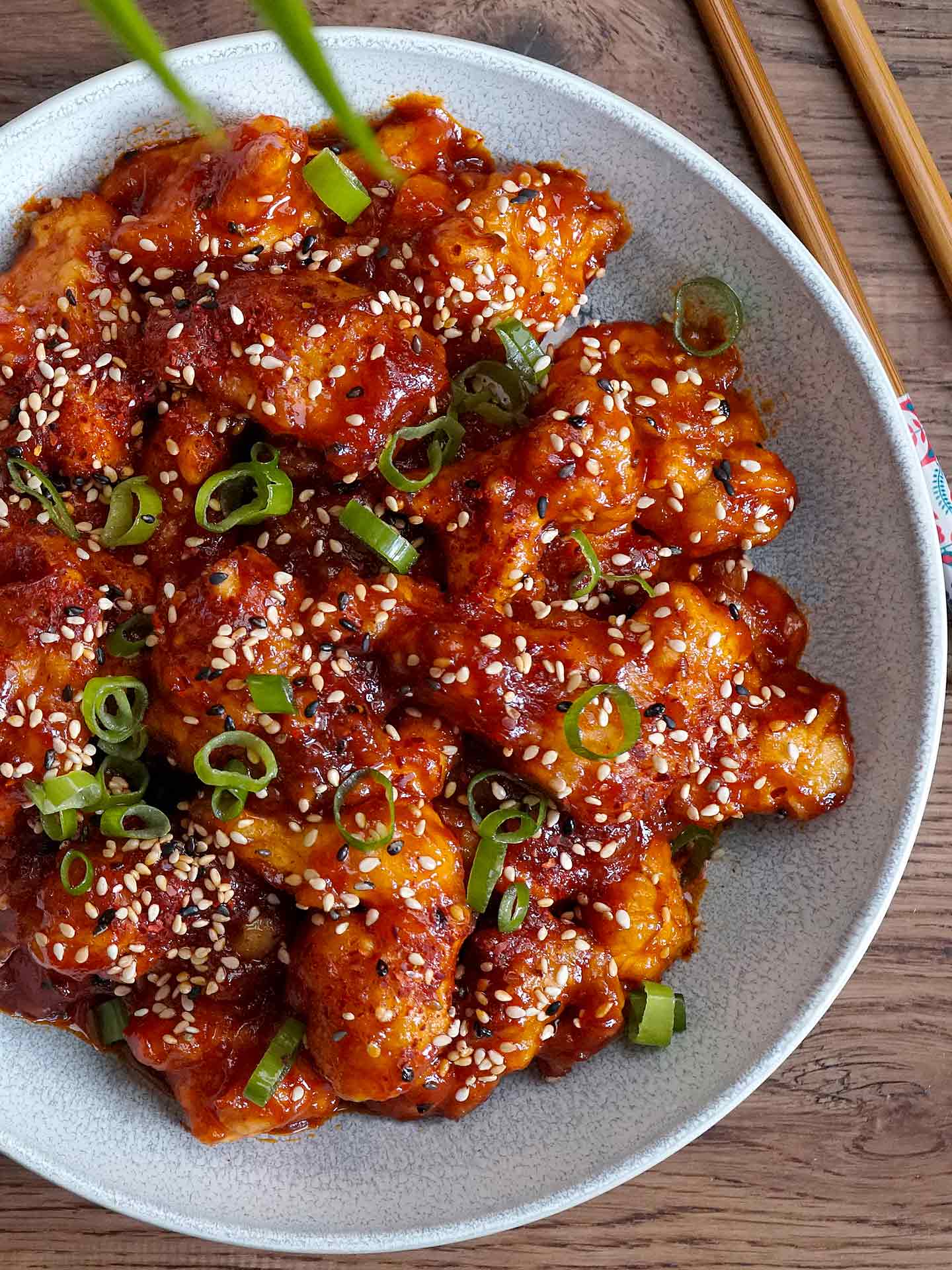
Korean BBQ Chicken (Gochujang Chicken)
A flavorful Korean dish featuring marinated and grilled chicken coated in a spicy-sweet gochujang sauce, served with steamed rice and fresh vegetables. This recipe is a must-try for any occasion.
🥘Ingredients
- 2 lbs boneless chicken thighs
- 1 cup gochujang (Korean red pepper paste)
- 2 tbsp soy sauce
- 1 tbsp brown sugar
- 1 tbsp minced garlic
- 1 tbsp grated ginger
- 1 tbsp sesame oil
- 1 tbsp rice vinegar
- 1 tsp toasted sesame seeds
- 4 cups jasmine rice
- 4 cups water
- 1 green onion, sliced
- 1 tbsp sesame seeds
- 1/2 cup chopped cilantro
- 1/2 cup sliced green bell pepper
👨🍳Directions
-
1 Preheat grill or oven to 400°F (200°C). Prepare a grill pan or line an oven-safe skillet with foil.
-
2 In a large bowl, combine gochujang, soy sauce, brown sugar, garlic, ginger, sesame oil, and rice vinegar. Mix well.
-
3 Cut chicken thighs into bite-sized pieces. Pour the marinade over the chicken and coat evenly. Cover and refrigerate for at least 1 hour (or overnight for deeper flavor).
-
4 Cook the chicken: For grilling, place chicken pieces on the grill and cook for 6-8 minutes per side, basting with extra marinade. For oven, place chicken in the skillet, cover, and bake for 20-25 minutes, turning halfway.
-
5 While chicken cooks, rinse and cook rice according to package instructions (typically 1:1 rice-to-water ratio, simmering for 15 mins).
-
6 Prepare garnishes: Slice green onions, cilantro, and bell pepper. Sprinkle with sesame seeds.
-
7 Serve grilled chicken hot over steamed rice, garnished with sliced green onions, cilantro, bell peppers, and sesame seeds.
🔧Equipment
- Mixing bowls
- Knife and cutting board
- Food processor (optional)
- Grill pan or grill
- Oven-safe skillet
- Serving platter
📊Nutrition Facts (per serving)
📝Notes
Watch Video Of How Korean BBQ Chicken (Gochujang Chicken) Works
This Korean chicken recipe is always a crowd-pleaser because it’s simple enough to make ahead and still tastes fresh when served, making it perfect for busy family gatherings. The bold flavors and sticky glaze make it versatile—great over rice, in bowls, or even as a quick side—so you can serve it without stressing over last-minute prep. It’s hearty enough to feed a crowd without being too heavy, and the mix of sweet, spicy, and savory notes always gets everyone talking. Plus, it’s a go-to for when you want something flavorful but not complicated, so no one feels left out of the cooking.
❓ Frequently Asked Questions About Korean BBQ Chicken (Gochujang Chicken)
1. What are the key ingredients in a traditional Korean BBQ chicken recipe?
In a classic Korean BBQ chicken dish like Galbi Jjim or Dakgangjeong, the key ingredients include: – Chicken (thighs or drumsticks, marinated for tenderness) – Glass noodles (for the broth, optional but traditional) – Dried shiitake mushrooms (for umami depth) – Gochugaru (Korean red pepper flakes) for spice – Gochujang (fermented red pepper paste) for sweetness and tang – Sesame oil, garlic, ginger, soy sauce, brown sugar, and green onions for marinade and seasoning – Optional: Rice vinegar, sesame seeds, or a touch of honey for extra flavor.
—
2. How long should I marinate the chicken before grilling?
For best results, marinate the chicken for at least 4–6 hours (overnight is ideal) in a well-balanced marinade. If short on time, a 2-hour marinade works, but deeper flavors develop with longer soaking. The key is to let the juices penetrate, so avoid overcrowding the marinade to prevent soggy chicken.
—
3. What’s the best way to cook Korean BBQ chicken for smoky flavor?
For smoky flavor, follow these steps: 1. Preheat the grill to medium-high heat (or use a charcoal grill for intense smokiness). 2. Grill the chicken skin-side down first for 5–7 minutes to render fat, then flip and baste with marinade. 3. Add mushrooms and vegetables (like bell peppers or onions) around the chicken for extra depth. 4. For extra smokiness, use chicken skin (crispy and flavorful) or a wood chip grill (apple or cherry wood works well). 5. Broil briefly at the end for caramelized edges if needed.
—
4. Can I make Korean BBQ chicken without a grill?
Absolutely! Here’s how to adapt it: – Oven method: Broil chicken thighs at 400°F (200°C) for 15–20 mins, basting with marinade halfway. – Stovetop method: Sear chicken in a pan over high heat, then simmer in broth with mushrooms and glass noodles for 10–15 mins. – Slow cooker: Cook on low for 4–5 hours with marinade and veggies for tender, juicy chicken. – Air fryer: Cook at 375°F (190°C) for 12–15 mins, flipping halfway.
—
5. What side dishes pair best with Korean BBQ chicken?
Korean BBQ chicken is versatile! Pair it with: – Kimchi (fermented spicy cabbage) for tangy contrast – Steamed white rice (classic choice) – Jjajangmyeon (black bean noodles) for a rich, savory side – Bokkeumbap (spicy fried rice) or Gamja Juk (stir-fried potatoes) – Pickled radish (Danmuji) for fresh crunch – Miso soup or soy-based broth to cleanse the palate – Side veggies like steamed spinach (Guksu) or grilled zucchini
